+
India Notifies Green Ammonia And Methanol Standards
OIL & GAS

India Notifies Green Ammonia And Methanol Standards

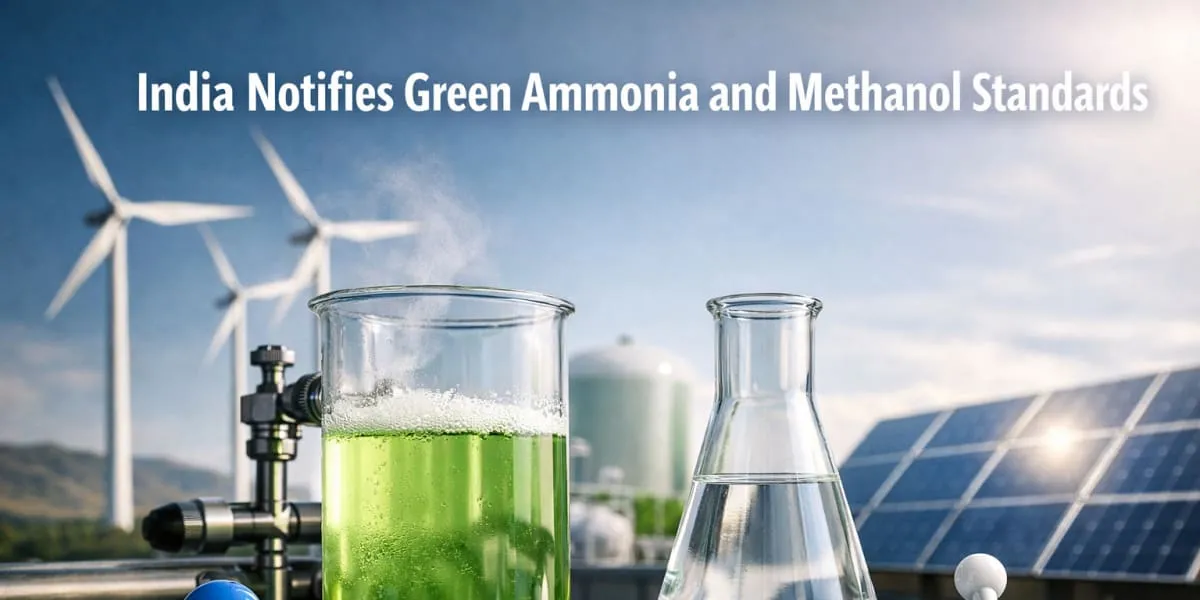
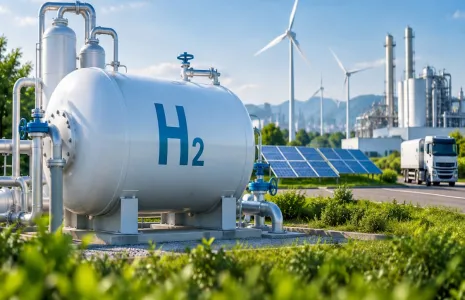
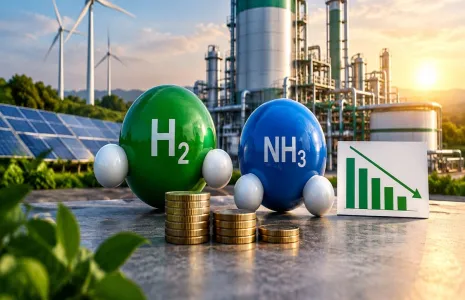
The Government has notified standards for Green Ammonia and Green Methanol under the National Green Hydrogen Mission, the Ministry of New and Renewable Energy (MNRE) said on 27 February 2026. The measure aims to accelerate development and trade in derivatives of green hydrogen produced from renewable sources and to provide a clear regulatory basis for producers, exporters and procurers. The MNRE set out eligibility conditions and emission thresholds that will determine when ammonia and methanol qualify as green fuels.

Under the new framework, Green Ammonia must have total non-biogenic greenhouse gas emissions of no more than zero point three eight kg of carbon dioxide equivalent per kg of ammonia, with emissions accounted for across green hydrogen production, ammonia synthesis, purification, compression and on-site storage. The emissions will be calculated as an average over the preceding 12-month period. For Green Methanol the threshold is zero point four four kg of carbon dioxide equivalent per kg of methanol, covering hydrogen production, methanol synthesis, purification and on-site storage.

The notification specifies that carbon dioxide used in Green Methanol production may be sourced from biogenic sources, Direct Air Capture (DAC) or existing industrial sources, and that eligible sources may be revised in future with prospective application and grandfathering provisions. Renewable electricity used in production may include electricity generated from renewable sources that is stored in an energy storage system or banked with the grid in accordance with applicable regulations. The MNRE said detailed methodologies for measurement, reporting and on-site verification will be issued separately.

Existing tenders or procurement processes issued before the notification will continue to follow their original terms but procuring entities may align such tenders with the new standards where feasible and by mutual agreement. The government expects the standards to provide clarity to industry players and investors, to support decarbonisation of fertilisers, shipping, power and heavy industry, and to strengthen India as a reliable producer and exporter of green fuels under the National Green Hydrogen Mission.

The Government has notified standards for Green Ammonia and Green Methanol under the National Green Hydrogen Mission, the Ministry of New and Renewable Energy (MNRE) said on 27 February 2026. The measure aims to accelerate development and trade in derivatives of green hydrogen produced from renewable sources and to provide a clear regulatory basis for producers, exporters and procurers. The MNRE set out eligibility conditions and emission thresholds that will determine when ammonia and methanol qualify as green fuels. Under the new framework, Green Ammonia must have total non-biogenic greenhouse gas emissions of no more than zero point three eight kg of carbon dioxide equivalent per kg of ammonia, with emissions accounted for across green hydrogen production, ammonia synthesis, purification, compression and on-site storage. The emissions will be calculated as an average over the preceding 12-month period. For Green Methanol the threshold is zero point four four kg of carbon dioxide equivalent per kg of methanol, covering hydrogen production, methanol synthesis, purification and on-site storage. The notification specifies that carbon dioxide used in Green Methanol production may be sourced from biogenic sources, Direct Air Capture (DAC) or existing industrial sources, and that eligible sources may be revised in future with prospective application and grandfathering provisions. Renewable electricity used in production may include electricity generated from renewable sources that is stored in an energy storage system or banked with the grid in accordance with applicable regulations. The MNRE said detailed methodologies for measurement, reporting and on-site verification will be issued separately. Existing tenders or procurement processes issued before the notification will continue to follow their original terms but procuring entities may align such tenders with the new standards where feasible and by mutual agreement. The government expects the standards to provide clarity to industry players and investors, to support decarbonisation of fertilisers, shipping, power and heavy industry, and to strengthen India as a reliable producer and exporter of green fuels under the National Green Hydrogen Mission.

Next Story
Infrastructure Urban

Implementation Status of Jal Jeevan Mission

Since August 2019 the Government has implemented Jal Jeevan Mission to provide assured potable water through household tap connections in rural India. At the start of the mission only 32.3 million (mn) rural households, representing 16.7 per cent, were reported to have tap water connections. States and union territories have reported that 125.8 mn additional rural households have since been provided with tap connections. As a result, of about 193.6 mn rural households roughly 158.2 mn, or 81.71 per cent, are reported to have tap water supply at home.\n\nThe State, district and village level st..

Next Story
Infrastructure Urban

Jal Jeevan Mission Reaches Eighty One Per Cent Rural Coverage

The Government reported substantial progress under the Jal Jeevan Mission, launched in August 2019 to provide tap water to every rural household. At launch only 32.3 million (mn) rural households had tap connections and states and Union territories reported provision of 125.8 mn additional households by March 2026. Consequently, out of about 193.6 mn rural households around 158.2 mn, or 81.71 per cent, are reported to have tap water at home. The Finance Minister announced extension of the mission until 2028 in the 2025-26 budget speech. The Swachh Bharat Mission Grameen, launched in October 20..

Next Story
Infrastructure Urban

Empowering Local Governance for Sustainable Rural Water Supply

The Ministry of Jal Shakti has aligned the Jal Jeevan Mission (JJM) with the 73rd Amendment to strengthen village level planning and community ownership of water supply. Gram Panchayats, village water and sanitation committees and Pani Samitis are to plan, implement, manage and maintain piped water systems, with gram sabha processes formalising handover and oversight. Implementation support agencies including non government organisations, community based organisations and self help groups have been empanelled to train local committees and promote women participation. Under JJM, the department ..

Advertisement

Subscribe to Our Newsletter

Get daily newsletters around different themes from Construction world.

STAY CONNECTED

Advertisement

Advertisement

Advertisement