
No Immediate Hike In Petrol And Diesel Prices
OIL & GAS

No Immediate Hike In Petrol And Diesel Prices

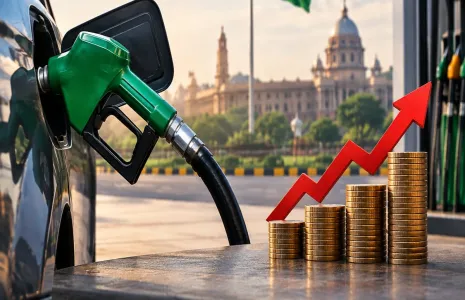
India will not see an immediate increase in retail petrol and diesel prices despite crude oil crossing 100 dollars a barrel, the finance ministry indicated, as authorities weigh fiscal and social implications. Analysts noted that policymakers are monitoring global markets while oil marketing companies reassess margins and inventory costs. The decision aims to shield consumers from sudden shock to inflation and transport costs.

The consumer retail price was left unchanged while central and state tax components remained under review as authorities explored fiscal levers. Officials indicated that buffers in the oil pool account and targeted subsidies could be deployed to moderate the impact of higher crude costs. Policymakers are reported to be reluctant to permit a further rise in excise or sales levies that would raise pump prices for households.

Market participants pointed to tight global supplies and geopolitical tensions as the main drivers behind crude surpassing 100 dollars. Refiners and importers are managing procurement by adjusting sourcing and scheduling to smooth refiners' runs and avoid sharp inventory depletion. The central bank and finance ministry are monitoring rupee exchange movements given that a weaker rupee could amplify the domestic cost of imported oil.

Analysts warn that sustained high crude will narrow fiscal space and may force gradual petrol and diesel price realignment, but immediate relief measures can limit short term consumer pain. The impact will be visible in transport and logistics costs, which feed into food and manufacturing prices, potentially keeping headline inflation elevated and complicating monetary policy choices. The ministry will continue to review data, balance revenue considerations with social affordability, and signal that any decision on pump price revision will be calibrated and communicated ahead of implementation to avoid market disruption.

India will not see an immediate increase in retail petrol and diesel prices despite crude oil crossing 100 dollars a barrel, the finance ministry indicated, as authorities weigh fiscal and social implications. Analysts noted that policymakers are monitoring global markets while oil marketing companies reassess margins and inventory costs. The decision aims to shield consumers from sudden shock to inflation and transport costs. The consumer retail price was left unchanged while central and state tax components remained under review as authorities explored fiscal levers. Officials indicated that buffers in the oil pool account and targeted subsidies could be deployed to moderate the impact of higher crude costs. Policymakers are reported to be reluctant to permit a further rise in excise or sales levies that would raise pump prices for households. Market participants pointed to tight global supplies and geopolitical tensions as the main drivers behind crude surpassing 100 dollars. Refiners and importers are managing procurement by adjusting sourcing and scheduling to smooth refiners' runs and avoid sharp inventory depletion. The central bank and finance ministry are monitoring rupee exchange movements given that a weaker rupee could amplify the domestic cost of imported oil. Analysts warn that sustained high crude will narrow fiscal space and may force gradual petrol and diesel price realignment, but immediate relief measures can limit short term consumer pain. The impact will be visible in transport and logistics costs, which feed into food and manufacturing prices, potentially keeping headline inflation elevated and complicating monetary policy choices. The ministry will continue to review data, balance revenue considerations with social affordability, and signal that any decision on pump price revision will be calibrated and communicated ahead of implementation to avoid market disruption.

Related Stories

Gold Stories

Next Story
Resources

Schindler named among Forbes’ World’s Best Employers 2026

Schindler has been named among Forbes’ World’s Best Employers 2026, a global ranking recognising companies for their workplace environments.Compiled by Forbes in partnership with Statista, the ranking is based on independent employee feedback, including whether employees would recommend their organisation to friends and family.The company said the recognition reflected its focus on creating a workplace where employees can develop their expertise and build careers. ..

Next Story
Infrastructure Urban

India needs an export-execution mindset: Vishesh Jain

Interview with Vishesh Jain, Founder & CEO, EximpleWhat gaps in India’s global trade ecosystem led you to build Eximple, and what problem did you see businesses struggling with most?Eximple came out of a problem that all three founders had seen from different choke points in the trade ecosystem. India has millions of MSMEs and manufacturers, and many of them can make products that are genuinely competitive on quality. Yet only a small fraction is able to build meaningful international businesses. In our experience, the gap is usually not manufacturing capability; it is the ability to exe..

Next Story
Building Material

Nuvoco reports 13.5% revenue growth in Q2 FY27

Nuvoco Vistas Corp. Ltd. reported consolidated revenue of Rs 27.9 billion for Q2 FY27, up 13.5% year on year. Cement sales volume rose 9% to 4.7 million tonnes (MMT), while EBITDA increased 11% to Rs 4.11 billion.The company said it began its cement operations in 2014 with a 2.3 MMT per annum (MMTPA) operation at Nimbol. It now aims to reach 35 MMTPA of cement capacity by FY28, nearly 15 times its initial capacity. Its portfolio spans cement, ready-mix concrete and modern building materials.On sustainability and cost efficiency, Nuvoco partnered with CleanMax for a 46.4 MW wind-solar hybrid re..

Advertisement

Subscribe to Our Newsletter

Get daily newsletters around different themes from Construction world.

STAY CONNECTED

Advertisement

SPECIAL OFFER
QR Code