+
Russian Share Of India's Jan Oil Imports Hits Lowest Since Late 2022
OIL & GAS

Russian Share Of India's Jan Oil Imports Hits Lowest Since Late 2022

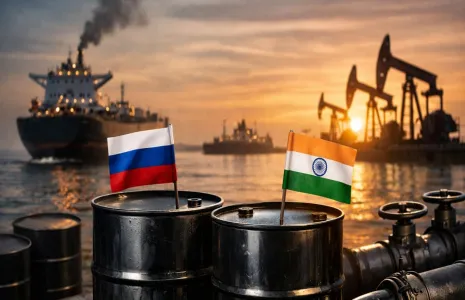
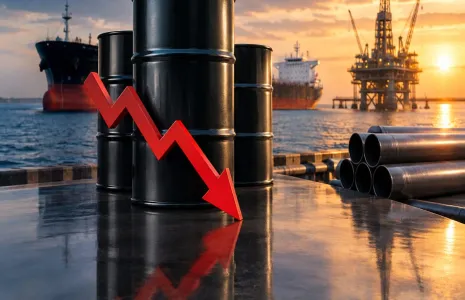
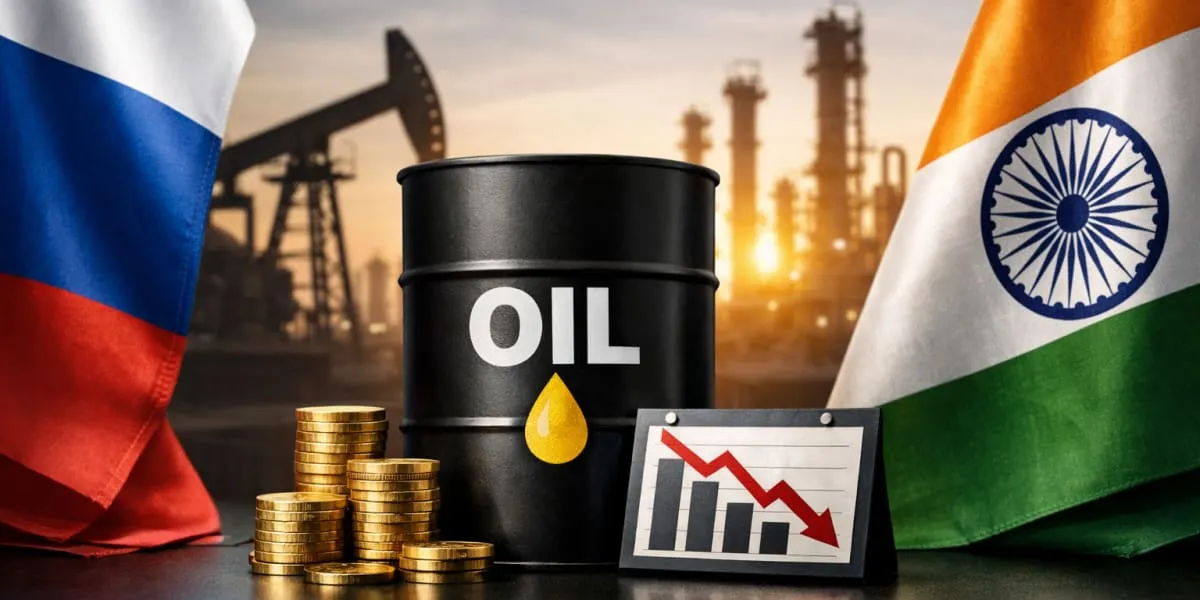
Data compiled by industry monitors shows that the Russian share of India’s oil imports in January fell to its lowest level since late 2022. The drop was observed amid a broader reshuffle of crude supply routes and purchasing patterns. Analysts noted that the shift reduced the relative weight of Russian barrels in India’s overall crude basket. The development follows months of adjustments by Indian refiners as they balance cost, availability and contractual obligations.

Imports from the Middle East increased over the same period, with Saudi Arabia and other Gulf producers appearing to supply a larger share of cargoes to meet domestic refinery needs. Traders observed greater activity on seaborne routes from Gulf loading hubs and refiners adjusted intake to optimise processing schedules. Changes in freight economics and shipping availability also appear to have influenced sourcing choices. The net effect was a visible repositioning of India’s crude procurement mix for the month.

The decline in Russian participation does not imply an absence of Indian purchases of Russian grades over the whole year; purchasing decisions have remained responsive to price signals and contractual frameworks. Refiners continued to manage inventory levels and feedstock quality while seeking to preserve margins amid volatile international benchmarks. Policy considerations, including strategic reserves and diplomatic relations, remained part of the calculus behind sourcing. Market participants said the monthly snapshot reflected short term dynamics rather than a permanent rerouting.

Looking ahead, analysts expect India’s crude import pattern to continue responding to global supply flows, price differentials and refinery maintenance schedules. Any sizeable shifts in Organisation of the Petroleum Exporting Countries (OPEC) output or disruptions along key shipping lanes could prompt renewed adjustments in sourcing. Indian refiners and policy makers will monitor developments to safeguard refining operations and energy security. The monthly change underscored the fluidity of international crude markets and India’s active role as a major buyer.

Data compiled by industry monitors shows that the Russian share of India’s oil imports in January fell to its lowest level since late 2022. The drop was observed amid a broader reshuffle of crude supply routes and purchasing patterns. Analysts noted that the shift reduced the relative weight of Russian barrels in India’s overall crude basket. The development follows months of adjustments by Indian refiners as they balance cost, availability and contractual obligations. Imports from the Middle East increased over the same period, with Saudi Arabia and other Gulf producers appearing to supply a larger share of cargoes to meet domestic refinery needs. Traders observed greater activity on seaborne routes from Gulf loading hubs and refiners adjusted intake to optimise processing schedules. Changes in freight economics and shipping availability also appear to have influenced sourcing choices. The net effect was a visible repositioning of India’s crude procurement mix for the month. The decline in Russian participation does not imply an absence of Indian purchases of Russian grades over the whole year; purchasing decisions have remained responsive to price signals and contractual frameworks. Refiners continued to manage inventory levels and feedstock quality while seeking to preserve margins amid volatile international benchmarks. Policy considerations, including strategic reserves and diplomatic relations, remained part of the calculus behind sourcing. Market participants said the monthly snapshot reflected short term dynamics rather than a permanent rerouting. Looking ahead, analysts expect India’s crude import pattern to continue responding to global supply flows, price differentials and refinery maintenance schedules. Any sizeable shifts in Organisation of the Petroleum Exporting Countries (OPEC) output or disruptions along key shipping lanes could prompt renewed adjustments in sourcing. Indian refiners and policy makers will monitor developments to safeguard refining operations and energy security. The monthly change underscored the fluidity of international crude markets and India’s active role as a major buyer.

Next Story
Equipment

Kabelschlepp India Installs Robotic VMC in Bengaluru

Kabelschlepp India, part of the Tsubaki Group, has installed a state-of-the-art Vertical Machining Center (VMC) integrated with robotic automation at its Bengaluru facility. The inauguration was held in the presence of Henning Preis, President & CEO, Kabelschlepp Group, Jörg Schulz, Vice President – Production, and Srinivas P. Kamisetty, Managing Director, Kabelschlepp India.The high-precision CNC VMC is designed for advanced milling, drilling, tapping and multi-axis machining. Equipped with a vertical spindle orientation, automatic tool changer and intelligent CNC control system, it en..

Next Story
Infrastructure Transport

Highway Delivery Reset!

Project delays and inefficiencies continue to bedevil the progress of India’s National Highways network. A multi-pronged reform agenda is needed to inject greater transparency and accountability at every stage – from planning and procurement to execution, maintenance and oversight. This article offers key recommendations and reform strategies that government stakeholders – from the Ministry of Road Transport & Highways (MoRTH) and the National Highways Authority of India (NHAI) to state agencies and oversight bodies – should pursue to put highway development on a better track.Decen..

Next Story
Infrastructure Transport

MSIDC Executes ₹37,000 Crore Road Programme

With Rs 37,000 crore worth of road projects under execution across Maharashtra, Maharashtra State Infrastructure Development Corporation (MSIDC) is driving one of the state’s largest infrastructure programmes. Dr Brijesh Dixit, Managing Director, discusses the institutional reforms, execution frameworks, financing strategies and technology adoption enabling timely, high-quality delivery, in conversation with PRATAP PADODE, Editor-in-Chief, CW.With over Rs 37,000 crore worth of road projects underway across districts – many under tight timelines – what institutional and executio..

Advertisement

Subscribe to Our Newsletter

Get daily newsletters around different themes from Construction world.

STAY CONNECTED

Advertisement

Advertisement

Advertisement

Open In App