+
 Chandigarh plans 75 MW solar power generation by August 2023
POWER & RENEWABLE ENERGY

Chandigarh plans 75 MW solar power generation by August 2023

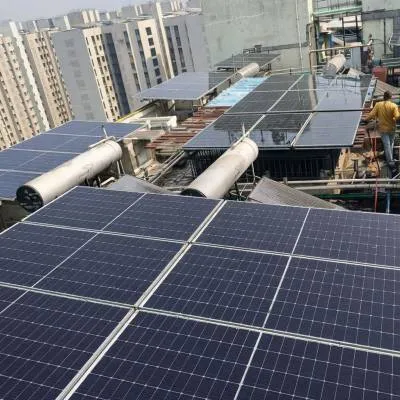
The Chandigarh administration has set a target of 75 MW solar power generation by 15 August 2023, undeterred by the Covid-19 pandemic, which spoiled its earlier plans.

The Chandigarh Renewable Energy and Science and Technology (CREST) promotion society and the UT administration submitted the proposal to the centre under the Azadi Ka Amrit Mahotsav campaign.

UT secretary environment and CEO of CREST, Debendra Dalai, told the media that it has already started generating 45 MW of solar power from different projects. It aims at generating another 30 MW, including residential and governmental projects.

Recently, the administration asked about the progress in the city's solar project installation and a roadmap for future solar plant installations from CREST.

In a meeting between the administration and department officials, UT asked CREST to provide the details of the project, including the progress details, in the pipeline of those completed.

The Ministry of New and Renewable Energy (MNRE) has increased the solar power generation target of the city from 50 MW to 69 MW by 2022.

UT's plea for implementing the Renewable Energy Service Company (RESCO) model for the installation of solar plants in the city was turned down by the Joint Electricity Regulatory Commission (JERC).

CREST inspired JERC to implement the RESCO model in the city. CREST proposed this model after approval from the UT administrator, V P Singh Badnore. Under the RESCO, UT planned that the private companies would install solar plants on private properties, and in exchange, charge the owner of the building a lower tariff than the regular electricity rate for the time mentioned in the tender, after which the building owner will get the solar plant.

Image Source


Also read: TPREL launches 100 MW solar power project in Gujarat

Also read: MNRE issues EoI from consultants to assess solar projects and parks

The Chandigarh administration has set a target of 75 MW solar power generation by 15 August 2023, undeterred by the Covid-19 pandemic, which spoiled its earlier plans. The Chandigarh Renewable Energy and Science and Technology (CREST) promotion society and the UT administration submitted the proposal to the centre under the Azadi Ka Amrit Mahotsav campaign. UT secretary environment and CEO of CREST, Debendra Dalai, told the media that it has already started generating 45 MW of solar power from different projects. It aims at generating another 30 MW, including residential and governmental projects. Recently, the administration asked about the progress in the city's solar project installation and a roadmap for future solar plant installations from CREST. In a meeting between the administration and department officials, UT asked CREST to provide the details of the project, including the progress details, in the pipeline of those completed. The Ministry of New and Renewable Energy (MNRE) has increased the solar power generation target of the city from 50 MW to 69 MW by 2022. UT's plea for implementing the Renewable Energy Service Company (RESCO) model for the installation of solar plants in the city was turned down by the Joint Electricity Regulatory Commission (JERC). CREST inspired JERC to implement the RESCO model in the city. CREST proposed this model after approval from the UT administrator, V P Singh Badnore. Under the RESCO, UT planned that the private companies would install solar plants on private properties, and in exchange, charge the owner of the building a lower tariff than the regular electricity rate for the time mentioned in the tender, after which the building owner will get the solar plant. Image Source Also read: TPREL launches 100 MW solar power project in Gujarat Also read: MNRE issues EoI from consultants to assess solar projects and parks

Related Stories

Gold Stories

Next Story
Infrastructure Transport

NHAI Tightens AI-Machine Construction Norms

New Delhi: The National Highways Authority of India (NHAI) has significantly tightened its framework for Automated and Intelligent Machine-Aided Construction (AI-MC), introducing provisions that could directly affect contractor payments, equipment deployment and digital ownership of highway project data.Under Policy Circular No. 11.109/2026 dated August 28, 2026, mandatory AI-MC deployment has been rationalised to highway projects with a continuous length exceeding 20 km and an EPC/civil construction cost above Rs 5 billion. Standalone bridges, ROBs, tunnels, short bypasses below 10 km and str..

Next Story
Infrastructure Urban

Infrastructure Opportunity Outlook by IMPACCT.Info

India’s infrastructure pipeline is witnessing dynamic activity across stages — from immediate bidding to future planning. IMPACCT segments these into three categories: Immediate, 3–6 Month, and Future Opportunities, enabling businesses to identify, prepare, and participate in high-value tenders and projects across sectors.To read full article Click Here ..

Next Story
Real Estate

Glass, Reframed!

Glass façades, quintessential aesthetic building envelopes globally, have been widely adopted in India as well. But when the focus is high-performance building systems that deliver energy efficiency, comfort and architectural identity, glass isn’t the only preference. Combination solutions, involving glass and some other material, improve façade outcomes. Some combinations come at comparable prices, some at a higher price. Here is a selection of performance-oriented solutions...To read the full story Click Here ..

Advertisement

Subscribe to Our Newsletter

Get daily newsletters around different themes from Construction world.

STAY CONNECTED

Advertisement

SPECIAL OFFER
QR Code