First solar to invest $684 mn for solar manufacturing module in India
POWER & RENEWABLE ENERGY

First solar to invest $684 mn for solar manufacturing module in India

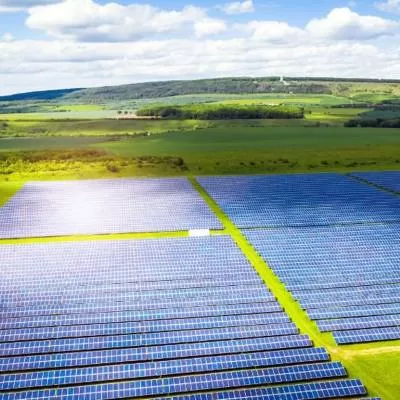
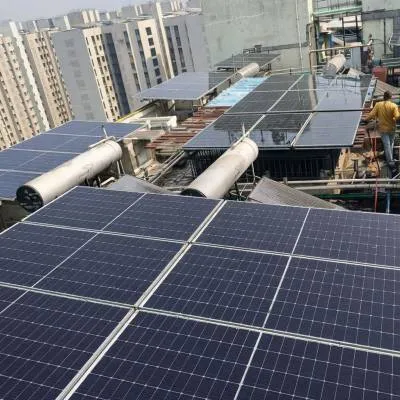
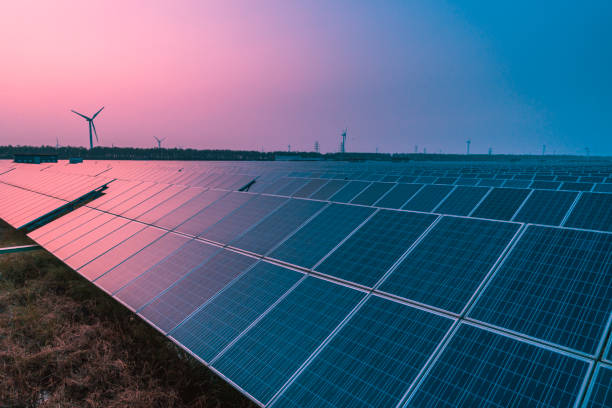
First Solar, a solar module manufacturer based in the United States, announced plans to invest $684 million in India to build a new vertically integrated photovoltaic (PV) thin-film solar module manufacturing facility.

First Solar plans to build a new manufacturing facility with a 3.3 GW capacity in Tamil Nadu, pending permitting and approval of Indian government incentives that are satisfactory to the company. In the second half of 2023, the facility is expected to be operational.

The company would become India's largest solar module manufacturer with this 3.3 GW capacity module manufacturing facility. This announcement may prompt Chinese module manufacturers to reconsider their strategies and consider investing in module production in India.

First Solar expects its module manufacturing capacity to double to 16 GWdc in 2024 as a result of its expansion in India and the United States.

The facility will be built with advanced manufacturing technology similar to the one used at the company's recently announced facility in Ohio, according to the company. Artificial intelligence, internet of things connectivity, and machine-to-machine communication will be used to provide the facility with a high level of automation, precision, and continuous improvement.

First Solar has supplied a total of 1.94 GW of solar modules to projects in India, according to Mercom's India Solar Market Leaderboard 2021. After North America, India is the company's second-largest market.

First Solar's net sales in the first quarter of 2021 totalled $803.4 million, up to $194 million from the previous quarter. In a year-over-year comparison, net sales increased by 51%. The company then stated that by the end of 2021 and 2022, it aims to reach a nameplate module manufacturing capacity of 8.7 GWdc and 9.4 GWdc, respectively.

The media had previously reported that IDFC Alternatives' India Infrastructure Fund II (IIF II) had entered into definitive agreements with First Solar Power India and its affiliates to acquire seven operating solar projects with a total capacity of 190 MW across the Indian states of Andhra Pradesh and Telangana through its wholly-owned subsidiary Vector Green Energy.

Image Source


Also read: Rajasthan Electronics invites bids for solar PV projects in Jaipur

Also read: IREDA floats tender for solar manufacturing modules under PLI scheme

First Solar, a solar module manufacturer based in the United States, announced plans to invest $684 million in India to build a new vertically integrated photovoltaic (PV) thin-film solar module manufacturing facility. First Solar plans to build a new manufacturing facility with a 3.3 GW capacity in Tamil Nadu, pending permitting and approval of Indian government incentives that are satisfactory to the company. In the second half of 2023, the facility is expected to be operational. The company would become India's largest solar module manufacturer with this 3.3 GW capacity module manufacturing facility. This announcement may prompt Chinese module manufacturers to reconsider their strategies and consider investing in module production in India. First Solar expects its module manufacturing capacity to double to 16 GWdc in 2024 as a result of its expansion in India and the United States. The facility will be built with advanced manufacturing technology similar to the one used at the company's recently announced facility in Ohio, according to the company. Artificial intelligence, internet of things connectivity, and machine-to-machine communication will be used to provide the facility with a high level of automation, precision, and continuous improvement. First Solar has supplied a total of 1.94 GW of solar modules to projects in India, according to Mercom's India Solar Market Leaderboard 2021. After North America, India is the company's second-largest market. First Solar's net sales in the first quarter of 2021 totalled $803.4 million, up to $194 million from the previous quarter. In a year-over-year comparison, net sales increased by 51%. The company then stated that by the end of 2021 and 2022, it aims to reach a nameplate module manufacturing capacity of 8.7 GWdc and 9.4 GWdc, respectively. The media had previously reported that IDFC Alternatives' India Infrastructure Fund II (IIF II) had entered into definitive agreements with First Solar Power India and its affiliates to acquire seven operating solar projects with a total capacity of 190 MW across the Indian states of Andhra Pradesh and Telangana through its wholly-owned subsidiary Vector Green Energy. Image Source Also read: Rajasthan Electronics invites bids for solar PV projects in Jaipur Also read: IREDA floats tender for solar manufacturing modules under PLI scheme

Next Story
Real Estate

AI: The New Recruit

From getting ideas to evaluating designs, presenting concepts to clients and tracking projects, artificial intelligence (AI) is helping architects work better and faster.“AI allows architects to spend more time doing what only they can do: think critically, synthesise complexity and design with intent,” says Dikshu C Kukreja, Managing Principal, CP Kukreja Architects. “Every minute reclaimed from repetitive processes can be invested in creativity, contextual understanding, interdisciplinary collaboration and innovation – the qualities that define meaningful architecture.”To read the ..

Next Story
Real Estate

Redevelopment 2.0

In 2017, Mumbai identified 160,000 ageing buildings due for structural audit. Close to half of these were in the Western Suburbs. Redeveloping the oldest and structurally weakest of these would help unlock new housing, much needed given the city’s growing population density and constant developed area of 437.7 sq km. At 30,600 people per sq km in 2024, Mumbai’s density was almost thrice that of Gurugram, and 60 per cent higher than Bengaluru’s.Essentially, Mumbai’s realty market has demand. It has capital. It has realty development potential.Fast forward to 2026. Mumbai has 1,094 regis..

Next Story
Technology

Cost intelligence will become a strategic contributor to project success

As India's construction industry accelerates its digital transformation, integrated platforms, AI and connected data are becoming essential to improving cost certainty, project efficiency and sustainability. Ravi Kumar, Sales Director – India, RIB Software India, shares how digital workflows are reshaping project planning, commercial management and decision-making across the construction value chain.India's construction sector is embracing digital technologies at an unprecedented pace. From your perspective, what are the biggest shifts driving this transformation and how is RIB Software enab..

Advertisement

Subscribe to Our Newsletter

Get daily newsletters around different themes from Construction world.

STAY CONNECTED

Advertisement

Advertisement

Advertisement