Four firms qualify to avail PLI benefits for ACC battery storage
POWER & RENEWABLE ENERGY

Four firms qualify to avail PLI benefits for ACC battery storage

A total of 4 companies are selected, including Reliance New Energy Solar Limited, Ola Electric Mobility Private Limited, Hyundai Global Motors Company Limited, and Rajesh Exports Limited, for an incentive under production linked incentive (PLI) scheme for advanced chemistry cell (ACC) battery storage.

Union Cabinet Minister for Heavy Industries Dr Mahendra Nath Pandey told the media that today, the growth in demand for EVs due to a favourable regulatory framework, has mostly attracted investment in this sector. Today giant firms are investing in electric vehicle manufacturing in India and are curious to join us. Growth in the EV segment of the auto industry will allow us to achieve India's commitment to Panchtantra given by PM Narendra Modi in COP 26 and will deliver employment opportunities to Indian youth.

The Central Government has permitted the production linked incentive (PLI) Scheme 'National Programme on advanced chemistry cell (ACC) battery storage’ for attaining production capacity of 50 gigawatt hour (GWh) of ACC for boosting India’s manufacturing capabilities with a budgetary outlay of Rs 18,100 crore.

Under the initiative, the Government aims to attain greater domestic value addition, while at the same time guaranteeing that the levelized cost of battery production in India is globally competitive. The program is designed in such a manner that it is technology agnostic.

The beneficiary company shall be free to select suitably advanced technology and the corresponding plant and machinery, raw material and other intermediate goods for establishing a cell production facility to provide to any application.

The programme envisions an investment that will increase domestic manufacturing and additionally boost battery storage demand creation for both electric vehicles and stationary storage along with the development of a complete domestic supply chain & foreign direct investment (FDI) in the nation.

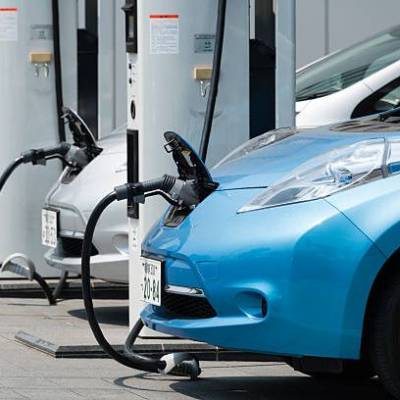
ACC PLI scheme is likely to expedite EV adoption and thus translate into net savings of Rs 2,00,000 crore to Rs 2,50,000 crore on account of oil import bill during the period of this Programme and improve the share of renewable energy at the national grid level.

This PLI scheme for Advanced Chemistry Cell (ACC) ( Rs 18,100 crore) along with the already rolled out PLI Scheme for the automotive sector (Rs 25,938 crore) and Faster Adoption of Manufacturing of Electric Vehicles (FAME) (Rs 10,000 crore) will allow India to leapfrog from traditional fossil fuel-based automobile transportation system to environmentally cleaner, sustainable, advanced and more efficient Electric Vehicles (EV) based system.

Image Source

Also read: Govt to increase fund allocation for solar PLI scheme to Rs 240 bn

A total of 4 companies are selected, including Reliance New Energy Solar Limited, Ola Electric Mobility Private Limited, Hyundai Global Motors Company Limited, and Rajesh Exports Limited, for an incentive under production linked incentive (PLI) scheme for advanced chemistry cell (ACC) battery storage. Union Cabinet Minister for Heavy Industries Dr Mahendra Nath Pandey told the media that today, the growth in demand for EVs due to a favourable regulatory framework, has mostly attracted investment in this sector. Today giant firms are investing in electric vehicle manufacturing in India and are curious to join us. Growth in the EV segment of the auto industry will allow us to achieve India's commitment to Panchtantra given by PM Narendra Modi in COP 26 and will deliver employment opportunities to Indian youth. The Central Government has permitted the production linked incentive (PLI) Scheme 'National Programme on advanced chemistry cell (ACC) battery storage’ for attaining production capacity of 50 gigawatt hour (GWh) of ACC for boosting India’s manufacturing capabilities with a budgetary outlay of Rs 18,100 crore. Under the initiative, the Government aims to attain greater domestic value addition, while at the same time guaranteeing that the levelized cost of battery production in India is globally competitive. The program is designed in such a manner that it is technology agnostic. The beneficiary company shall be free to select suitably advanced technology and the corresponding plant and machinery, raw material and other intermediate goods for establishing a cell production facility to provide to any application. The programme envisions an investment that will increase domestic manufacturing and additionally boost battery storage demand creation for both electric vehicles and stationary storage along with the development of a complete domestic supply chain & foreign direct investment (FDI) in the nation. ACC PLI scheme is likely to expedite EV adoption and thus translate into net savings of Rs 2,00,000 crore to Rs 2,50,000 crore on account of oil import bill during the period of this Programme and improve the share of renewable energy at the national grid level. This PLI scheme for Advanced Chemistry Cell (ACC) ( Rs 18,100 crore) along with the already rolled out PLI Scheme for the automotive sector (Rs 25,938 crore) and Faster Adoption of Manufacturing of Electric Vehicles (FAME) (Rs 10,000 crore) will allow India to leapfrog from traditional fossil fuel-based automobile transportation system to environmentally cleaner, sustainable, advanced and more efficient Electric Vehicles (EV) based system. Image Source Also read: Govt to increase fund allocation for solar PLI scheme to Rs 240 bn

Next Story
Infrastructure Urban

ABB to Invest Rs 6.25 Billion to Expand India Manufacturing

ABB recently announced plans to invest approximately Rs 6.25 billion ($75 million) in India during 2026 to expand its manufacturing footprint and research and development capabilities. The investment follows more than $35 million spent in 2025 and reflects the company’s continued focus on strengthening its ‘local-for-local’ strategy in the country.The investment will support ABB’s Electrification, Motion and Automation businesses and expand manufacturing capacity for infrastructure sectors such as renewable energy, metro rail, data centres and industrial applications. Approximately 300..

Next Story
Equipment

Six WOLFF Cranes Handle 60,000 m³ Concrete for German Hospital

Six WOLFF tower cranes are playing a key role in constructing a new hospital complex in Memmingen, Germany, supporting large-scale material handling for the project. The facility is being built on a 7.7-hectare site and will feature six floors, around 480 beds and a gross floor area exceeding 75,000 sq m.Building shell works began recently in February 2025. One WOLFF 6531.12 Cross crane supported early site preparation before being dismantled in autumn 2025, while five remaining cranes continue operations. Over an average deployment period of 16 months, the cranes are expected to move approxim..

Next Story
Equipment

REC Funds Rs 115.6 Million CSR Support for Bihar Eye Hospital

REC recently committed Rs 115.6 million under its Corporate Social Responsibility (CSR) programme for the procurement of clinical and non-clinical equipment at Sankara Eye Hospital in Saharsa, Bihar. The initiative aims to strengthen healthcare infrastructure and improve access to specialised eye care services in the region.A Memorandum of Agreement (MoA) was recently signed between Pradeep Fellows, Executive Director (CSR), REC Limited, and Wg Cdr V. Shankar (Retd), Trustee and Executive Director of Sankara Eye Hospital, at the REC office in the SCOPE Complex, New Delhi.The support is expecte..

Advertisement

Subscribe to Our Newsletter

Get daily newsletters around different themes from Construction world.

STAY CONNECTED

Advertisement

Advertisement

Advertisement