Karnataka government approves relaxation of Solar Policy
POWER & RENEWABLE ENERGY

Karnataka government approves relaxation of Solar Policy

The Karnataka government has recently approved the amendment of the Solar Policy 2014-21. This move will enable the setting up of small solar parks that can generate as much as 25 mw. 

While the earlier policy mandated that solar parks should generate a minimum of 100 mw, which would require at least 500 acre of land, the revised policy for 25 mw would require only about 100-125 acre. This move will encourage more participation for solar power generation. Further, it has also been mandated to complete solar power grid installation within 18 months from the date of approval. This will help government monitoring and controlling. Moreover, private companies that generate solar power could also explore selling it to private parties or the Government.

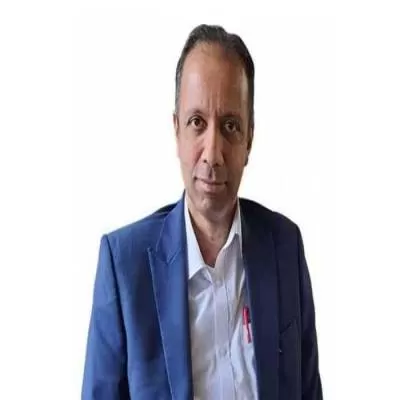
“We welcome the Karnataka government’s recent amendments to the Solar Policy 2014-21,” says Sunil Rathi, Director, Waaree Energies. “With the Centre’s new and ambitious target of achieving 260 gw of renewable energy capacity by 2024, the aim of setting up solar parks in a decentralised manner comes as an attractive opportunity for potential investors to take up more projects in the state. As Karnataka is a lucrative state for solar adoption with a potential of generating 24,700 mw, this is a move in the right direction. We have always believed that domestic solar players require the support of the Government to ensure a level playing field. Such steps will enable us to tap into the true potential of the Indian solar manufacturing segment.”

The Karnataka government has recently approved the amendment of the Solar Policy 2014-21. This move will enable the setting up of small solar parks that can generate as much as 25 mw. While the earlier policy mandated that solar parks should generate a minimum of 100 mw, which would require at least 500 acre of land, the revised policy for 25 mw would require only about 100-125 acre. This move will encourage more participation for solar power generation. Further, it has also been mandated to complete solar power grid installation within 18 months from the date of approval. This will help government monitoring and controlling. Moreover, private companies that generate solar power could also explore selling it to private parties or the Government.“We welcome the Karnataka government’s recent amendments to the Solar Policy 2014-21,” says Sunil Rathi, Director, Waaree Energies. “With the Centre’s new and ambitious target of achieving 260 gw of renewable energy capacity by 2024, the aim of setting up solar parks in a decentralised manner comes as an attractive opportunity for potential investors to take up more projects in the state. As Karnataka is a lucrative state for solar adoption with a potential of generating 24,700 mw, this is a move in the right direction. We have always believed that domestic solar players require the support of the Government to ensure a level playing field. Such steps will enable us to tap into the true potential of the Indian solar manufacturing segment.”

Next Story
Infrastructure Urban

Implementation Status of Jal Jeevan Mission

Since August 2019 the Government has implemented Jal Jeevan Mission to provide assured potable water through household tap connections in rural India. At the start of the mission only 32.3 million (mn) rural households, representing 16.7 per cent, were reported to have tap water connections. States and union territories have reported that 125.8 mn additional rural households have since been provided with tap connections. As a result, of about 193.6 mn rural households roughly 158.2 mn, or 81.71 per cent, are reported to have tap water supply at home.\n\nThe State, district and village level st..

Next Story
Infrastructure Urban

Jal Jeevan Mission Reaches Eighty One Per Cent Rural Coverage

The Government reported substantial progress under the Jal Jeevan Mission, launched in August 2019 to provide tap water to every rural household. At launch only 32.3 million (mn) rural households had tap connections and states and Union territories reported provision of 125.8 mn additional households by March 2026. Consequently, out of about 193.6 mn rural households around 158.2 mn, or 81.71 per cent, are reported to have tap water at home. The Finance Minister announced extension of the mission until 2028 in the 2025-26 budget speech. The Swachh Bharat Mission Grameen, launched in October 20..

Next Story
Infrastructure Urban

Empowering Local Governance for Sustainable Rural Water Supply

The Ministry of Jal Shakti has aligned the Jal Jeevan Mission (JJM) with the 73rd Amendment to strengthen village level planning and community ownership of water supply. Gram Panchayats, village water and sanitation committees and Pani Samitis are to plan, implement, manage and maintain piped water systems, with gram sabha processes formalising handover and oversight. Implementation support agencies including non government organisations, community based organisations and self help groups have been empanelled to train local committees and promote women participation. Under JJM, the department ..

Advertisement

Subscribe to Our Newsletter

Get daily newsletters around different themes from Construction world.

STAY CONNECTED

Advertisement

Advertisement

Advertisement