ADB To Channel One Point Two Bn Dollars For India's Clean Transition
POWER & RENEWABLE ENERGY

ADB To Channel One Point Two Bn Dollars For India's Clean Transition

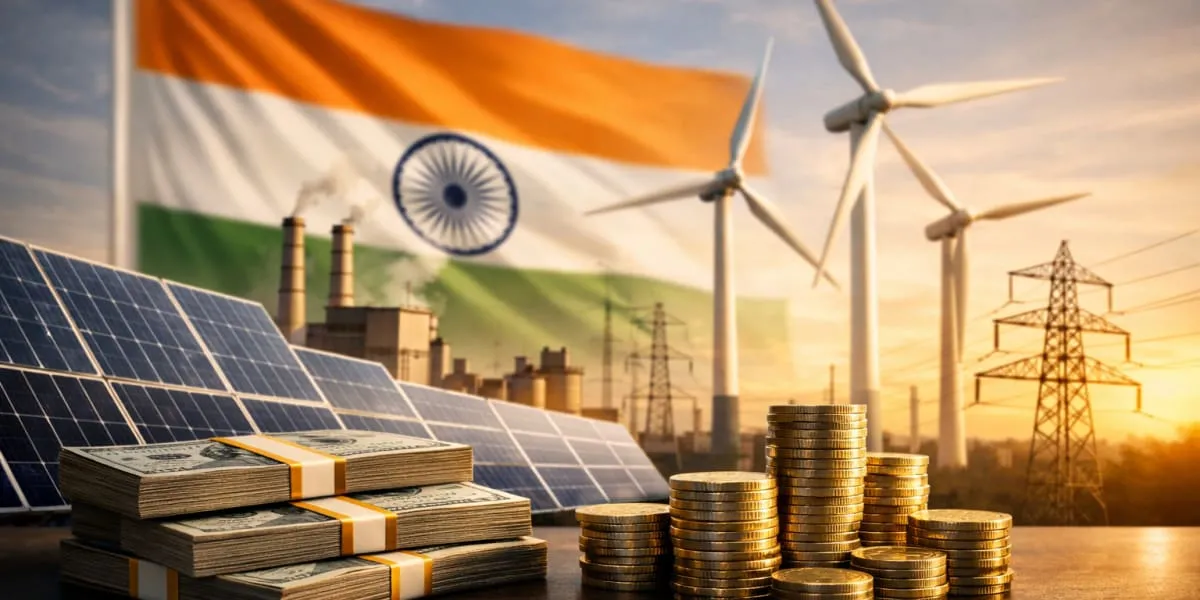
The Asian Development Bank (ADB) has signalled that it will channel one point two bn dollars into India's clean transition in 2026, aiming to accelerate investment in renewable energy and low carbon infrastructure. The funding is expected to support project development, policy reform and private sector mobilisation without specifying project names. Officials have framed the move as part of a broader effort to align finance with climate objectives and to shore up energy security. The plan reflects a focus on scaling up investment ahead of planned policy milestones.

ADB will work with national and subnational authorities as well as with financial institutions and industry to direct capital where it can leverage additional private finance. Emphasis will be placed on removing barriers to deployment of technologies and on strengthening regulatory frameworks to facilitate grid integration and storage. The support is intended to include technical assistance and capacity building to ensure projects are bankable and meet environmental standards. The bank sees such measures as central to attracting longer term institutional investors.

The initiative is also presented as a means to boost green jobs and to support communities affected by the shift away from fossil fuels. Measures to sustain livelihoods and to foster upskilling are described as complementary to infrastructure investment. Stakeholder engagement and social safeguards are to be prioritised to manage transition risks. ADB intends to monitor outcomes and to adjust support according to evolving needs.

Market participants and policymakers are expected to follow developments through 2026 as implementation details become clearer. The effort is likely to shape lending pipelines and to influence capital flows into renewable energy and resilience projects. Observers note that mobilising co finance remains essential to magnify the impact of the one point two bn dollars commitment. Continued collaboration between public and private actors is viewed as necessary to deliver the clean transition objectives.

The Asian Development Bank (ADB) has signalled that it will channel one point two bn dollars into India's clean transition in 2026, aiming to accelerate investment in renewable energy and low carbon infrastructure. The funding is expected to support project development, policy reform and private sector mobilisation without specifying project names. Officials have framed the move as part of a broader effort to align finance with climate objectives and to shore up energy security. The plan reflects a focus on scaling up investment ahead of planned policy milestones. ADB will work with national and subnational authorities as well as with financial institutions and industry to direct capital where it can leverage additional private finance. Emphasis will be placed on removing barriers to deployment of technologies and on strengthening regulatory frameworks to facilitate grid integration and storage. The support is intended to include technical assistance and capacity building to ensure projects are bankable and meet environmental standards. The bank sees such measures as central to attracting longer term institutional investors. The initiative is also presented as a means to boost green jobs and to support communities affected by the shift away from fossil fuels. Measures to sustain livelihoods and to foster upskilling are described as complementary to infrastructure investment. Stakeholder engagement and social safeguards are to be prioritised to manage transition risks. ADB intends to monitor outcomes and to adjust support according to evolving needs. Market participants and policymakers are expected to follow developments through 2026 as implementation details become clearer. The effort is likely to shape lending pipelines and to influence capital flows into renewable energy and resilience projects. Observers note that mobilising co finance remains essential to magnify the impact of the one point two bn dollars commitment. Continued collaboration between public and private actors is viewed as necessary to deliver the clean transition objectives.

Next Story
Infrastructure Transport

Chembur Metro to Boost East Mumbai Links

MMRDA is advancing eastern Mumbai’s urban mobility network, with the upcoming Chembur Metro Station set to emerge as a key interchange and the Mumbai Monorail preparing for relaunch.Dr Sanjay Mukherjee, Metropolitan Commissioner, MMRDA, conducted a site visit to Chembur Metro Station along with Kanhuraj Bagate, Managing Director, MMMOCL. He also visited the nearby VN Purav Monorail Station to review system preparedness and ease of interconnectivity.Once operational, the interchange is expected to offer commuters across the eastern suburbs quicker access, smoother transfers and seamless conne..

Next Story
Equipment

Herrenknecht TBMs Drive Thane–Borivali Tunnel Progress

Herrenknecht India has supplied two of the four tunnel boring machines (TBMs) required for the 11-km Thane–Borivali Twin Tunnel Project being developed by the Mumbai Metropolitan Region Development Authority (MMRDA). The project is expected to reduce travel time between Thane and Borivali from 60–90 minutes to around 15 minutes while easing congestion across the Mumbai Metropolitan Region.The first two Single Shield TBMs, named Nayak and Arjuna, feature 13.34-m cutterhead diameters and are designed for hard-rock excavation. They will be deployed to tunnel through the challenging geological..

Next Story
Resources

KBL Launches Smart Skid Mounted Fire Pump Set

Kirloskar Brothers (KBL) has launched its Smart Skid Mounted Fire Pump Set, an integrated fire protection solution designed to improve operational efficiency, remote monitoring and installation flexibility. The system was inaugurated by Ms Madhuritai Misal, Hon. Minister of State for Urban Development, Government of Maharashtra.The Smart Skid Mounted Fire Pump Set is a factory-tested, pre-packaged solution that combines FM/UL-certified motor and engine pump sets with IoT-enabled remote monitoring. Designed to deliver a flow rate of 170 m³/hr at a head of 100 metres, the system aims to provide..

Advertisement

Subscribe to Our Newsletter

Get daily newsletters around different themes from Construction world.

STAY CONNECTED

Advertisement

Advertisement

Advertisement

-->