APEPDCL Installs 31,000 Rooftop Solar Units Under PM Surya Ghar
POWER & RENEWABLE ENERGY

APEPDCL Installs 31,000 Rooftop Solar Units Under PM Surya Ghar

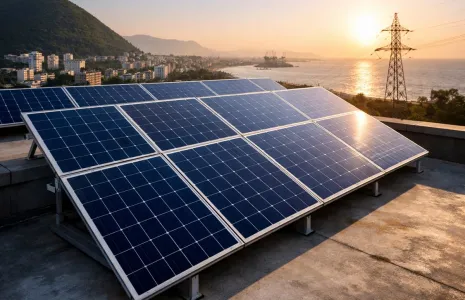
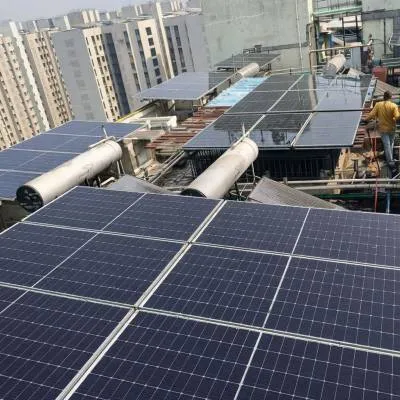
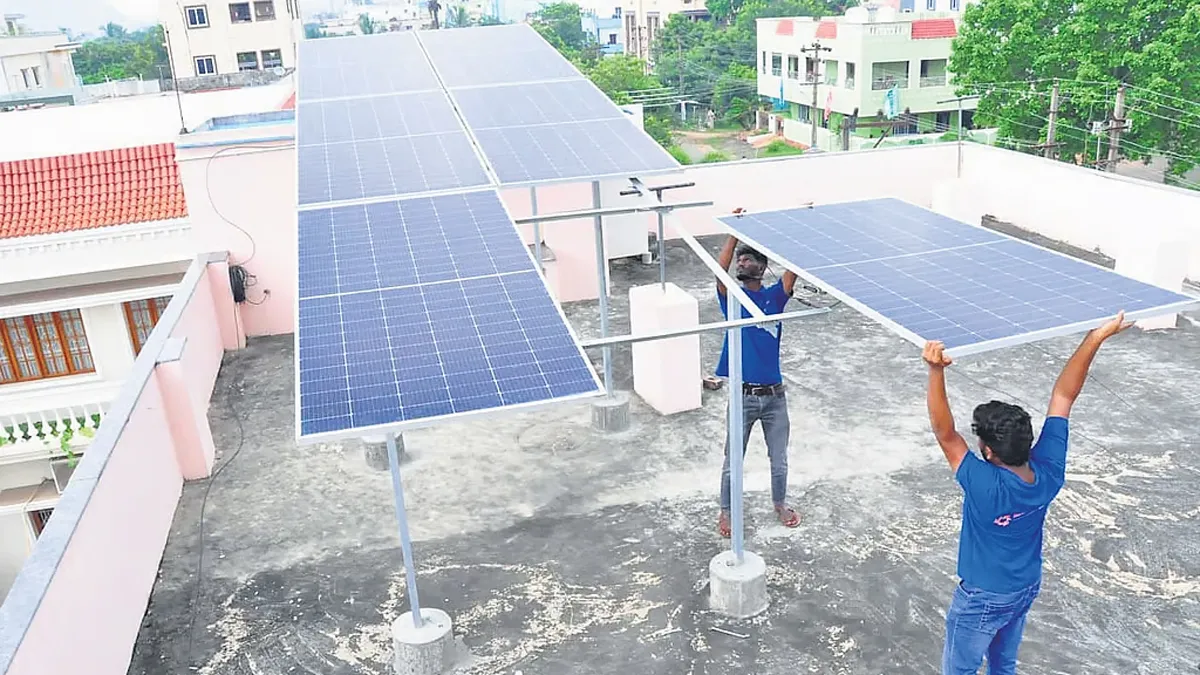
The Andhra Pradesh Eastern Power Distribution Company Ltd (APEPDCL) has installed nearly 31,000 rooftop solar plants with a total capacity of 100 MW across its jurisdiction. Chairperson and Managing Director Prudhvi Tej Immadi said the installations were completed under the PM Surya Ghar scheme, with 31,022 units amounting to 100,026 kW already connected to the grid.

According to APEPDCL data, Eluru district leads with 4,134 installations totalling 13,491 kW. Kakinada follows with 3,960 systems (12,923 kW), while Visakhapatnam has 3,715 installations generating 13,131 kW. East Godavari recorded 3,532 systems (11,516 kW), West Godavari 3,382 installations (10,945 kW), Srikakulam 3,366 systems (10,326 kW) and Vizianagaram 3,279 installations (10,242 kW).

Anakapalle district has 2,841 systems totalling 8,712 kW, and Konaseema has 1,934 installations generating 6,091 kW. Parvathipuram–Manyam recorded 864 installations (260 kW), while ASR district logged 15 systems producing 48 kW.

The CMD said the scheme is gaining traction because it allows households to meet their electricity needs for up to 20 years with a one-time investment. Any surplus power can be exported to the grid, enabling additional income. Awareness programmes are being held to help consumers benefit from the scheme.

He added that 100 sq ft of rooftop space is required for a 1 kW solar plant. Subsidies include Rs30,000 for 1 kW, Rs60,000 for 2 kW and up to Rs78,000 for 3 kW. A 3 kW plant can generate 360–450 units a month, allowing households to consume what they need and sell excess power to APEPDCL.

To support consumers living in apartments, APEPDCL is enabling Virtual Net Metering, allowing residents to install solar units on an independent house they own anywhere within the 11 districts and transfer generated units to offset apartment bills. Apartment common services may also install rooftop systems based on contracted load and are eligible for subsidies of Rs18,000 per kW for capacities up to 500 kW.

Banks are offering low-interest EMI-based loans for installations. Applications can be submitted through the PM Surya Ghar portal, with consumers free to choose from empanelled vendors. There is no application fee, and users with smart meters do not require a separate net meter.

The Andhra Pradesh Eastern Power Distribution Company Ltd (APEPDCL) has installed nearly 31,000 rooftop solar plants with a total capacity of 100 MW across its jurisdiction. Chairperson and Managing Director Prudhvi Tej Immadi said the installations were completed under the PM Surya Ghar scheme, with 31,022 units amounting to 100,026 kW already connected to the grid. According to APEPDCL data, Eluru district leads with 4,134 installations totalling 13,491 kW. Kakinada follows with 3,960 systems (12,923 kW), while Visakhapatnam has 3,715 installations generating 13,131 kW. East Godavari recorded 3,532 systems (11,516 kW), West Godavari 3,382 installations (10,945 kW), Srikakulam 3,366 systems (10,326 kW) and Vizianagaram 3,279 installations (10,242 kW). Anakapalle district has 2,841 systems totalling 8,712 kW, and Konaseema has 1,934 installations generating 6,091 kW. Parvathipuram–Manyam recorded 864 installations (260 kW), while ASR district logged 15 systems producing 48 kW. The CMD said the scheme is gaining traction because it allows households to meet their electricity needs for up to 20 years with a one-time investment. Any surplus power can be exported to the grid, enabling additional income. Awareness programmes are being held to help consumers benefit from the scheme. He added that 100 sq ft of rooftop space is required for a 1 kW solar plant. Subsidies include Rs30,000 for 1 kW, Rs60,000 for 2 kW and up to Rs78,000 for 3 kW. A 3 kW plant can generate 360–450 units a month, allowing households to consume what they need and sell excess power to APEPDCL. To support consumers living in apartments, APEPDCL is enabling Virtual Net Metering, allowing residents to install solar units on an independent house they own anywhere within the 11 districts and transfer generated units to offset apartment bills. Apartment common services may also install rooftop systems based on contracted load and are eligible for subsidies of Rs18,000 per kW for capacities up to 500 kW. Banks are offering low-interest EMI-based loans for installations. Applications can be submitted through the PM Surya Ghar portal, with consumers free to choose from empanelled vendors. There is no application fee, and users with smart meters do not require a separate net meter.

Next Story
Real Estate

RBI Rate Cut Boosts Confidence Across Housing Market

Industry Context and Market DynamicsThe real estate industry has welcomed the RBI’s rate cut as a timely boost to affordability and demand. With home prices having risen steadily across major markets, even a marginal reduction in interest rates meaningfully strengthens purchasing power, especially for first-time and mid-income buyers.Ashish Jerath, President – Sales & Marketing, Smartworld Developers, observes:“The RBI’s 25-basis-point cut, bringing the repo rate down to 5.25%, is a timely boost for the real estate sector. Lower interest rates reduce borrowing costs, enabling homeb..

Next Story
Infrastructure Transport

BMC Resumes Rs 170 Billion Road Works, Targets 80 per cent By Jan 2026

Following the withdrawal of the southwest monsoon in October, the Brihanmumbai Municipal Corporation (BMC) has restarted work on 645 roads—covering 297.49 kilometres—under its large-scale concretisation programme. Data shows that more than 60 per cent of the resumed works are located in the western suburbs. Officials said the civic body aims to complete concretisation on 80 per cent of the roads where fresh work has begun by January 2026. Launched in 2022, the Rs 170 billion project seeks to concretise 700 kilometres of roads across Mumbai. All civil works were halted during the monsoon ..

Next Story
Infrastructure Urban

India Pushes Digital Shift In Urban Land Mapping

The Department of Land Resources (DoLR) under the Ministry of Rural Development has convened a National Symposium on NAKSHA – the National Geospatial Knowledge-based Land Survey of Urban Habitations – to advance India’s transition to modern, technology-driven land mapping. Speaking at the inaugural session, Secretary Manoj Joshi underscored the urgent need to move revenue departments away from outdated, tape-based methods and rough hand-drawn sketches. He stressed that adopting latitude–longitude-based digital mapping and GIS-linked registration systems is essential for economic stabi..

Advertisement

Subscribe to Our Newsletter

Get daily newsletters around different themes from Construction world.

STAY CONNECTED

Advertisement

Advertisement

Advertisement

Advertisement

Open In App