+
Karnataka To Spend Over Rs1 Trillion Upgrading Bengaluru
ECONOMY & POLICY

Karnataka To Spend Over Rs1 Trillion Upgrading Bengaluru

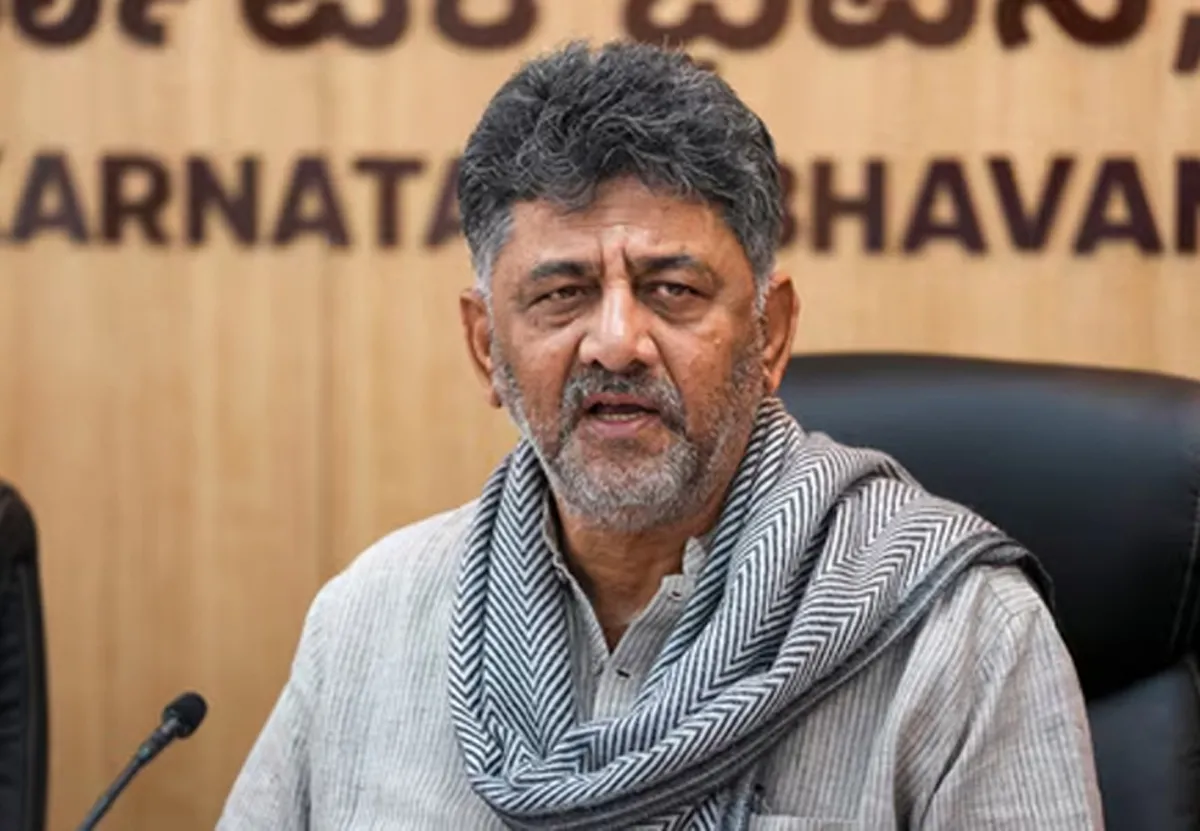
Pitching Bengaluru as an “ever-evolving engine of transformation”, Karnataka Deputy Chief Minister D. K. Shivakumar on Tuesday said the State government is enhancing city infrastructure with investments exceeding Rs1 trillion. Shivakumar, who also oversees Bengaluru Development, was speaking at the inaugural session of the 28th Bengaluru Tech Summit 2025, billed as Asia’s largest technology event and organised by the Department of Electronics, IT & Bt and the Software Technology Parks of India.

He said technology, innovation and investment thrive when foundational infrastructure is strong, and for this reason the government is accelerating development at an unprecedented pace. Highlighting key initiatives, he outlined several mega projects: a 40-km twin tunnel costing Rs425 billion, a 41-km double-decker Metro worth Rs180 billion, a 110-km elevated corridor estimated at Rs150 billion, 320 km of buffer roads costing Rs50 billion, the Rs5 billion SkyDeck, and the 74-km Bangalore Business Corridor valued at Rs270 billion.

“We are spending over Rs1 trillion on Bengaluru city to improve infrastructure,” he said.

Shivakumar also announced that a second airport is being planned for Bengaluru, and that the State will set up a dedicated Secretariat for NRIs to support and coordinate with the global diaspora. Plans include residential layouts for NRIs, and a world-class AI City near Bidadi spread across 9,000 acres. An international complex to house global business establishments is also in the pipeline.

Emphasising that technology and talent are Bengaluru’s “twin pillars”, he said the city’s strength lies not only in its infrastructure or policy incentives but in its people. He urged industry leaders to support rural education through CSR, noting that enabling policies are being framed.

“Together, let us build a future where technology, creativity, and enterprise create opportunities not just for our State or our country, but for the entire world. I assure you Karnataka will extend all possible support for mutual growth,” he added.

Pitching Bengaluru as an “ever-evolving engine of transformation”, Karnataka Deputy Chief Minister D. K. Shivakumar on Tuesday said the State government is enhancing city infrastructure with investments exceeding Rs1 trillion. Shivakumar, who also oversees Bengaluru Development, was speaking at the inaugural session of the 28th Bengaluru Tech Summit 2025, billed as Asia’s largest technology event and organised by the Department of Electronics, IT & Bt and the Software Technology Parks of India. He said technology, innovation and investment thrive when foundational infrastructure is strong, and for this reason the government is accelerating development at an unprecedented pace. Highlighting key initiatives, he outlined several mega projects: a 40-km twin tunnel costing Rs425 billion, a 41-km double-decker Metro worth Rs180 billion, a 110-km elevated corridor estimated at Rs150 billion, 320 km of buffer roads costing Rs50 billion, the Rs5 billion SkyDeck, and the 74-km Bangalore Business Corridor valued at Rs270 billion. “We are spending over Rs1 trillion on Bengaluru city to improve infrastructure,” he said. Shivakumar also announced that a second airport is being planned for Bengaluru, and that the State will set up a dedicated Secretariat for NRIs to support and coordinate with the global diaspora. Plans include residential layouts for NRIs, and a world-class AI City near Bidadi spread across 9,000 acres. An international complex to house global business establishments is also in the pipeline. Emphasising that technology and talent are Bengaluru’s “twin pillars”, he said the city’s strength lies not only in its infrastructure or policy incentives but in its people. He urged industry leaders to support rural education through CSR, noting that enabling policies are being framed. “Together, let us build a future where technology, creativity, and enterprise create opportunities not just for our State or our country, but for the entire world. I assure you Karnataka will extend all possible support for mutual growth,” he added.

Next Story
Infrastructure Transport

MMRDA Installs 325-Tonne Steel Spans on Mumbai Metro Line 4

The Mumbai Metropolitan Region Development Authority (MMRDA) has achieved a key construction milestone on Metro Line 4 with the successful installation of three large steel spans at Bhandup West during overnight operations.The spans, together weighing 325 metric tonnes, were launched using eight heavy-duty cranes and 12 multi-axle vehicles. The operation required precise engineering and meticulous planning to minimise disruption in the densely populated suburban area.Due to effective inter-agency coordination, the work—originally scheduled across four nights—was completed within just two n..

Next Story
Infrastructure Transport

CMRL Targets March 2027 Opening for Vadapalani–Panagal Park

Chennai Metro Rail Limited (CMRL) is progressing as scheduled to open the Vadapalani–Panagal Park section of Phase II’s Corridor 4 by March 2027. The 3.5 km underground stretch is part of the 26.1 km Corridor 4 connecting Lighthouse with Poonamallee Bypass.Construction activities are advancing steadily, with tunnelling works between Vadapalani and Panagal Park already completed. Track-laying operations are expected to commence shortly. At Panagal Park station, structural works have reached the concourse and platform levels, while excavation continues at the lowest level.CMRL is also consid..

Next Story
Infrastructure Transport

Maha-Metro Invites Pune Metro Civil Maintenance Bids

Maharashtra Metro Rail Corporation Limited (Maha-Metro) has invited bids for the annual civil maintenance contract of the Pune Metro Rail Project. The tender, bearing ID and number P1-O&M-20/2025, is scheduled to close on 23 February 2026, with a pre-bid meeting slated for 10 February 2026. The earnest money deposit (EMD) for the contract is Rs 3,50,500, and the duration of the contract is one year.The scope of work includes annual civil maintenance of 28 elevated and underground stations, 28.079 km of elevated viaduct including steel bridges, 12.15 km of tunnels, and two depots under the ..

Advertisement

Subscribe to Our Newsletter

Get daily newsletters around different themes from Construction world.

STAY CONNECTED

Advertisement

Advertisement

Advertisement

Open In App