Cabinet Approves Rs 25,840 Million Small Hydro Scheme
POWER & RENEWABLE ENERGY

Cabinet Approves Rs 25,840 Million Small Hydro Scheme

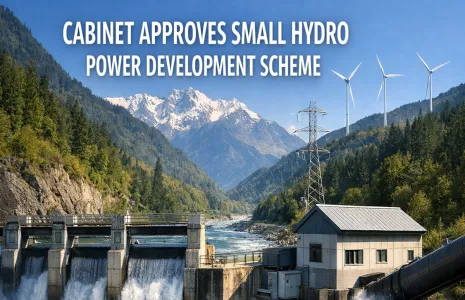
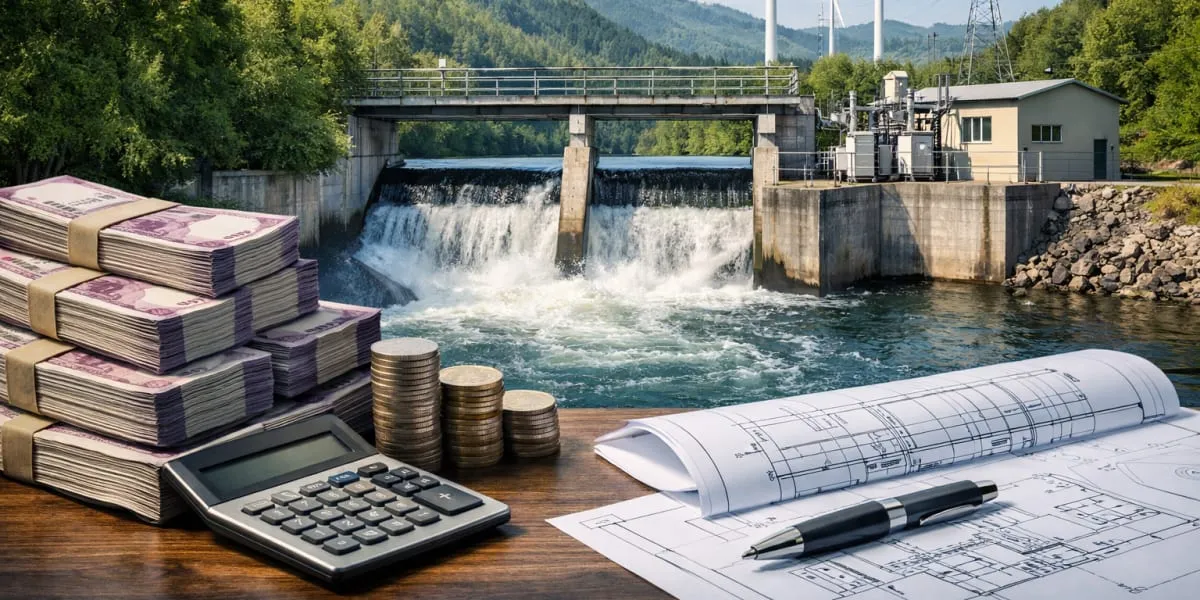
The Union Cabinet has approved a small hydro power scheme with central funding of Rs 25,840 million (mn) aimed at augmenting clean energy capacity. The allocation of 25,840 million (mn) reflects the central effort to mobilise resources for distributed renewable generation. The scheme is designed to add 1,500 megawatt (MW) of capacity to the power mix and to expand generation from small riverine and canal based installations. The funding was presented as part of the government's renewable energy policy framework.

The programme will prioritise projects that are ready for early commissioning and that can leverage existing transmission infrastructure to reduce lead times. Officials indicated the move is expected to stimulate investment in the small hydro sector and to complement larger renewable initiatives without replacing them. The plan emphasises private sector participation alongside state agencies to accelerate project implementation. Authorities highlighted the importance of streamlined clearances to meet deployment targets.

Policy makers framed the initiative as part of a broader push towards cleaner and more decentralised power systems to serve local and remote communities. The scheme is intended to bolster energy security and to provide seasonally reliable generation where wind and solar resources are variable. Support measures will include financial and technical assistance to improve project readiness and bankability. Technical standards and environmental safeguards will guide site selection and construction practices.

Stakeholders were reported to welcome the clarity on incentives and the predictable framework for project approvals, which is expected to reduce uncertainty for developers. The government will monitor outcomes and adjust eligibility and incentive structures as deployment proceeds to ensure value for public funds. The approval is likely to catalyse equipment manufacturing, local employment and ancillary services in regions hosting the projects. Analysts said attention will be paid to cost competitiveness and long term operation and maintenance arrangements.

The Union Cabinet has approved a small hydro power scheme with central funding of Rs 25,840 million (mn) aimed at augmenting clean energy capacity. The allocation of 25,840 million (mn) reflects the central effort to mobilise resources for distributed renewable generation. The scheme is designed to add 1,500 megawatt (MW) of capacity to the power mix and to expand generation from small riverine and canal based installations. The funding was presented as part of the government's renewable energy policy framework. The programme will prioritise projects that are ready for early commissioning and that can leverage existing transmission infrastructure to reduce lead times. Officials indicated the move is expected to stimulate investment in the small hydro sector and to complement larger renewable initiatives without replacing them. The plan emphasises private sector participation alongside state agencies to accelerate project implementation. Authorities highlighted the importance of streamlined clearances to meet deployment targets. Policy makers framed the initiative as part of a broader push towards cleaner and more decentralised power systems to serve local and remote communities. The scheme is intended to bolster energy security and to provide seasonally reliable generation where wind and solar resources are variable. Support measures will include financial and technical assistance to improve project readiness and bankability. Technical standards and environmental safeguards will guide site selection and construction practices. Stakeholders were reported to welcome the clarity on incentives and the predictable framework for project approvals, which is expected to reduce uncertainty for developers. The government will monitor outcomes and adjust eligibility and incentive structures as deployment proceeds to ensure value for public funds. The approval is likely to catalyse equipment manufacturing, local employment and ancillary services in regions hosting the projects. Analysts said attention will be paid to cost competitiveness and long term operation and maintenance arrangements.

Next Story
Infrastructure Urban

Mineral Auction Rules Amended To Speed Mine Operationalisation

The Ministry of Mines notified the Mineral (Auction) Second Amendment Rules, 2026 on 30 March 2026 to accelerate operationalisation of mines and improve ease of doing business in the mining sector. The amendment follows a prior change to the Mineral (Auction) Rules, 2015 effected on 17 October 2025 that introduced intermediary timelines between issuance of a letter of intent (LoI) and execution of the mining lease. The 2025 change provided that one per cent of performance security would be appropriated for each month of delay by the preferred bidder and introduced incentives for early operatio..

Next Story
Infrastructure Transport

Indian Railways Strengthens Telecom And AI Safety Systems

Indian Railways strengthened its telecom and digital infrastructure during 2025-26 with the aim of improving safety, operational efficiency and the passenger experience. The programme promoted modernisation through advanced technologies, robust communication systems and passenger-centric solutions. These measures were presented as part of a drive to build a digitally integrated rail ecosystem. A key development was the enhancement of the Internet Protocol Multi-Protocol Label Switching (IP MPLS) backbone, commissioned at 1,396 stations to meet bandwidth needs of mission-critical applications. ..

Next Story
Infrastructure Transport

NHAI Holds Workshop on Litigation Management and Coordination

The National Highways Authority of India (NHAI) organised a day-long workshop in New Delhi to strengthen capacity and interdepartmental synergy for faster execution of national highway projects. The event was held under Mission Karmayogi – Sadhana Saptah, an initiative of the Government of India to enhance governance through capacity building and improved processes. The workshop focused on structured and solution oriented deliberations to address implementation constraints. The session was chaired by the NHAI chairman Santosh Kumar Yadav and brought together senior officials from NHAI, the M..

Advertisement

Subscribe to Our Newsletter

Get daily newsletters around different themes from Construction world.

STAY CONNECTED

Advertisement

Advertisement

Advertisement