+
Cabinet clears Rs 207.73 bn for Ladakh power transmission
POWER & RENEWABLE ENERGY

Cabinet clears Rs 207.73 bn for Ladakh power transmission

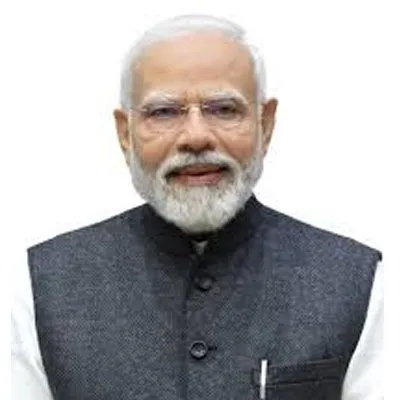
The Union Cabinet had approved a budget of Rs 207.73 billion for establishing a transmission line aimed at evacuating power from a 13 GW renewable energy project in Ladakh. The initiative was initially unveiled by Prime Minister Narendra Modi in his Independence Day address, where he outlined plans for a 7.5 GW Solar Park in Ladakh.

Following an extensive field survey, the Ministry of New and Renewable Energy (MNRE) devised a comprehensive plan for constructing a 13 GW Renewable Energy (RE) generation capacity in addition to a 12 GWh Battery Energy Storage System (BESS) in Pang, Ladakh. According to an official release, the vast amount of power generated necessitates the establishment of an inter-state transmission infrastructure.

The Cabinet Committee on Economic Affairs (CCEA) subsequently sanctioned the Green Energy Corridor (GEC) Phase-II project, which involves the Inter-State Transmission System (ISTS) for the 13 GW Renewable Energy Project in Ladakh. The transmission line designed for this purpose will traverse through Himachal Pradesh and Punjab, terminating in Kaithal, Haryana, where it will be seamlessly integrated into the National Grid.

It was outlined that the project is scheduled to be operational by the financial year 2029-30, with an estimated cost of Rs 207.73 billion. Additionally, the central government will extend 40% financial assistance, amounting to Rs 83.09 billion, to facilitate the endeavour.

The Union Cabinet had approved a budget of Rs 207.73 billion for establishing a transmission line aimed at evacuating power from a 13 GW renewable energy project in Ladakh. The initiative was initially unveiled by Prime Minister Narendra Modi in his Independence Day address, where he outlined plans for a 7.5 GW Solar Park in Ladakh. Following an extensive field survey, the Ministry of New and Renewable Energy (MNRE) devised a comprehensive plan for constructing a 13 GW Renewable Energy (RE) generation capacity in addition to a 12 GWh Battery Energy Storage System (BESS) in Pang, Ladakh. According to an official release, the vast amount of power generated necessitates the establishment of an inter-state transmission infrastructure. The Cabinet Committee on Economic Affairs (CCEA) subsequently sanctioned the Green Energy Corridor (GEC) Phase-II project, which involves the Inter-State Transmission System (ISTS) for the 13 GW Renewable Energy Project in Ladakh. The transmission line designed for this purpose will traverse through Himachal Pradesh and Punjab, terminating in Kaithal, Haryana, where it will be seamlessly integrated into the National Grid. It was outlined that the project is scheduled to be operational by the financial year 2029-30, with an estimated cost of Rs 207.73 billion. Additionally, the central government will extend 40% financial assistance, amounting to Rs 83.09 billion, to facilitate the endeavour.

Related Stories

Gold Stories

Next Story
Infrastructure Urban

Infrastructure Opportunity Outlook by IMPACCT.Info

India’s infrastructure pipeline is witnessing dynamic activity across stages — from immediate bidding to future planning. IMPACCT segments these into three categories: Immediate, 3–6 Month, and Future Opportunities, enabling businesses to identify, prepare, and participate in high-value tenders and projects across sectors.To read full article Click Here ..

Next Story
Real Estate

Glass, Reframed!

Glass façades, quintessential aesthetic building envelopes globally, have been widely adopted in India as well. But when the focus is high-performance building systems that deliver energy efficiency, comfort and architectural identity, glass isn’t the only preference. Combination solutions, involving glass and some other material, improve façade outcomes. Some combinations come at comparable prices, some at a higher price. Here is a selection of performance-oriented solutions...To read the full story Click Here ..

Next Story
Infrastructure Urban

Beyond Building Faster

India’s cities are expanding at an unprecedented pace, bringing new infrastructure and development opportunities while also intensifying challenges around mobility, public spaces, liveability and supporting infrastructure. The question, therefore, is not simply whether India can build faster, but whether it can build cities that work better.At a CW webinar, Are We Designing Better Cities – or Just Building Faster?, moderator Ar. Samir Shaikh, Founding Principal, AR&UD Studio, brought together perspectives from design, development, master planning and technology...To read the full artic..

Advertisement

Subscribe to Our Newsletter

Get daily newsletters around different themes from Construction world.

STAY CONNECTED

Advertisement

SPECIAL OFFER
QR Code