GERC Notifies Grid Interactive BESS Regulations 2026
POWER & RENEWABLE ENERGY

GERC Notifies Grid Interactive BESS Regulations 2026

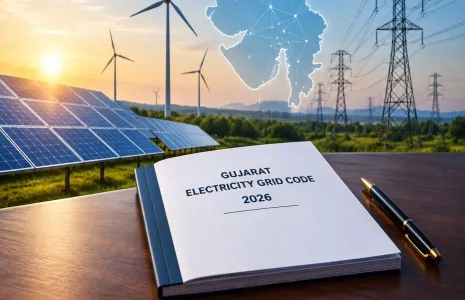
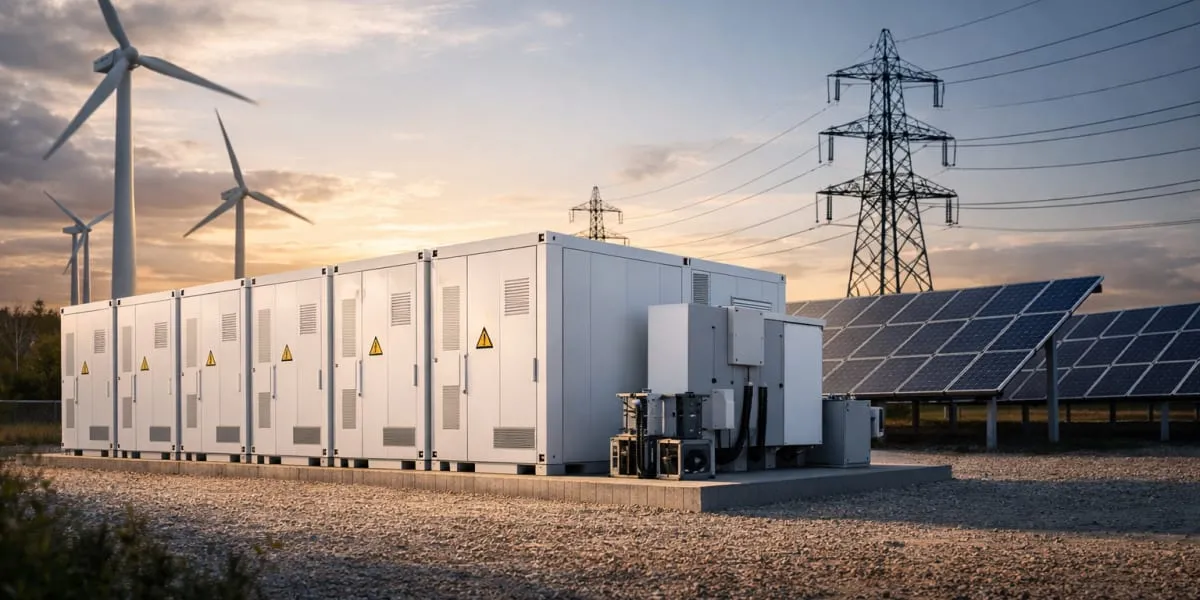
The Gujarat Electricity Regulatory Commission (GERC) has notified the Grid Interactive Battery Energy Storage System regulations, 2026 to provide a framework for integrating battery energy storage into the state electricity network. The regulations aim to improve grid reliability, support renewable energy integration and help Gujarat meet its Energy Storage Obligation targets. The Commission sets out definitions, deployment models and procedural requirements for developers, utilities and consumers.

A Battery Energy Storage System (BESS) is defined as an electrochemical device that draws electricity from the grid or generators, stores it as chemical energy and supplies it back to the network when required. The regulations recognise deployment models such as co located with power plants, standalone grid connected facilities and storage embedded within transmission and distribution infrastructure. Consumers and prosumers may install battery systems under net metering and virtual net metering arrangements.

Technical requirements are prescribed for utility scale projects. Systems connected at 11 kV and above must have a minimum project size of one megawatt (MW) with at least two hours of storage, while smaller installations at distribution transformer level or those by individual consumers are exempt. Ownership is open to generating companies, transmission and distribution licensees and independent storage service providers, with procurement primarily through competitive bidding and tariffs discovered as availability based fixed charges.

All projects must register with the Gujarat Energy Development Agency (GEDA), and co located storage integrated with new renewable plants may be covered by the primary registration. The State Load Despatch Centre (SLDC) will schedule and dispatch grid connected BESS, with charging treated as drawal and discharging as injection, and standalone projects may undertake energy arbitrage, ancillary services and peak management. Developers must follow Central Electricity Authority technical standards, comply with cybersecurity and environmental protocols including the Battery Waste Management Rules, 2022, and consumer billing disputes will be handled by the Consumer Grievance Redressal Forum while other disputes will fall under the Commission.

The Gujarat Electricity Regulatory Commission (GERC) has notified the Grid Interactive Battery Energy Storage System regulations, 2026 to provide a framework for integrating battery energy storage into the state electricity network. The regulations aim to improve grid reliability, support renewable energy integration and help Gujarat meet its Energy Storage Obligation targets. The Commission sets out definitions, deployment models and procedural requirements for developers, utilities and consumers. A Battery Energy Storage System (BESS) is defined as an electrochemical device that draws electricity from the grid or generators, stores it as chemical energy and supplies it back to the network when required. The regulations recognise deployment models such as co located with power plants, standalone grid connected facilities and storage embedded within transmission and distribution infrastructure. Consumers and prosumers may install battery systems under net metering and virtual net metering arrangements. Technical requirements are prescribed for utility scale projects. Systems connected at 11 kV and above must have a minimum project size of one megawatt (MW) with at least two hours of storage, while smaller installations at distribution transformer level or those by individual consumers are exempt. Ownership is open to generating companies, transmission and distribution licensees and independent storage service providers, with procurement primarily through competitive bidding and tariffs discovered as availability based fixed charges. All projects must register with the Gujarat Energy Development Agency (GEDA), and co located storage integrated with new renewable plants may be covered by the primary registration. The State Load Despatch Centre (SLDC) will schedule and dispatch grid connected BESS, with charging treated as drawal and discharging as injection, and standalone projects may undertake energy arbitrage, ancillary services and peak management. Developers must follow Central Electricity Authority technical standards, comply with cybersecurity and environmental protocols including the Battery Waste Management Rules, 2022, and consumer billing disputes will be handled by the Consumer Grievance Redressal Forum while other disputes will fall under the Commission.

Next Story
Infrastructure Transport

RAHSTA Awards 2026 Opens for India’s Leading Road Developers

RAHSTA (Roads and Highways Sustainable Technologies & Advancement), Asia’s leading road infrastructure platform, has officially opened nominations for the RAHSTA Awards 2026 under the Road Developers category. The awards will honour companies and organisations that are shaping India’s highway infrastructure landscape through innovation, sustainability, quality execution and efficient asset management.Scheduled alongside RAHSTA 2026 on July 8–9, 2026 at the Jio World Convention Centre, Mumbai, the awards have emerged as one of the most respected recognitions for the roads and highways..

Next Story
Infrastructure Transport

Railways To Sell 10 per cent In PSUs To Raise Rs Two Point Six Two tn

The railway ministry has outlined a plan to sell up to 10 per cent stakes in several public sector undertakings as part of a broader asset monetisation drive. The move is designed to unlock value and generate funds for capital expenditure and network modernisation. The programme targets private participation through offer for sale and minority stake divestments across operating and finance entities. The initiative follows previous asset recycling efforts and seeks to capture market interest for strategic holdings. The target for the exercise is Rs two point six two trillion (tn) to be realised..

Next Story
Infrastructure Transport

Cabinet Clears Railway Multitracking Projects Worth Rs 234.37 Billion

The Union Cabinet approved three multitracking railway projects worth Rs 234.37 billion (Rs 234.37 bn) to improve connectivity and ease congestion. The Cabinet Committee on Economic Affairs chaired by the Prime Minister authorised schemes that will expand the Indian Railways network by nearly 901 km across 19 districts. Officials said the projects form part of the PM Gati Shakti National Master Plan for integrated planning. The approved projects include the Nagda-Mathura third and fourth line, Guntakal-Wadi third and fourth line and Burhwal-Sitapur third and fourth line, serving routes in Madh..

Advertisement

Subscribe to Our Newsletter

Get daily newsletters around different themes from Construction world.

STAY CONNECTED

Advertisement

Advertisement

Advertisement

-->