Tata Power Launches Ladakh's First Rooftop Solar Project
POWER & RENEWABLE ENERGY

Tata Power Launches Ladakh's First Rooftop Solar Project

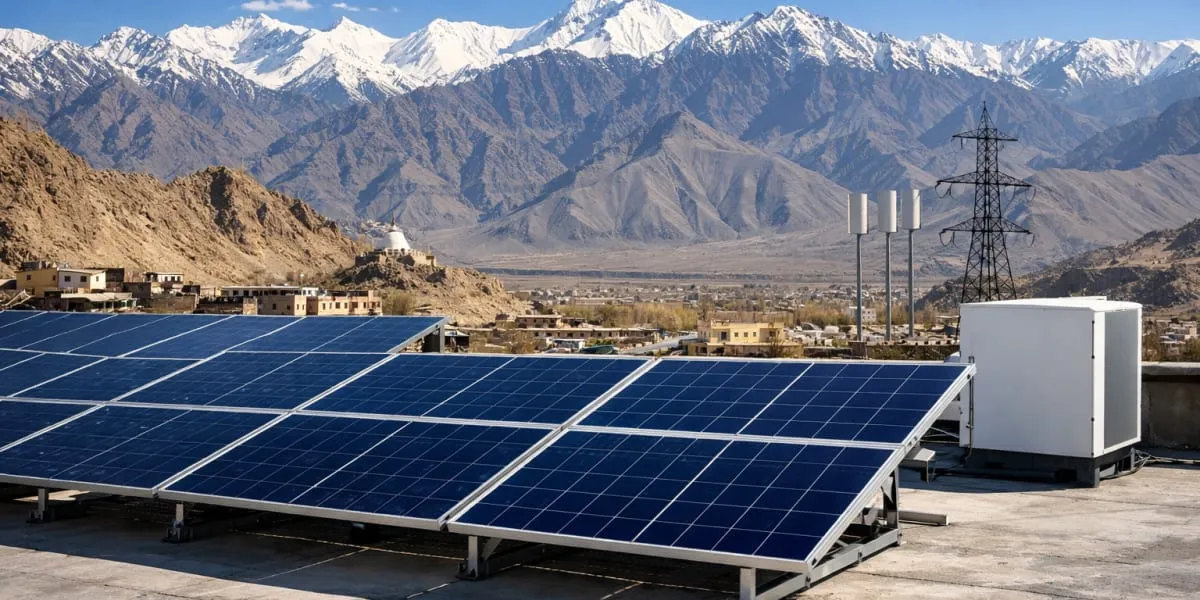
Tata Power has launched Ladakh's first rooftop solar project to promote sustainable tourism and accelerate clean energy adoption in the high altitude union territory. The project aims to reduce dependence on conventional power sources and support environmentally responsible infrastructure development in an ecologically sensitive region. The company characterised the work as part of its strategy to deploy decentralised energy solutions where grid supply is constrained. The move follows growing demand for low carbon infrastructure from public and private stakeholders.

The rooftop installation will supply clean electricity to tourism related facilities and is designed to lower carbon emissions and operating energy costs for local operators. Ladakh faces unique energy challenges because of its remote geography, sparse population and harsh climatic conditions, which complicate conventional power delivery. The region benefits from high solar radiation and clear weather for much of the year, making solar technologies particularly suitable.

The initiative complements Tata Power's wider renewable portfolio, which includes rooftop solar, utility scale renewable projects and distributed clean energy services across India. The latest project reflects a growing emphasis on decentralised energy systems tailored to remote and high altitude locations where logistical barriers raise the cost of conventional supply. Developers are increasingly integrating local generation with tourism infrastructure to enhance resilience and reduce reliance on fossil fuels.

Policy momentum at the national level and targets for renewable capacity expansion have positioned remote regions such as Ladakh as strategic sites for solar deployment. Observers noted that combining renewable energy with tourism planning could improve sustainability standards while helping to preserve fragile ecosystems over the long term. The project is expected to act as a reference model for similar interventions in other environmentally sensitive destinations.

Tata Power has launched Ladakh's first rooftop solar project to promote sustainable tourism and accelerate clean energy adoption in the high altitude union territory. The project aims to reduce dependence on conventional power sources and support environmentally responsible infrastructure development in an ecologically sensitive region. The company characterised the work as part of its strategy to deploy decentralised energy solutions where grid supply is constrained. The move follows growing demand for low carbon infrastructure from public and private stakeholders. The rooftop installation will supply clean electricity to tourism related facilities and is designed to lower carbon emissions and operating energy costs for local operators. Ladakh faces unique energy challenges because of its remote geography, sparse population and harsh climatic conditions, which complicate conventional power delivery. The region benefits from high solar radiation and clear weather for much of the year, making solar technologies particularly suitable. The initiative complements Tata Power's wider renewable portfolio, which includes rooftop solar, utility scale renewable projects and distributed clean energy services across India. The latest project reflects a growing emphasis on decentralised energy systems tailored to remote and high altitude locations where logistical barriers raise the cost of conventional supply. Developers are increasingly integrating local generation with tourism infrastructure to enhance resilience and reduce reliance on fossil fuels. Policy momentum at the national level and targets for renewable capacity expansion have positioned remote regions such as Ladakh as strategic sites for solar deployment. Observers noted that combining renewable energy with tourism planning could improve sustainability standards while helping to preserve fragile ecosystems over the long term. The project is expected to act as a reference model for similar interventions in other environmentally sensitive destinations.

Next Story
Infrastructure Transport

RAHSTA Awards 2026 Opens for India’s Leading Road Developers

RAHSTA (Roads and Highways Sustainable Technologies & Advancement), Asia’s leading road infrastructure platform, has officially opened nominations for the RAHSTA Awards 2026 under the Road Developers category. The awards will honour companies and organisations that are shaping India’s highway infrastructure landscape through innovation, sustainability, quality execution and efficient asset management.Scheduled alongside RAHSTA 2026 on July 8–9, 2026 at the Jio World Convention Centre, Mumbai, the awards have emerged as one of the most respected recognitions for the roads and highways..

Next Story
Infrastructure Transport

Railways To Sell 10 per cent In PSUs To Raise Rs Two Point Six Two tn

The railway ministry has outlined a plan to sell up to 10 per cent stakes in several public sector undertakings as part of a broader asset monetisation drive. The move is designed to unlock value and generate funds for capital expenditure and network modernisation. The programme targets private participation through offer for sale and minority stake divestments across operating and finance entities. The initiative follows previous asset recycling efforts and seeks to capture market interest for strategic holdings. The target for the exercise is Rs two point six two trillion (tn) to be realised..

Next Story
Infrastructure Transport

Cabinet Clears Railway Multitracking Projects Worth Rs 234.37 Billion

The Union Cabinet approved three multitracking railway projects worth Rs 234.37 billion (Rs 234.37 bn) to improve connectivity and ease congestion. The Cabinet Committee on Economic Affairs chaired by the Prime Minister authorised schemes that will expand the Indian Railways network by nearly 901 km across 19 districts. Officials said the projects form part of the PM Gati Shakti National Master Plan for integrated planning. The approved projects include the Nagda-Mathura third and fourth line, Guntakal-Wadi third and fourth line and Burhwal-Sitapur third and fourth line, serving routes in Madh..

Advertisement

Subscribe to Our Newsletter

Get daily newsletters around different themes from Construction world.

STAY CONNECTED

Advertisement

Advertisement

Advertisement

-->