Green Hydrogen Push Could Backfire Without Supply Chain Overhaul
POWER & RENEWABLE ENERGY

Green Hydrogen Push Could Backfire Without Supply Chain Overhaul

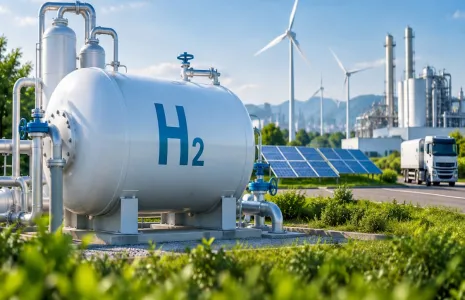
A new study led by researchers at the University of Sheffield warns that a global push toward green hydrogen could fail to deliver its intended climate benefits unless major changes are made to the way hydrogen is produced and transported. Published in Nature Communications Sustainability, the research finds that the environmental impact of hydrogen varies significantly depending on the energy sources used across the supply chain. The study emphasises that green hydrogen will not be inherently low carbon without cleaner power systems underlying production.

The authors assessed 20 potential hydrogen production and transport scenarios across 14 countries between 2023 and 2050, including major hydrogen economies such as the United States, the United Kingdom, Germany, Japan and China. The analysis evaluated five hydrogen production pathways, including electrolysis and biomass-based processes, and examined how energy sources and transport systems affect environmental outcomes. It found that hydrogen produced through electrolysis currently has some of the highest global warming impacts because much of the electricity used in the process still comes from carbon-intensive grids.

At present, around 96 per cent of global hydrogen production remains connected to fossil fuel-powered energy systems, raising doubts about whether large scale hydrogen deployment will automatically reduce emissions. The study projects that hydrogen could become significantly cleaner if electricity systems are rapidly decarbonised, with some supply chains capable of reducing environmental impacts by more than 90 per cent by 2050 if renewable electricity becomes dominant. The researchers also identify a potential role for international supply chains in improving sustainability.

One scenario highlighted involves hydrogen produced in the United Kingdom using proton exchange membrane electrolysis and transported to the United States, which could achieve substantially lower environmental impacts provided both countries transition to cleaner power systems. The study concludes that policy makers and industry must coordinate rapid power sector decarbonisation and careful design of production and transport networks to realise the climate benefits of hydrogen. Without a comprehensive supply chain overhaul the green hydrogen push risks delivering limited emissions reductions.

A new study led by researchers at the University of Sheffield warns that a global push toward green hydrogen could fail to deliver its intended climate benefits unless major changes are made to the way hydrogen is produced and transported. Published in Nature Communications Sustainability, the research finds that the environmental impact of hydrogen varies significantly depending on the energy sources used across the supply chain. The study emphasises that green hydrogen will not be inherently low carbon without cleaner power systems underlying production. The authors assessed 20 potential hydrogen production and transport scenarios across 14 countries between 2023 and 2050, including major hydrogen economies such as the United States, the United Kingdom, Germany, Japan and China. The analysis evaluated five hydrogen production pathways, including electrolysis and biomass-based processes, and examined how energy sources and transport systems affect environmental outcomes. It found that hydrogen produced through electrolysis currently has some of the highest global warming impacts because much of the electricity used in the process still comes from carbon-intensive grids. At present, around 96 per cent of global hydrogen production remains connected to fossil fuel-powered energy systems, raising doubts about whether large scale hydrogen deployment will automatically reduce emissions. The study projects that hydrogen could become significantly cleaner if electricity systems are rapidly decarbonised, with some supply chains capable of reducing environmental impacts by more than 90 per cent by 2050 if renewable electricity becomes dominant. The researchers also identify a potential role for international supply chains in improving sustainability. One scenario highlighted involves hydrogen produced in the United Kingdom using proton exchange membrane electrolysis and transported to the United States, which could achieve substantially lower environmental impacts provided both countries transition to cleaner power systems. The study concludes that policy makers and industry must coordinate rapid power sector decarbonisation and careful design of production and transport networks to realise the climate benefits of hydrogen. Without a comprehensive supply chain overhaul the green hydrogen push risks delivering limited emissions reductions.

Next Story
Real Estate

Housing Sales Dip 7 per cent QoQ Across Top Cities

India’s housing market saw a 7 per cent quarter-on-quarter decline in sales across the top seven cities in Q1 2026, with approximately 1,01,675 units sold compared to 1,08,970 units in Q4 2025, according to ANAROCK Group. However, on a yearly basis, sales rose 9 per cent, indicating continued underlying demand.The total sales value stood at around Rs 1.51 trillion, reflecting a 5 per cent quarterly drop but a 6 per cent annual increase. Mumbai Metropolitan Region and Bengaluru together accounted for nearly 48 per cent of total sales, while Chennai recorded the highest quarterly decline at 18..

Next Story
Real Estate

Birla Estates Enters Mumbai Redevelopment

Birla Estates has announced its entry into Mumbai’s redevelopment segment with a luxury residential project in Khar West, developed in partnership with Parinee Real Estate Builders. The project will redevelop Anmol Co-operative Housing Society and Bhartiya Bhavan Co-operative Housing Society, marking the company’s first redevelopment initiative in the Mumbai Metropolitan Region.Spread across 1.3 acres, the development will offer a saleable area of 2.9 lakh sq ft with an estimated revenue potential of Rs 17 billion. Positioned in one of Mumbai’s prime residential micro-markets, the projec..

Next Story
Infrastructure Urban

Hitachi, MUFG Expand EV Financing Model

Hitachi and MUFG Bank have expanded their NextGen business co-creation model to accelerate decarbonised mobility by financing electric vehicles and charging infrastructure. The renewed collaboration aims to address key barriers to electrification, including limited access to capital and the need for integrated energy solutions.Building on earlier partnerships, the expanded model extends beyond battery-focused solutions to include electric mobility assets, charging systems and energy management infrastructure across global markets. The initiative will leverage structured financing through speci..

Advertisement

Subscribe to Our Newsletter

Get daily newsletters around different themes from Construction world.

STAY CONNECTED

Advertisement

Advertisement

Advertisement