Hindustan Power Secures LoI for Platinum Minerals in Madhya Pradesh
POWER & RENEWABLE ENERGY

Hindustan Power Secures LoI for Platinum Minerals in Madhya Pradesh

Hindustan Power announced that a group firm has been awarded a Letter of Intent for exploration of the Padhar Platinum Group Elements (PGE) block in Madhya Pradesh, marking the group's entry into India's critical minerals sector. The company said the award followed a forward e-auction conducted by the Union Ministry of Mines in which the firm was declared the preferred bidder. The development was described as a strategic step to build domestic capacity for minerals needed in advanced industrial and energy applications.

The Padhar block spans approximately 200 square km and has been identified as a prospective zone for platinum group elements and associated zinc deposits. Platinum group elements include platinum, palladium and rhodium, which the company highlighted as important for technologies such as hydrogen fuel cells, emission control systems and electrolyzers used in green hydrogen production. Zinc was noted as useful for galvanization, battery technologies and corrosion protection for renewable energy infrastructure.

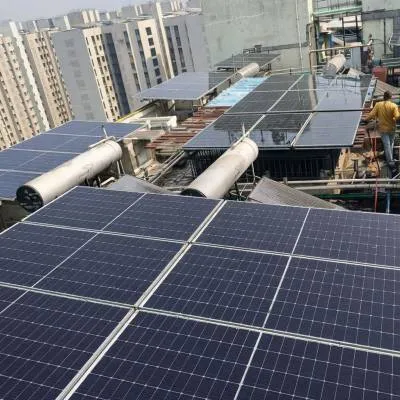
Hindustan Power said the exploration complements its ongoing resource and clean energy initiatives. The group is developing two high-grade coal mines in Chhattisgarh and Jharkhand to strengthen its conventional mining presence while accelerating a clean energy portfolio through solar and storage projects. The firm cited a recent 435 Megawatt-peak (MWp) solar project in Uttar Pradesh and multiple grid-scale solar and battery storage developments secured in 2025 as evidence of this transition.

The company indicated that the move into critical minerals aims to support supply chain security and India’s broader priorities for self-reliant manufacturing and energy leadership. Hindustan Power framed the exploration as a disciplined and responsible approach to resource development that will support both conventional power stability and rapid growth of clean energy systems. The group said it will pursue the exploration with attention to environmental and regulatory best practice while seeking to build a reliable domestic resource base.

Hindustan Power announced that a group firm has been awarded a Letter of Intent for exploration of the Padhar Platinum Group Elements (PGE) block in Madhya Pradesh, marking the group's entry into India's critical minerals sector. The company said the award followed a forward e-auction conducted by the Union Ministry of Mines in which the firm was declared the preferred bidder. The development was described as a strategic step to build domestic capacity for minerals needed in advanced industrial and energy applications. The Padhar block spans approximately 200 square km and has been identified as a prospective zone for platinum group elements and associated zinc deposits. Platinum group elements include platinum, palladium and rhodium, which the company highlighted as important for technologies such as hydrogen fuel cells, emission control systems and electrolyzers used in green hydrogen production. Zinc was noted as useful for galvanization, battery technologies and corrosion protection for renewable energy infrastructure. Hindustan Power said the exploration complements its ongoing resource and clean energy initiatives. The group is developing two high-grade coal mines in Chhattisgarh and Jharkhand to strengthen its conventional mining presence while accelerating a clean energy portfolio through solar and storage projects. The firm cited a recent 435 Megawatt-peak (MWp) solar project in Uttar Pradesh and multiple grid-scale solar and battery storage developments secured in 2025 as evidence of this transition. The company indicated that the move into critical minerals aims to support supply chain security and India’s broader priorities for self-reliant manufacturing and energy leadership. Hindustan Power framed the exploration as a disciplined and responsible approach to resource development that will support both conventional power stability and rapid growth of clean energy systems. The group said it will pursue the exploration with attention to environmental and regulatory best practice while seeking to build a reliable domestic resource base.

Next Story
Infrastructure Transport

Pune To Build Nine Km Link Road Between Highways

The Pune Municipal Corporation (PMC) has decided to appoint an expert to plan the development of a nine km long, 60 metre wide road from Khadi Machine chowk to Wadki chowk as an extension to the Katraj-Kondhwa road to link the Mumbai-Satara and Pune-Solapur national highways. The scheme is intended to divert heavy vehicle traffic away from the city and improve access between the two arterial routes. The project has been prioritised by the PMC and forms part of a larger set of schemes in which 19 roads have been identified for development at a combined cost of Rs 9.82 billion (bn) to address c..

Next Story
Infrastructure Transport

Barabanki Bahraich Six Lane Highway Approved in Uttar Pradesh

The Uttar Pradesh government has approved construction of a new six-lane highway linking Barabanki and Bahraich as part of National Highway 927, and the cabinet has cleared the project. The alignment will pass through Mustafabad and Kaiserganj and extend for about 101.5 km, creating a key corridor for local and long-distance movement. The National Highways Authority of India will oversee the work and has signalled the scheme is intended to strengthen regional connectivity and cross-border access to Nepal. The project carries an estimated total cost of Rs 69,690 million, equivalent to Rs 69.69..

Next Story
Infrastructure Transport

Toll At Kharegaon Likely As Highway Upgrade Nears Completion

A section of the highway at Kharegaon has undergone an upgrade and is approaching completion, and authorities have indicated plans for a toll to be introduced once works finish. The project has focused on strengthening the carriageway, improving drainage and upgrading intersections to enhance safety and capacity. Officials have said the toll will be used to recover construction costs and fund ongoing maintenance. The upgrade included resurfacing of the pavement, widening of certain stretches and installation of modern signage and lighting to reduce accident risk. Contractors completed most ma..

Advertisement

Subscribe to Our Newsletter

Get daily newsletters around different themes from Construction world.

STAY CONNECTED

Advertisement

Advertisement

Advertisement