IIM Bangalore SCMC Opens 9th Biennial Supply Chain Conference
POWER & RENEWABLE ENERGY

IIM Bangalore SCMC Opens 9th Biennial Supply Chain Conference

The Supply Chain Management Centre (SCMC) at the Indian Institute of Management Bangalore recently inaugurated Day One of the 9th Biennial Supply Chain Management Conference 2025, bringing together industry leaders, researchers, practitioners and policymakers to examine the rapidly evolving global supply chain landscape.

The conference opened with a traditional lamp-lighting ceremony led by senior representatives from SCMC, IIM Bangalore, industry partners and academia. The discussions centred on the conference theme, ‘Geopolitics, Sustainability, and Generative AI’, reflecting the growing complexity facing supply chains amid geopolitical disruptions, climate priorities and rapid technological change.

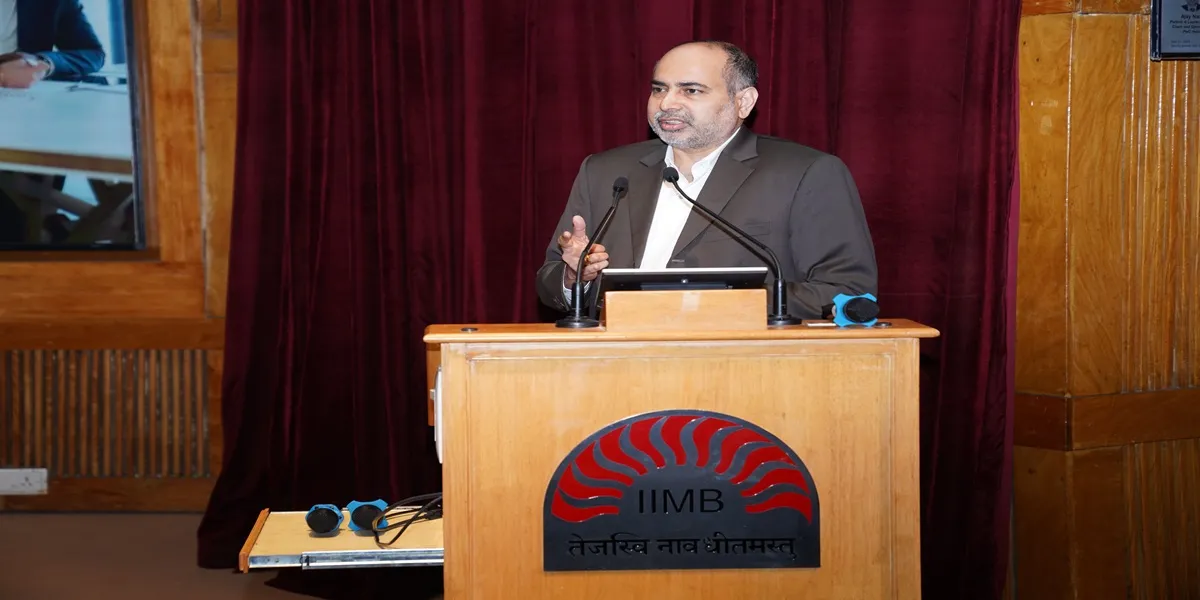
In his inaugural address, Prof Rajeev R Tripathi, Chairperson, SCMC, IIM Bangalore, highlighted the widening gap between Indian supply chain practices and those in advanced markets, underlining the urgent need for digital tools such as AI-enabled forecasting and data-driven decision-making. He stressed that the theme captured both the challenges and opportunities for modernising domestic supply chains.

Prof Dinesh Kumar, Director In-charge, IIM Bangalore, spoke on the rising volatility in global supply chains, illustrating how AI is increasingly being applied in predictive maintenance, demand estimation and performance management. He emphasised that supply chains must be designed to manage uncertainty rather than stability.

The keynote address was delivered by Ajay Nair, Partner and Leader for Supply Chain Transformation at PwC India, who traced the evolution of supply chains from operational backrooms to boardroom priorities. He outlined key forces reshaping the sector, including technological acceleration, ESG expectations, talent shortages and the need for resilience, and called for sustainability to be embedded as a strategic imperative rather than a compliance requirement.

The first panel discussion explored the future of work in supply chains through human and AI collaboration. Industry leaders from technology, logistics and data-driven enterprises shared insights on integrating AI into legacy systems, managing real-time risk, and translating digital visibility into operational outcomes. Speakers agreed that workforce upskilling and organisational adaptability will be critical to realising the full value of AI.

Further keynote insights highlighted how supply chain interventions can drive significant impact in public systems such as healthcare and food distribution, demonstrating the potential of operational innovations in resource-constrained environments.

The day concluded with three parallel breakout tracks focusing on digital transformation and AI adoption, sustainability-led supply chain redesign, and building resilience amid geopolitical uncertainty. Together, the sessions reinforced the conference’s role as a platform for bridging academic research and industry practice while shaping the future direction of supply chains in India and globally.

The Supply Chain Management Centre (SCMC) at the Indian Institute of Management Bangalore recently inaugurated Day One of the 9th Biennial Supply Chain Management Conference 2025, bringing together industry leaders, researchers, practitioners and policymakers to examine the rapidly evolving global supply chain landscape. The conference opened with a traditional lamp-lighting ceremony led by senior representatives from SCMC, IIM Bangalore, industry partners and academia. The discussions centred on the conference theme, ‘Geopolitics, Sustainability, and Generative AI’, reflecting the growing complexity facing supply chains amid geopolitical disruptions, climate priorities and rapid technological change. In his inaugural address, Prof Rajeev R Tripathi, Chairperson, SCMC, IIM Bangalore, highlighted the widening gap between Indian supply chain practices and those in advanced markets, underlining the urgent need for digital tools such as AI-enabled forecasting and data-driven decision-making. He stressed that the theme captured both the challenges and opportunities for modernising domestic supply chains. Prof Dinesh Kumar, Director In-charge, IIM Bangalore, spoke on the rising volatility in global supply chains, illustrating how AI is increasingly being applied in predictive maintenance, demand estimation and performance management. He emphasised that supply chains must be designed to manage uncertainty rather than stability. The keynote address was delivered by Ajay Nair, Partner and Leader for Supply Chain Transformation at PwC India, who traced the evolution of supply chains from operational backrooms to boardroom priorities. He outlined key forces reshaping the sector, including technological acceleration, ESG expectations, talent shortages and the need for resilience, and called for sustainability to be embedded as a strategic imperative rather than a compliance requirement. The first panel discussion explored the future of work in supply chains through human and AI collaboration. Industry leaders from technology, logistics and data-driven enterprises shared insights on integrating AI into legacy systems, managing real-time risk, and translating digital visibility into operational outcomes. Speakers agreed that workforce upskilling and organisational adaptability will be critical to realising the full value of AI. Further keynote insights highlighted how supply chain interventions can drive significant impact in public systems such as healthcare and food distribution, demonstrating the potential of operational innovations in resource-constrained environments. The day concluded with three parallel breakout tracks focusing on digital transformation and AI adoption, sustainability-led supply chain redesign, and building resilience amid geopolitical uncertainty. Together, the sessions reinforced the conference’s role as a platform for bridging academic research and industry practice while shaping the future direction of supply chains in India and globally.

Next Story
Infrastructure Urban

Powerplay Rolls Out Procurement-Linked Credit for Contractors

Powerplay has announced the launch of Powerplay Credit, a project-linked working capital solution aimed at easing cash flow pressures faced by contractors during active construction execution. The solution has gone live across key markets in South India, with a wider national rollout planned for 2026.The launch comes amid rising activity in India’s construction sector across infrastructure, housing, industrial corridors, renewable energy and urban redevelopment. Contractors executing large corporate and government projects often face extended payment cycles, stage-based billing and delayed r..

Next Story
Infrastructure Urban

Jyoti Structures Commissions Galvanisation at Second Nashik Unit

Jyoti Structures has commissioned galvanisation operations at its second tower manufacturing unit in Nashik, strengthening its in-house capabilities across critical stages of power transmission infrastructure production. The listed Engineering, Procurement and Construction (EPC) company operates globally and has delivered projects for customers across more than 50 countries.The second Nashik unit, with an annual manufacturing capacity of 36,000 metric tonnes, has become operational following the completion of installation, testing and readiness of the new galvanising facilities. With this deve..

Next Story
Infrastructure Energy

Rosatom Connects First Kursk NPP-2 Unit to National Grid

Rosatom has launched the first power unit of the Kursk Nuclear Power Plant-2 (Kursk NPP-2) into Russia’s Unified Energy System, marking a key milestone in the country’s nuclear energy programme. The initial grid connection took place at the end of the year, bringing a new source of low-carbon electricity online for the Kursk region and the broader Central Energy System.The newly commissioned unit is the first implementation of the VVER-TOI reactor design, which incorporates advanced safety and performance features. With an installed capacity of 1,250 MW, it is the most powerful nuclear pow..

Advertisement

Subscribe to Our Newsletter

Get daily newsletters around different themes from Construction world.

STAY CONNECTED

Advertisement

Advertisement

Advertisement

Advertisement

Open In App