India and EU Discuss Energy Security Amid West Asia Conflict
POWER & RENEWABLE ENERGY

India and EU Discuss Energy Security Amid West Asia Conflict

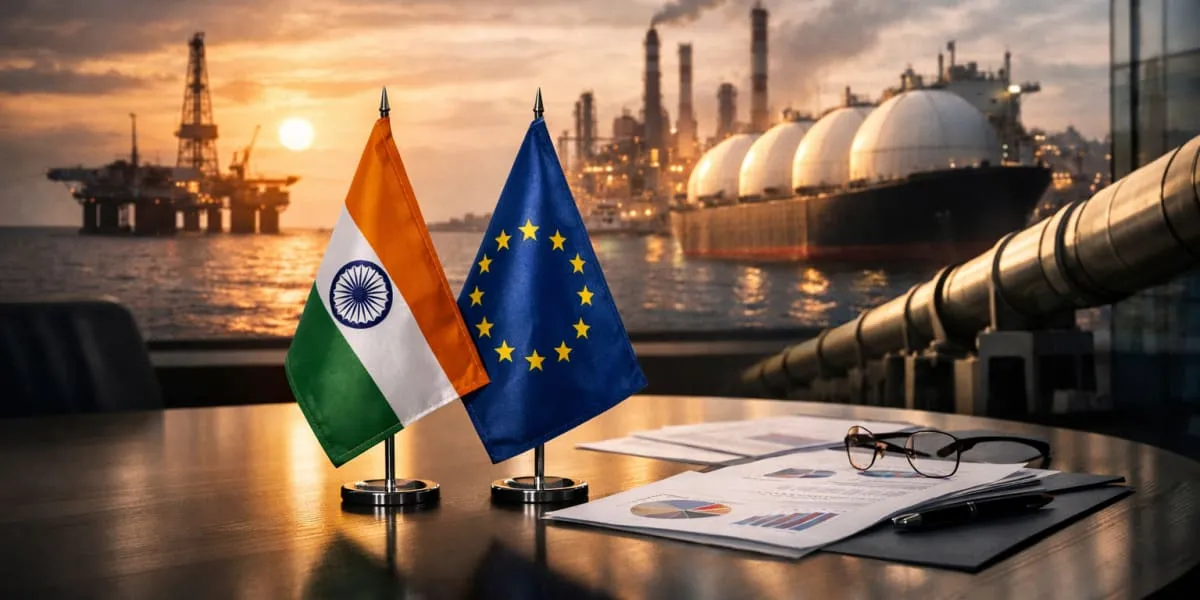
External Affairs Minister Subrahmanyam Jaishankar held high-level talks with counterparts from the 27 European Union (EU) member states in Brussels, where the escalating conflict in West Asia and its implications for global energy security featured prominently. The minister's visit followed the recent India-EU summit and the conclusion of a landmark Free Trade Agreement (FTA), and his engagements included meetings with the EU foreign and security policy chief and the European Commission president. Both sides underlined the need for dialogue and diplomacy to de-escalate tensions.

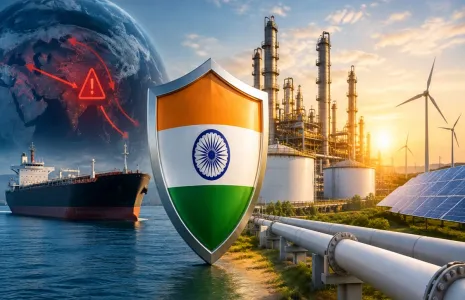
Officials noted that global oil and gas prices had risen after actions that significantly disrupted transit through the Strait of Hormuz, a narrow shipping lane between the Persian Gulf and the Gulf of Oman that handles roughly 20 per cent of global oil and Liquefied Natural Gas (LNG). The disruption was described as having clear ripple effects for countries dependent on West Asia for energy procurement, including India, and ministers exchanged assessments of short term supply risks and longer term market stability.

Jaishankar set out priorities to capitalise on the momentum from the summit and to deepen strategic ties, calling for the Free Trade Agreement to be fully implemented and for defence industrial collaboration and maritime co-operation to be intensified under the security and defence partnership. He also advocated transforming the India-EU Trade and Technology Council into a more outcome driven forum and encouraged closer alignment between India-EU relations and bilateral ties with member states. European counterparts reportedly reciprocated the emphasis on a shared strategic agenda.

Ministers also exchanged views on the situations in Ukraine and the Indo-Pacific and reiterated support for a stable international order and strengthened multilateralism. Bilateral meetings on the margins covered consultations with several member states and reinforced a shared ambition to elevate cooperation to a higher strategic level while maintaining regular consultations on regional matters.

External Affairs Minister Subrahmanyam Jaishankar held high-level talks with counterparts from the 27 European Union (EU) member states in Brussels, where the escalating conflict in West Asia and its implications for global energy security featured prominently. The minister's visit followed the recent India-EU summit and the conclusion of a landmark Free Trade Agreement (FTA), and his engagements included meetings with the EU foreign and security policy chief and the European Commission president. Both sides underlined the need for dialogue and diplomacy to de-escalate tensions. Officials noted that global oil and gas prices had risen after actions that significantly disrupted transit through the Strait of Hormuz, a narrow shipping lane between the Persian Gulf and the Gulf of Oman that handles roughly 20 per cent of global oil and Liquefied Natural Gas (LNG). The disruption was described as having clear ripple effects for countries dependent on West Asia for energy procurement, including India, and ministers exchanged assessments of short term supply risks and longer term market stability. Jaishankar set out priorities to capitalise on the momentum from the summit and to deepen strategic ties, calling for the Free Trade Agreement to be fully implemented and for defence industrial collaboration and maritime co-operation to be intensified under the security and defence partnership. He also advocated transforming the India-EU Trade and Technology Council into a more outcome driven forum and encouraged closer alignment between India-EU relations and bilateral ties with member states. European counterparts reportedly reciprocated the emphasis on a shared strategic agenda. Ministers also exchanged views on the situations in Ukraine and the Indo-Pacific and reiterated support for a stable international order and strengthened multilateralism. Bilateral meetings on the margins covered consultations with several member states and reinforced a shared ambition to elevate cooperation to a higher strategic level while maintaining regular consultations on regional matters.

Next Story
Infrastructure Transport

AFCONS & Navayuga set world records with Missing Link Expressway

Maharashtra’s most ambitious greenfield bypass — a 13.3-km alignment carrying twin record-setting tunnels and India’s tallest cable-stayed road bridge — was thrown open to traffic on Maharashtra Day, finally completing the Mumbai–Pune Expressway after a 23-year wait. CW reports…The 650-m cable-stayed bridge over Tiger Valley at sunset — the package executed by Afcons Infrastructure Ltd carries 182-m pylons, the tallest on any Indian road bridge.On 1 May 2026, Chief Minister Devendra Fadnavis, flanked by Deputy Chief Ministers Eknath Shinde and Sunetra Pawar (representing the late..

Next Story
Infrastructure Transport

Mumbai–Pune Missing Link boosts realty prospects

The recently opened ‘missing link’ on the Mumbai–Pune Expressway is set to significantly transform connectivity between the two cities by reducing travel time and bypassing the challenging ghat section. The new alignment, featuring tunnels and viaducts, is designed to improve safety, ease congestion and ensure a smoother, faster commute for both passenger and commercial traffic.With improved travel efficiency, the corridor is expected to strengthen intercity movement, encouraging more frequent travel for work, leisure and logistics. This enhanced accessibility is likely to benefit real e..

Next Story
Infrastructure Urban

How Hormuz is Hijacking Indian Highways

At the recently held RAHSTA Round Table on 29th April in Pune, and earlier during our webinars for Cement Expo by Indian Cement Review and by FIRST Construction Council on manufacturing construction equipment for the world, one thread lay common: the industry is being subjected to a cost-push chain reaction moving from crude oil → freight/insurance → steel, cement fuel, bitumen, polymers, packaging, logistics and finally project margins. Indeed, the West Asia crisis caused by the war and the Hormuz Strait blockade, which does not directly concern us, has turned around and hit us. If the wa..

Advertisement

Subscribe to Our Newsletter

Get daily newsletters around different themes from Construction world.

STAY CONNECTED

Advertisement

Advertisement

Advertisement