
India Expands Nuclear Power Capacity
POWER & RENEWABLE ENERGY

India Expands Nuclear Power Capacity

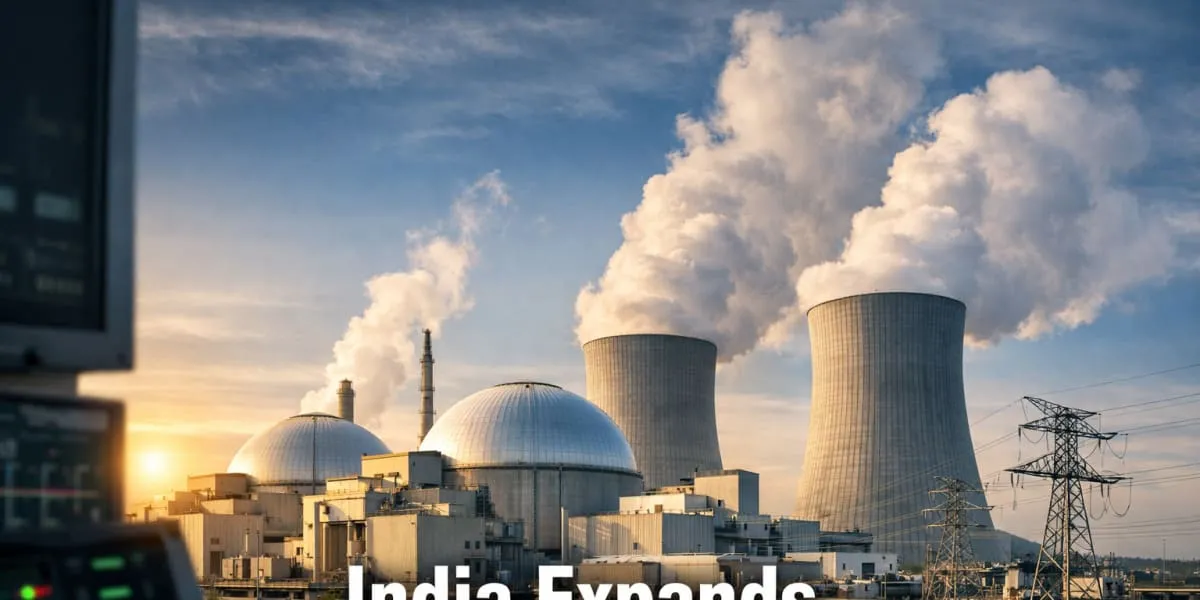
The Department of Atomic Energy has stated that the present installed nuclear power capacity in the country is 8,780 Megawatt (MW), comprising 24 nuclear power plants excluding RAPS-1, a 100 MW unit. The figure reflects central government records submitted in a written reply in the Rajya Sabha. The reply was provided by the Union Minister of State (Independent Charge) for Science and Technology and Earth Sciences and Minister of State in the Prime Minister's Office, Personnel, Public Grievances and Pensions, Atomic Energy and Space, Dr Jitendra Singh.

Total generation from nuclear plants was 45,855 mn units in 2022-23, 47,971 mn units in 2023-24 and 56,681 mn units in 2024-25, indicating year on year growth. These figures were cited to illustrate recent operational performance of the fleet. The ministry emphasised the role of nuclear generation in meeting low carbon energy objectives.

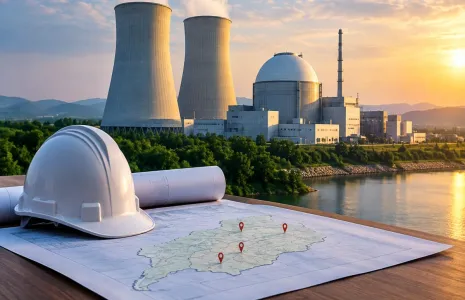
At present there are 18 nuclear reactors with a total capacity of 13,600 MW under implementation, including ten reactors under construction and eight reactors under pre project activities. Projects under construction or commissioning include RAPP-8 of 700 MW, Kudankulam units KKNPP-3 and KKNPP-4 of 1,000 MW each, KKNPP-5 and KKNPP-6 of 1,000 MW each, Gorakhpur Haryana Atomic Power Project units GHAVP-1 and GHAVP-2 of 700 MW each, Kaiga units 5 and 6 of 700 MW each and the Prototype Fast Breeder Reactor of 500 MW at Kalpakkam. Pre project activities have been approved for additional twin unit sites including GHAVP-3 and GHAVP-4, Chutka-1 and Chutka-2, and four units at Mahi Banswara in Rajasthan.

BHAVINI is currently commissioning the 500 MW Prototype Fast Breeder Reactor (PFBR) at Kalpakkam and the government has authorised pre project work for twin FBR units of 500 MW each at the same site. The ministry indicated that on attainment of first criticality of the PFBR, the government will be approached for financial sanction for FBR units one and two. The reply prepared for the Rajya Sabha provided the status and capacity details of ongoing and planned nuclear power projects.

The Department of Atomic Energy has stated that the present installed nuclear power capacity in the country is 8,780 Megawatt (MW), comprising 24 nuclear power plants excluding RAPS-1, a 100 MW unit. The figure reflects central government records submitted in a written reply in the Rajya Sabha. The reply was provided by the Union Minister of State (Independent Charge) for Science and Technology and Earth Sciences and Minister of State in the Prime Minister's Office, Personnel, Public Grievances and Pensions, Atomic Energy and Space, Dr Jitendra Singh. Total generation from nuclear plants was 45,855 mn units in 2022-23, 47,971 mn units in 2023-24 and 56,681 mn units in 2024-25, indicating year on year growth. These figures were cited to illustrate recent operational performance of the fleet. The ministry emphasised the role of nuclear generation in meeting low carbon energy objectives. At present there are 18 nuclear reactors with a total capacity of 13,600 MW under implementation, including ten reactors under construction and eight reactors under pre project activities. Projects under construction or commissioning include RAPP-8 of 700 MW, Kudankulam units KKNPP-3 and KKNPP-4 of 1,000 MW each, KKNPP-5 and KKNPP-6 of 1,000 MW each, Gorakhpur Haryana Atomic Power Project units GHAVP-1 and GHAVP-2 of 700 MW each, Kaiga units 5 and 6 of 700 MW each and the Prototype Fast Breeder Reactor of 500 MW at Kalpakkam. Pre project activities have been approved for additional twin unit sites including GHAVP-3 and GHAVP-4, Chutka-1 and Chutka-2, and four units at Mahi Banswara in Rajasthan. BHAVINI is currently commissioning the 500 MW Prototype Fast Breeder Reactor (PFBR) at Kalpakkam and the government has authorised pre project work for twin FBR units of 500 MW each at the same site. The ministry indicated that on attainment of first criticality of the PFBR, the government will be approached for financial sanction for FBR units one and two. The reply prepared for the Rajya Sabha provided the status and capacity details of ongoing and planned nuclear power projects.

Next Story
Infrastructure Urban

Mineral Auction Rules Amended To Speed Mine Operationalisation

The Ministry of Mines notified the Mineral (Auction) Second Amendment Rules, 2026 on 30 March 2026 to accelerate operationalisation of mines and improve ease of doing business in the mining sector. The amendment follows a prior change to the Mineral (Auction) Rules, 2015 effected on 17 October 2025 that introduced intermediary timelines between issuance of a letter of intent (LoI) and execution of the mining lease. The 2025 change provided that one per cent of performance security would be appropriated for each month of delay by the preferred bidder and introduced incentives for early operatio..

Next Story
Infrastructure Transport

Indian Railways Strengthens Telecom And AI Safety Systems

Indian Railways strengthened its telecom and digital infrastructure during 2025-26 with the aim of improving safety, operational efficiency and the passenger experience. The programme promoted modernisation through advanced technologies, robust communication systems and passenger-centric solutions. These measures were presented as part of a drive to build a digitally integrated rail ecosystem. A key development was the enhancement of the Internet Protocol Multi-Protocol Label Switching (IP MPLS) backbone, commissioned at 1,396 stations to meet bandwidth needs of mission-critical applications. ..

Next Story
Infrastructure Transport

NHAI Holds Workshop on Litigation Management and Coordination

The National Highways Authority of India (NHAI) organised a day-long workshop in New Delhi to strengthen capacity and interdepartmental synergy for faster execution of national highway projects. The event was held under Mission Karmayogi – Sadhana Saptah, an initiative of the Government of India to enhance governance through capacity building and improved processes. The workshop focused on structured and solution oriented deliberations to address implementation constraints. The session was chaired by the NHAI chairman Santosh Kumar Yadav and brought together senior officials from NHAI, the M..

Advertisement

Subscribe to Our Newsletter

Get daily newsletters around different themes from Construction world.

STAY CONNECTED

Advertisement

Advertisement

Advertisement