India Pushes Green Hydrogen Innovation to Lead Global Market
POWER & RENEWABLE ENERGY

India Pushes Green Hydrogen Innovation to Lead Global Market

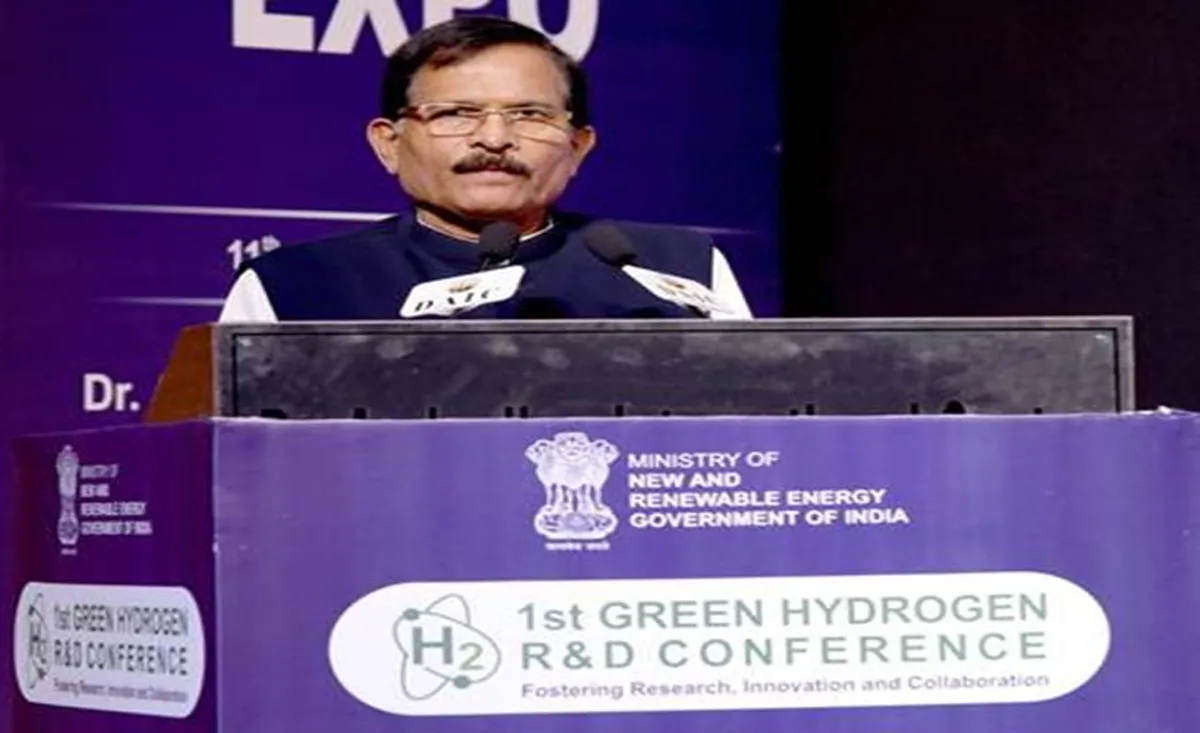
India’s drive towards achieving Net Zero by 2070 has gained fresh momentum as Union Minister of State for New and Renewable Energy, Shripad Yesso Naik, called on scientists, startups, researchers, and industry leaders to position India as a global hub for green hydrogen innovation.
He was speaking at the valedictory session of the first Green Hydrogen R&D Conference, organised under the National Green Hydrogen Mission by the Ministry of New and Renewable Energy (MNRE). The two-day event brought together experts to chart India’s course towards a clean, secure, and self-reliant energy future.
Naik highlighted that green hydrogen lies at the heart of India’s energy transition, offering the potential to decarbonise hard-to-abate sectors, reduce import dependence, and open new trade opportunities.
Through the National Green Hydrogen Mission, India aims to become not only a major consumer but also a global leader in hydrogen innovation, manufacturing, and deployment. MNRE has supported over 200 R&D projects in renewable energy, fuel cells, hydrogen, and storage technologies. Dedicated funds, testing facilities, and incubation programmes are helping Indian researchers convert ideas into scalable solutions.
“This conference reflects our resolve to turn laboratories into launch pads and startups into global champions,” Naik said.
The event featured technical sessions on cutting-edge production methods, storage challenges, transport solutions, and fuel-cell applications. Experts discussed governance frameworks, prototyping, commercialisation, and infrastructure. Special sessions encouraged long-term research, while roundtables focused on safety, new applications, and testing infrastructure, highlighting the importance of collaborative innovation.
Naik emphasised that research must progress from academia to pilot projects and commercial deployment. Congratulating startups and young innovators, he noted that their energy and ideas embody the vision of a developed India by 2047.
The conference also launched a call for proposals for hydrogen startups, aiming to reduce barriers and accelerate innovation. Naik stressed that the mission goes beyond clean energy, driving industrial competitiveness, creating high-value jobs, and strengthening India’s position in the global hydrogen economy.
“India’s leadership in green hydrogen will make our industries future-ready against global carbon regulations,” he said.
Acknowledging challenges in research and commercialisation, Naik expressed confidence in India’s scientists and entrepreneurs. With robust R&D infrastructure, supportive policies, and international partnerships, India is poised to turn challenges into opportunities.
The conference saw 1,347 registrations, 17 technical sessions, and a dedicated startup exhibition. Officials from MNRE, SECI, and NISE highlighted India’s potential to scale electrolyser technology, expand renewable capacity, and build mentoring ecosystems for startups. NISE will serve as the implementing agency for startup support under the Mission, forging partnerships to strengthen India’s hydrogen ecosystem.

India’s drive towards achieving Net Zero by 2070 has gained fresh momentum as Union Minister of State for New and Renewable Energy, Shripad Yesso Naik, called on scientists, startups, researchers, and industry leaders to position India as a global hub for green hydrogen innovation.He was speaking at the valedictory session of the first Green Hydrogen R&D Conference, organised under the National Green Hydrogen Mission by the Ministry of New and Renewable Energy (MNRE). The two-day event brought together experts to chart India’s course towards a clean, secure, and self-reliant energy future.Naik highlighted that green hydrogen lies at the heart of India’s energy transition, offering the potential to decarbonise hard-to-abate sectors, reduce import dependence, and open new trade opportunities.Through the National Green Hydrogen Mission, India aims to become not only a major consumer but also a global leader in hydrogen innovation, manufacturing, and deployment. MNRE has supported over 200 R&D projects in renewable energy, fuel cells, hydrogen, and storage technologies. Dedicated funds, testing facilities, and incubation programmes are helping Indian researchers convert ideas into scalable solutions.“This conference reflects our resolve to turn laboratories into launch pads and startups into global champions,” Naik said.The event featured technical sessions on cutting-edge production methods, storage challenges, transport solutions, and fuel-cell applications. Experts discussed governance frameworks, prototyping, commercialisation, and infrastructure. Special sessions encouraged long-term research, while roundtables focused on safety, new applications, and testing infrastructure, highlighting the importance of collaborative innovation.Naik emphasised that research must progress from academia to pilot projects and commercial deployment. Congratulating startups and young innovators, he noted that their energy and ideas embody the vision of a developed India by 2047.The conference also launched a call for proposals for hydrogen startups, aiming to reduce barriers and accelerate innovation. Naik stressed that the mission goes beyond clean energy, driving industrial competitiveness, creating high-value jobs, and strengthening India’s position in the global hydrogen economy.“India’s leadership in green hydrogen will make our industries future-ready against global carbon regulations,” he said.Acknowledging challenges in research and commercialisation, Naik expressed confidence in India’s scientists and entrepreneurs. With robust R&D infrastructure, supportive policies, and international partnerships, India is poised to turn challenges into opportunities.The conference saw 1,347 registrations, 17 technical sessions, and a dedicated startup exhibition. Officials from MNRE, SECI, and NISE highlighted India’s potential to scale electrolyser technology, expand renewable capacity, and build mentoring ecosystems for startups. NISE will serve as the implementing agency for startup support under the Mission, forging partnerships to strengthen India’s hydrogen ecosystem.

Next Story
Infrastructure Urban

India Expands Semiconductor Training To 500 Institutions

Under the Chips to Startups programme of the India Semiconductor Mission, the Union minister responsible for Railways, Information and Broadcasting, and Electronics and IT reported notable progress in talent development. He indicated that over the past four years substantial steps have been taken towards a 10-year target of training 85,000 engineers in semiconductor design. World-class EDA tools have been deployed in 315 academic institutions across the country to provide students with practical exposure to chip design. These EDA tools are supported by leading global firms and are accessible t..

Next Story
Infrastructure Urban

Delhi Institutions Support India Semiconductor Mission

The Government of India has prioritised talent development through training, upskilling and workforce development under the Chips to Startups initiative of the India Semiconductor Mission, with officials noting progress in four years towards a 10-year target of training 85,000 engineers in semiconductor design. Electronic design automation tools provided by Synopsys, Cadence, Siemens, Renesas, Ansys and AMD have been deployed in 315 academic institutions, enabling students to gain practical chip design experience. Chips have been fabricated and tested at the Semiconductor Laboratory, Mohali, a..

Next Story
Infrastructure Urban

NHA Announces Winners Of NHCX Hackathon At IIT Hyderabad

The National Health Authority (NHA) has concluded the NHCX Hackathon under the Ayushman Bharat Digital Mission (ABDM) to stimulate innovation around the National Health Claims Exchange (NHCX). The winning teams presented their solutions at the NHCX Innovation Meet held at IIT Hyderabad during a two-day event in March 2026 that also served as the hackathon grand finale. The hackathon itself ran from 22 to 28 February 2026 and aimed to accelerate paperless, transparent claims processing across India. The event was organised with a range of ecosystem partners, including the Insurance Regulatory a..

Advertisement

Subscribe to Our Newsletter

Get daily newsletters around different themes from Construction world.

STAY CONNECTED

Advertisement

Advertisement

Advertisement