India's G20 presidency: Government plans low-cost energy financing
POWER & RENEWABLE ENERGY

India's G20 presidency: Government plans low-cost energy financing

The government is developing an interest subvention scheme to aid the energy sector's adoption of clean energy and energy efficiency technologies, revealed Alok Kumar, the Power Secretary. Speaking at the third Energy Transition Working Group (ETWG) meeting during India's G20 Presidency, Kumar stated that India is formulating a scheme to support the deployment of expensive emerging energy efficiency technologies, offering interest subvention. It's under consideration. He emphasised the need for initial support such as viability gap funding (VGF) and priority lending to facilitate the widespread implementation of new technologies.

Kumar further highlighted the government's commitment to achieving universal access to clean energy and addressing the challenges posed by deep decarbonisation and hard-to-abate sectors. The ETWG is diligently identifying priorities and estimating low-cost financing options to present to the G20 leadership.

Kumar stressed the importance of affordable finance for promoting these technologies in the fight against climate change, emphasising the government's focus on selecting appropriate technologies and securing low-cost financing. He emphasised the necessity of substantial public finance to reduce the financing costs of clean energy projects in developing countries, where the majority of action is required.

Kumar expressed the G20 community's responsibility to ensure that countries embarking on the path of development receive sufficient fund flows and affordable finance, ensuring equitable access to the benefits of progress.

During the event, Bhupinder Singh Bhalla, Secretary of the Ministry of New and Renewable Energy, emphasised the need for robust policy commitments, citing policy and regulatory stability, transparency, and predictability as essential factors for attracting investments.

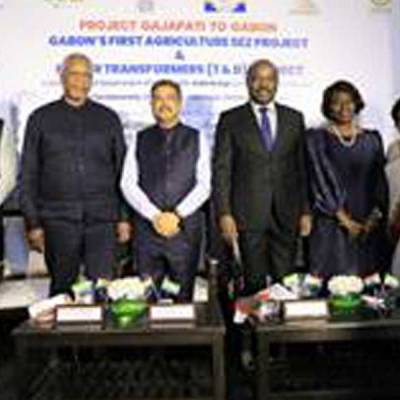
Hosted by the Ministry of New and Renewable Energy (MNRE) and the International Renewable Energy Agency (IRENA) in collaboration with the Indian Renewable Energy Development Agency, the official side event titled "Low-cost Finance for New & Emerging Energy Technologies" took place in Mumbai on May 15, 2023, as part of the G20 ETWG meeting under India's G20 Presidency. The event brought together policymakers, financial institutions, and technology developers to discuss cost-effective financing estimates for energy transition based on emerging critical technologies such as hydrogen, offshore wind, energy storage, and carbon capture utilisation and storage.

At the event, the report "Low-Cost Finance for Energy Transition," prepared by IRENA in partnership with MNRE under the G20's India Presidency, was unveiled.

Also Read
HP govt focuses on business-friendly environment and investment
Will Government Spending Accelerate Construction?


The government is developing an interest subvention scheme to aid the energy sector's adoption of clean energy and energy efficiency technologies, revealed Alok Kumar, the Power Secretary. Speaking at the third Energy Transition Working Group (ETWG) meeting during India's G20 Presidency, Kumar stated that India is formulating a scheme to support the deployment of expensive emerging energy efficiency technologies, offering interest subvention. It's under consideration. He emphasised the need for initial support such as viability gap funding (VGF) and priority lending to facilitate the widespread implementation of new technologies. Kumar further highlighted the government's commitment to achieving universal access to clean energy and addressing the challenges posed by deep decarbonisation and hard-to-abate sectors. The ETWG is diligently identifying priorities and estimating low-cost financing options to present to the G20 leadership. Kumar stressed the importance of affordable finance for promoting these technologies in the fight against climate change, emphasising the government's focus on selecting appropriate technologies and securing low-cost financing. He emphasised the necessity of substantial public finance to reduce the financing costs of clean energy projects in developing countries, where the majority of action is required. Kumar expressed the G20 community's responsibility to ensure that countries embarking on the path of development receive sufficient fund flows and affordable finance, ensuring equitable access to the benefits of progress. During the event, Bhupinder Singh Bhalla, Secretary of the Ministry of New and Renewable Energy, emphasised the need for robust policy commitments, citing policy and regulatory stability, transparency, and predictability as essential factors for attracting investments. Hosted by the Ministry of New and Renewable Energy (MNRE) and the International Renewable Energy Agency (IRENA) in collaboration with the Indian Renewable Energy Development Agency, the official side event titled Low-cost Finance for New & Emerging Energy Technologies took place in Mumbai on May 15, 2023, as part of the G20 ETWG meeting under India's G20 Presidency. The event brought together policymakers, financial institutions, and technology developers to discuss cost-effective financing estimates for energy transition based on emerging critical technologies such as hydrogen, offshore wind, energy storage, and carbon capture utilisation and storage. At the event, the report Low-Cost Finance for Energy Transition, prepared by IRENA in partnership with MNRE under the G20's India Presidency, was unveiled. Also Read HP govt focuses on business-friendly environment and investmentWill Government Spending Accelerate Construction?

Next Story
Infrastructure Energy

Coal Ministry Simplifies Disposal of Washery Rejects

The Ministry of Coal has recently simplified the process for disposal of coal washery rejects to enhance ease of doing business and ensure faster utilisation, while maintaining environmental safeguards. The move aligns with the government’s Atmanirbhar Bharat vision and ongoing reform agenda in the coal sector. Under the existing policy issued on 27 May 2021, washery rejects were disposed of through a three-tier priority system. The first priority allows their use for energy extraction, in line with Solid Waste Management Rules, 2016, applicable to waste with calorific value above 1,500 kca..

Next Story
Infrastructure Urban

India, Oman Sign CEPA to Boost Trade and Services Ties

India and Oman have recently signed a Comprehensive Economic Partnership Agreement (CEPA), marking a major milestone in India’s strategic engagement with the Gulf region. The agreement was signed in the presence of Narendra Modi and Sultan Haitham bin Tarik, by Piyush Goyal and Qais bin Mohammed Al Yousef. The CEPA provides unprecedented market access for Indian goods, with Oman offering zero-duty access on 98.08 per cent of its tariff lines, covering 99.38 per cent of India’s exports by value. Major labour-intensive sectors such as textiles, leather, footwear, gems and jewellery, enginee..

Next Story
Technology

TTDF Backs 136 Telecom R&D Projects Worth Rs 5.42 Bn

The Telecom Technology Development Fund (TTDF) Scheme has recently approved 136 projects worth Rs 5.42 billion to strengthen indigenous telecom innovation across India, the government informed Parliament. The scheme focuses on bridging the digital divide by enabling development and manufacturing of advanced telecom technologies for rural and remote areas. In a written reply to the Rajya Sabha, Minister of State for Communications and Rural Development Pemmasani Chandra Sekhar said the TTDF Scheme, launched on 1 October 2022, supports IITs, NITs, MSMEs, start-ups and research institutions work..

Advertisement

Subscribe to Our Newsletter

Get daily newsletters around different themes from Construction world.

STAY CONNECTED

Advertisement

Advertisement

Advertisement

Advertisement

Open In App