India's Critical Minerals Solution Lies Nearby
POWER & RENEWABLE ENERGY

India's Critical Minerals Solution Lies Nearby

India's pursuit of critical minerals crucial for renewable energy and technology sectors may pivot towards its extended neighbourhood, addressing growing concerns over global supply chain vulnerabilities. As the world grapples with mineral scarcity and geopolitical tensions, India seeks to secure key resources essential for electric vehicles, renewable energy infrastructure, and advanced technology manufacturing.

The strategic move aligns with India's ambitions to reduce dependency on imports, particularly from countries facing political instability or trade uncertainties. Enhancing regional partnerships and exploring potential mineral deposits in neighbouring nations could bolster India's resource security and economic resilience.

Recent initiatives underscore this shift, with Indian firms actively engaging in exploration projects and strategic collaborations across South Asia and beyond. Such efforts aim not only to diversify mineral sourcing but also to strengthen regional economic integration and geopolitical stability.

India's approach signals a broader strategy to safeguard its energy transition goals and technological advancements. By harnessing resources closer to home, India aims to mitigate risks associated with distant and sometimes volatile supply chains. This proactive stance not only supports domestic industrial growth but also positions India as a key player in the global renewable energy landscape.

In conclusion, India's pursuit of critical minerals in its extended neighbourhood marks a strategic response to global uncertainties, fostering regional cooperation while enhancing its own economic and energy security in the process.

India's pursuit of critical minerals crucial for renewable energy and technology sectors may pivot towards its extended neighbourhood, addressing growing concerns over global supply chain vulnerabilities. As the world grapples with mineral scarcity and geopolitical tensions, India seeks to secure key resources essential for electric vehicles, renewable energy infrastructure, and advanced technology manufacturing. The strategic move aligns with India's ambitions to reduce dependency on imports, particularly from countries facing political instability or trade uncertainties. Enhancing regional partnerships and exploring potential mineral deposits in neighbouring nations could bolster India's resource security and economic resilience. Recent initiatives underscore this shift, with Indian firms actively engaging in exploration projects and strategic collaborations across South Asia and beyond. Such efforts aim not only to diversify mineral sourcing but also to strengthen regional economic integration and geopolitical stability. India's approach signals a broader strategy to safeguard its energy transition goals and technological advancements. By harnessing resources closer to home, India aims to mitigate risks associated with distant and sometimes volatile supply chains. This proactive stance not only supports domestic industrial growth but also positions India as a key player in the global renewable energy landscape. In conclusion, India's pursuit of critical minerals in its extended neighbourhood marks a strategic response to global uncertainties, fostering regional cooperation while enhancing its own economic and energy security in the process.

Related Stories

Gold Stories

Next Story
Resources

Schindler named among Forbes’ World’s Best Employers 2026

Schindler has been named among Forbes’ World’s Best Employers 2026, a global ranking recognising companies for their workplace environments.Compiled by Forbes in partnership with Statista, the ranking is based on independent employee feedback, including whether employees would recommend their organisation to friends and family.The company said the recognition reflected its focus on creating a workplace where employees can develop their expertise and build careers. ..
Next Story
Infrastructure Urban

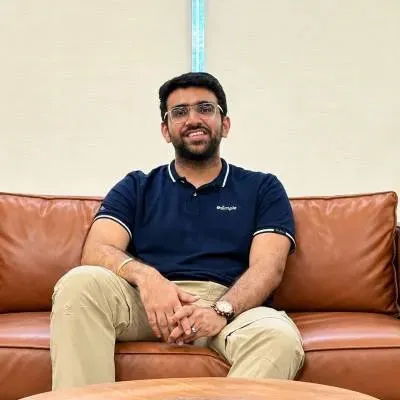
India needs an export-execution mindset: Vishesh Jain

Interview with Vishesh Jain, Founder & CEO, EximpleWhat gaps in India’s global trade ecosystem led you to build Eximple, and what problem did you see businesses struggling with most?Eximple came out of a problem that all three founders had seen from different choke points in the trade ecosystem. India has millions of MSMEs and manufacturers, and many of them can make products that are genuinely competitive on quality. Yet only a small fraction is able to build meaningful international businesses. In our experience, the gap is usually not manufacturing capability; it is the ability to exe..

Next Story
Building Material

Nuvoco reports 13.5% revenue growth in Q2 FY27

Nuvoco Vistas Corp. Ltd. reported consolidated revenue of Rs 27.9 billion for Q2 FY27, up 13.5% year on year. Cement sales volume rose 9% to 4.7 million tonnes (MMT), while EBITDA increased 11% to Rs 4.11 billion.The company said it began its cement operations in 2014 with a 2.3 MMT per annum (MMTPA) operation at Nimbol. It now aims to reach 35 MMTPA of cement capacity by FY28, nearly 15 times its initial capacity. Its portfolio spans cement, ready-mix concrete and modern building materials.On sustainability and cost efficiency, Nuvoco partnered with CleanMax for a 46.4 MW wind-solar hybrid re..

Advertisement

Subscribe to Our Newsletter

Get daily newsletters around different themes from Construction world.

STAY CONNECTED

Advertisement

SPECIAL OFFER
QR Code