Investments in wind repowering could total INR 400 billion: CRISIL
POWER & RENEWABLE ENERGY

Investments in wind repowering could total INR 400 billion: CRISIL

According to research firm CRISIL, the Ministry of New and Renewable Energy’s draught policy for repowering old wind power plants has the potential to spark investments worth INR 400 billion over the course of three to five years, which is nearly three times the average annual wind power capex seen in the previous four fiscals. Ankit Hakhu, Director, CRISIL Ratings, stated that, “this may result in the replacement of around 5 GW of obsolete windmills with new wind power facilities having two times more generation capabilities. Because such projects may yield double-digit returns at prices of around INR 4 per unit for the additional capacity, their feasibility appears to be strong.”

Since their typical power purchase cost is currently INR 4-5 per unit, a pricing like this might draw C&I clients through open access, according to Hakhu. As per the official press announcement, up until March 2018 the total installed wind capacity increased by almost three times, from roughly 13 GW in 2010 to 34 GW. However, the majority of these used windmills with hub heights under 100 metres and narrower turbines with capacities around 1.5 MW. Compared to more recent technologies, they produce less per unit of capital expenditure.

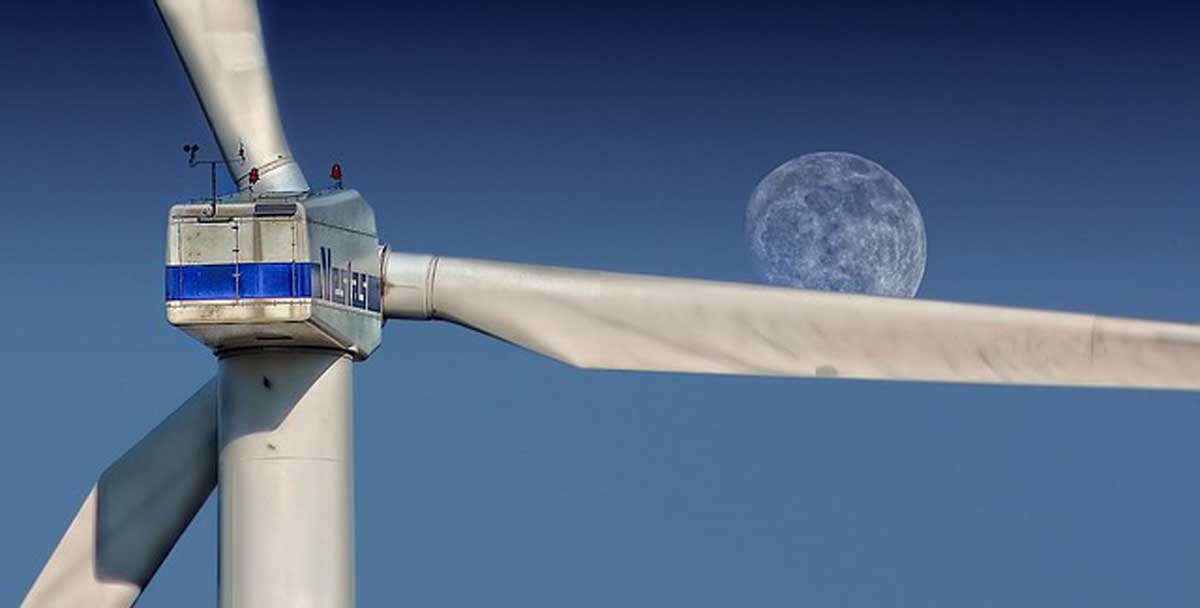
New windmills can operate at hub heights over 150 metres, and they can use turbines with a capacity of more than 3 MW to produce more power per unit of machine capital expenditure. This can make use of locations with significant generating potential but now only have older generation turbines.

According to research firm CRISIL, the Ministry of New and Renewable Energy’s draught policy for repowering old wind power plants has the potential to spark investments worth INR 400 billion over the course of three to five years, which is nearly three times the average annual wind power capex seen in the previous four fiscals. Ankit Hakhu, Director, CRISIL Ratings, stated that, “this may result in the replacement of around 5 GW of obsolete windmills with new wind power facilities having two times more generation capabilities. Because such projects may yield double-digit returns at prices of around INR 4 per unit for the additional capacity, their feasibility appears to be strong.” Since their typical power purchase cost is currently INR 4-5 per unit, a pricing like this might draw C&I clients through open access, according to Hakhu. As per the official press announcement, up until March 2018 the total installed wind capacity increased by almost three times, from roughly 13 GW in 2010 to 34 GW. However, the majority of these used windmills with hub heights under 100 metres and narrower turbines with capacities around 1.5 MW. Compared to more recent technologies, they produce less per unit of capital expenditure. New windmills can operate at hub heights over 150 metres, and they can use turbines with a capacity of more than 3 MW to produce more power per unit of machine capital expenditure. This can make use of locations with significant generating potential but now only have older generation turbines.

Next Story
Infrastructure Urban

Implementation Status of Jal Jeevan Mission

Since August 2019 the Government has implemented Jal Jeevan Mission to provide assured potable water through household tap connections in rural India. At the start of the mission only 32.3 million (mn) rural households, representing 16.7 per cent, were reported to have tap water connections. States and union territories have reported that 125.8 mn additional rural households have since been provided with tap connections. As a result, of about 193.6 mn rural households roughly 158.2 mn, or 81.71 per cent, are reported to have tap water supply at home.\n\nThe State, district and village level st..

Next Story
Infrastructure Urban

Jal Jeevan Mission Reaches Eighty One Per Cent Rural Coverage

The Government reported substantial progress under the Jal Jeevan Mission, launched in August 2019 to provide tap water to every rural household. At launch only 32.3 million (mn) rural households had tap connections and states and Union territories reported provision of 125.8 mn additional households by March 2026. Consequently, out of about 193.6 mn rural households around 158.2 mn, or 81.71 per cent, are reported to have tap water at home. The Finance Minister announced extension of the mission until 2028 in the 2025-26 budget speech. The Swachh Bharat Mission Grameen, launched in October 20..

Next Story
Infrastructure Urban

Empowering Local Governance for Sustainable Rural Water Supply

The Ministry of Jal Shakti has aligned the Jal Jeevan Mission (JJM) with the 73rd Amendment to strengthen village level planning and community ownership of water supply. Gram Panchayats, village water and sanitation committees and Pani Samitis are to plan, implement, manage and maintain piped water systems, with gram sabha processes formalising handover and oversight. Implementation support agencies including non government organisations, community based organisations and self help groups have been empanelled to train local committees and promote women participation. Under JJM, the department ..

Advertisement

Subscribe to Our Newsletter

Get daily newsletters around different themes from Construction world.

STAY CONNECTED

Advertisement

Advertisement

Advertisement