Centre Unveils Three-Year PPP Pipeline for Infra Push
ROADS & HIGHWAYS

Centre Unveils Three-Year PPP Pipeline for Infra Push

The Department of Economic Affairs under the Ministry of Finance has created a three-year Public Private Partnership (PPP) project pipeline to streamline infrastructure development across the country. The initiative follows the announcement made in the Union Budget 2025–26 and is aimed at strengthening infrastructure through structured private sector participation. According to a finance ministry release, the consolidated pipeline comprises 852 projects spread across central infrastructure ministries as well as states and Union Territories.

The combined estimated project cost exceeds Rs 17 trillion, offering a clear medium-term roadmap for infrastructure investment. By bringing projects together in a single pipeline, the government aims to provide early visibility to investors, developers and other stakeholders, enabling more informed planning and investment decisions.

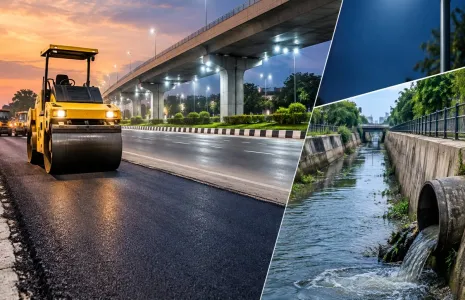
Data from the PPP India platform shows that the Ministry of Road Transport and Highways leads the pipeline with 108 projects valued at around Rs 8.77 trillion. The Ministry of Power follows with 46 projects worth about Rs 3.40 trillion.

Other major central contributors include the Ministry of Ports, Shipping and Waterways, which has 22 projects valued at roughly Rs 0.38 trillion, and the Ministry of Railways with 13 projects worth about Rs 0.31 trillion. The Department of Water Resources, River Development and Ganga Rejuvenation has 29 projects in the pipeline, with a combined cost of around Rs 0.12 trillion.

At the state and Union Territory level, Andhra Pradesh accounts for the highest number of projects, with 270 initiatives valued at about Rs 1.16 trillion. Tamil Nadu has 70 projects costing around Rs 0.88 trillion, while Madhya Pradesh has 21 projects worth about Rs 0.65 trillion. Uttar Pradesh features 89 projects with a total value of roughly Rs 0.12 trillion.

Other participating regions include Jammu and Kashmir with 57 projects valued at about Rs 0.21 trillion, and Rajasthan with 12 projects totalling around Rs 0.23 trillion. The government expects the pipeline to improve coordination, enhance investor confidence and accelerate the rollout of critical infrastructure across sectors.

The Department of Economic Affairs under the Ministry of Finance has created a three-year Public Private Partnership (PPP) project pipeline to streamline infrastructure development across the country. The initiative follows the announcement made in the Union Budget 2025–26 and is aimed at strengthening infrastructure through structured private sector participation. According to a finance ministry release, the consolidated pipeline comprises 852 projects spread across central infrastructure ministries as well as states and Union Territories. The combined estimated project cost exceeds Rs 17 trillion, offering a clear medium-term roadmap for infrastructure investment. By bringing projects together in a single pipeline, the government aims to provide early visibility to investors, developers and other stakeholders, enabling more informed planning and investment decisions. Data from the PPP India platform shows that the Ministry of Road Transport and Highways leads the pipeline with 108 projects valued at around Rs 8.77 trillion. The Ministry of Power follows with 46 projects worth about Rs 3.40 trillion. Other major central contributors include the Ministry of Ports, Shipping and Waterways, which has 22 projects valued at roughly Rs 0.38 trillion, and the Ministry of Railways with 13 projects worth about Rs 0.31 trillion. The Department of Water Resources, River Development and Ganga Rejuvenation has 29 projects in the pipeline, with a combined cost of around Rs 0.12 trillion. At the state and Union Territory level, Andhra Pradesh accounts for the highest number of projects, with 270 initiatives valued at about Rs 1.16 trillion. Tamil Nadu has 70 projects costing around Rs 0.88 trillion, while Madhya Pradesh has 21 projects worth about Rs 0.65 trillion. Uttar Pradesh features 89 projects with a total value of roughly Rs 0.12 trillion. Other participating regions include Jammu and Kashmir with 57 projects valued at about Rs 0.21 trillion, and Rajasthan with 12 projects totalling around Rs 0.23 trillion. The government expects the pipeline to improve coordination, enhance investor confidence and accelerate the rollout of critical infrastructure across sectors.

Next Story
Infrastructure Urban

9th India–Myanmar Joint Trade Committee Meeting Held in Nay Pyi Taw

The ninth meeting of the India–Myanmar Joint Trade Committee (JTC) was held in Nay Pyi Taw, Myanmar, with a focus on strengthening bilateral trade and deepening economic cooperation. The meeting was co-chaired by U Minn Minn, Deputy Minister, Ministry of Commerce of the Republic of the Union of Myanmar, and Nitin Kumar Yadav, Additional Secretary, Department of Commerce, Ministry of Commerce and Industry, Government of India.Representatives from relevant ministries and stakeholder departments from both countries participated in the discussions. The meeting covered a broad range of issues aim..

Next Story
Infrastructure Urban

DGCA Launches Digital Pilot Licence Services for ATPL

The Directorate General of Civil Aviation (DGCA) has launched Electronic Personnel Licence (EPL) services for the Airline Transport Pilot Licence (ATPL), marking a significant step in the regulator’s ongoing digital transformation of aviation licensing in India. The service was inaugurated at an event held at the DGCA headquarters.Inaugurating the EPL ATPL service, Director General of Civil Aviation Faiz Ahmed Kidwai said the initiative represents a major advancement in strengthening India’s civil aviation regulatory framework through secure, modern and future-ready digital systems. He con..

Next Story
Infrastructure Urban

Cabinet Extends Atal Pension Yojana and Support Till 2030–31

The Union Cabinet, chaired by Prime Minister Narendra Modi, has approved the continuation of the Atal Pension Yojana (APY) up to the financial year 2030–31, along with the extension of government funding support for promotional and developmental activities and gap funding to ensure the scheme’s long-term sustainability.Under the approved framework, APY will continue to receive government support aimed at expanding its reach among unorganised and low-income workers. This includes funding for awareness campaigns, capacity-building initiatives and other developmental activities to strengthen ..

Advertisement

Subscribe to Our Newsletter

Get daily newsletters around different themes from Construction world.

STAY CONNECTED

Advertisement

Advertisement

Advertisement

Advertisement

Open In App