


IGX Gas Price Index Drops 18% in December
OIL & GAS

IGX Gas Price Index Drops 18% in December

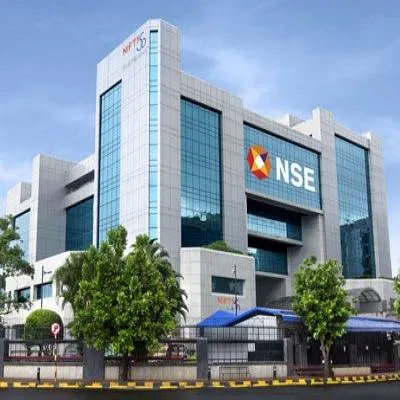
The benchmark gas price index of Indian Gas Exchange fell 18 per cent year-on-year to Rs 994, or USD 11 per MMBtu, in December 2025, reflecting a broader decline in global gas prices. The fall aligned with international market trends driven by increased supply, a mild winter in Europe and subdued demand across Asia, the exchange said in a release.

International spot benchmarks also weakened, with the European TTF down 35 per cent year-on-year to USD 9.9 per MMBtu, while the Asian WIM-Ex Dahej price declined 32 per cent to USD 10.6 per MMBtu. IGX operates as a regulated marketplace under the Petroleum and Natural Gas Regulatory Board, facilitating domestic price discovery through eight spot contracts across designated delivery points in six regional hubs.

During the first nine months of FY26, total traded volumes on the exchange rose 46 per cent year-on-year to 58.2 million MMBtu. In the third quarter alone, volumes increased 8 per cent to 17.5 million MMBtu, with free-market gas accounting for around 69 per cent of the total and the remaining 31 per cent comprising domestic high pressure high temperature (HPHT) gas traded at the ceiling price.

Monthly volumes in December 2025 dipped marginally by 2 per cent year-on-year to 5.6 million MMBtu, largely due to lower domestic HPHT volumes. Of the total traded during the month, free-market gas made up 71 per cent, while domestic HPHT gas at the ceiling price of Rs 875, or USD 9.72 per MMBtu, accounted for 29 per cent. Producers also traded nearly 10 MMSCM of domestic gas with pricing freedom at delivery points including Bokaro (CBM), the KG Basin and Hazira-ONGC.

Regionally, the GIXI-West index stood at Rs 996, or USD 11.1 per MMBtu, broadly in line with the all-India benchmark. GIXI-East and GIXI-South were lower by 5 per cent and 11 per cent, respectively, reflecting differences in transmission costs and taxation. The GIXI-Dahej index eased 3 per cent month-on-month to Rs 975, or USD 10.8 per MMBtu, trading close to the settled WIM-Ex Dahej price.

Operational data showed 238 trades executed during December, with Dahej emerging as the most active delivery point for free-market gas and Gadimoga leading for ceiling-price gas. Other active points included Mhaskal, Dabhol, Ankot and the KG Basin. The exchange also recorded its first trade in the Balance of the Month contract, while monthly contracts were the most active overall, followed by intraday and small-scale LNG trades.

The benchmark gas price index of Indian Gas Exchange fell 18 per cent year-on-year to Rs 994, or USD 11 per MMBtu, in December 2025, reflecting a broader decline in global gas prices. The fall aligned with international market trends driven by increased supply, a mild winter in Europe and subdued demand across Asia, the exchange said in a release. International spot benchmarks also weakened, with the European TTF down 35 per cent year-on-year to USD 9.9 per MMBtu, while the Asian WIM-Ex Dahej price declined 32 per cent to USD 10.6 per MMBtu. IGX operates as a regulated marketplace under the Petroleum and Natural Gas Regulatory Board, facilitating domestic price discovery through eight spot contracts across designated delivery points in six regional hubs. During the first nine months of FY26, total traded volumes on the exchange rose 46 per cent year-on-year to 58.2 million MMBtu. In the third quarter alone, volumes increased 8 per cent to 17.5 million MMBtu, with free-market gas accounting for around 69 per cent of the total and the remaining 31 per cent comprising domestic high pressure high temperature (HPHT) gas traded at the ceiling price. Monthly volumes in December 2025 dipped marginally by 2 per cent year-on-year to 5.6 million MMBtu, largely due to lower domestic HPHT volumes. Of the total traded during the month, free-market gas made up 71 per cent, while domestic HPHT gas at the ceiling price of Rs 875, or USD 9.72 per MMBtu, accounted for 29 per cent. Producers also traded nearly 10 MMSCM of domestic gas with pricing freedom at delivery points including Bokaro (CBM), the KG Basin and Hazira-ONGC. Regionally, the GIXI-West index stood at Rs 996, or USD 11.1 per MMBtu, broadly in line with the all-India benchmark. GIXI-East and GIXI-South were lower by 5 per cent and 11 per cent, respectively, reflecting differences in transmission costs and taxation. The GIXI-Dahej index eased 3 per cent month-on-month to Rs 975, or USD 10.8 per MMBtu, trading close to the settled WIM-Ex Dahej price. Operational data showed 238 trades executed during December, with Dahej emerging as the most active delivery point for free-market gas and Gadimoga leading for ceiling-price gas. Other active points included Mhaskal, Dabhol, Ankot and the KG Basin. The exchange also recorded its first trade in the Balance of the Month contract, while monthly contracts were the most active overall, followed by intraday and small-scale LNG trades.

Next Story
Infrastructure Urban

Turning environmental challenges into recoverable value streams.

The lack of scalable, scientific solutions capable of handling legacy waste and complex urban waste streams led to the establishment of Blue Planet Environmental Solutions. In conversation with CW, Prashant Singh, Co-Founder & CEO, shares the company’s journey from a startup to a city-scale environmental infrastructure player, detailing large municipal projects, decades-old legacy waste remediation, land recovery outcomes and its expanding circular economy footprint.How has the visio..

Next Story
Infrastructure Transport

India's Highway Crisis!

Massive spending, inflated metrics, systemic delays and deep-rooted corruption now threaten the credibility of India’s highway expansion, observes  LT GEN RAJEEV CHAUDHRY (Retd), former DG Border Roads.India is spending more on national highways than ever before. With Rs 2.72 lakh crore earmarked for FY 2025–26 and ambitious targets under the Amrit Kaal vision, the narrative is one of speed, scale and transformation. Yet, beneath the headline numbers lies an uncomfortable realit..

Next Story
Infrastructure Urban

Audit: Time to Elevate

The year 2026 got off to a sorry start for the elevator industry with a 31-year-old security guard crushed to death when a lift collapsed on him in a Mulund East (Mumbai) housing society, and two boys, aged 11, grievously injured by falling into a lift duct when the third floor lift door in their Goregaon (Mumbai) building gave way. Faulty door-lock wiring and poor maintenance by the vendor are most probably behind these tragic accidents.No month goes by without a fatal elevator accident in some city across India. CW asks why?To read the full story Click Here ..

Advertisement

Subscribe to Our Newsletter

Get daily newsletters around different themes from Construction world.

STAY CONNECTED

Advertisement

Advertisement

Advertisement

Advertisement

Open In App