+
L&T Delivers 110 Modules for Australia’s Largest Urea Plant
POWER & RENEWABLE ENERGY

L&T Delivers 110 Modules for Australia’s Largest Urea Plant

Larsen & Toubro (L&T) has completed the fabrication and delivery of 110 modules for Project CERES, Australia’s largest urea manufacturing plant, marking a significant milestone in the execution of the 2.3 MTPA facility. The project is being developed by Perdaman Chemicals & Fertilisers in Karratha, Western Australia, under the Saipem-Clough Joint Venture. 

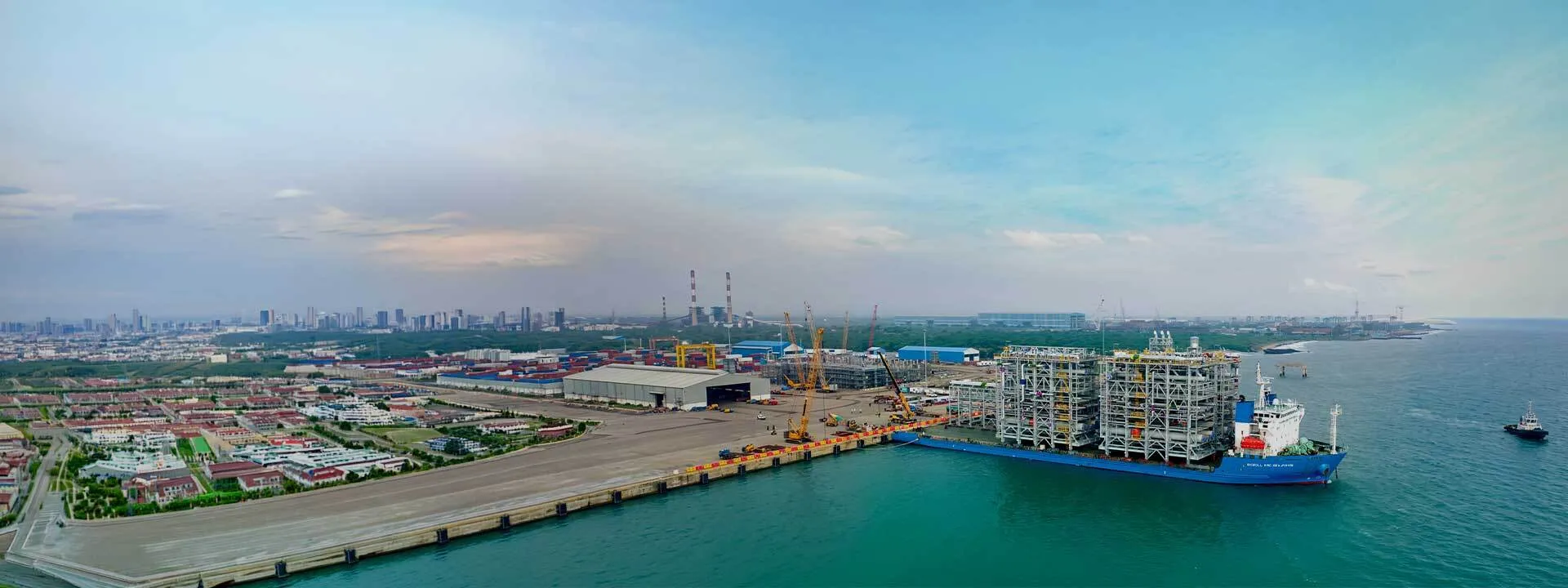
L&T’s scope comprised 47 Pre-assembled Units and 63 Pre-assembled Racks, with the modules weighing approximately 64,000 metric tonnes. Fabricated at the company’s Modular Fabrication Facility at Kattupalli near Chennai, the modules were transported from India to Karratha through 23 marine shipments in fully tested, pre-commissioned and ready-to-install condition. 

The project demonstrates the use of modularisation to shift substantial construction and integration activities away from the final project site. Fabrication, equipment installation, integration, testing and pre-commissioning were undertaken in a controlled environment, enabling parallel execution while supporting safety and quality oversight, predictability and reduced site interfaces. 

Commenting on the milestone, S N Subrahmanyan, Chairman & Managing Director, Larsen & Toubro, said, “Project CERES reflects how L&T is elevating India’s role in the global project-delivery ecosystem, from a manufacturing base to a source of integrated engineering, technology and execution capabilities.” He added that the achievement demonstrates the depth of India’s industrial ecosystem and its ability to meet demanding international standards. 

Subramanian Sarma, Deputy Managing Director & President, Larsen & Toubro, described modularisation as a “game changer” for large and complex energy projects. According to him, moving construction, integration, testing and pre-commissioning to a controlled fabrication environment enables parallel execution, strengthens safety and quality oversight, improves predictability and reduces complexity at the project site. 

The project achieved 37 million safe workhours and met Australian biosecurity and Electrical Equipment in Hazardous Areas requirements. Rigorous dimensional, quality and interface controls supported the integration of the modules at the Karratha project site. Several complex equipment packages incorporated into the modules were fabricated at L&T’s advanced manufacturing facility at Hazira, Gujarat. 

Executed from L&T’s Modular Fabrication Facility at Kattupalli, the project further demonstrates the facility’s role in large-scale modular fabrication. Spread across 900,000 sq m, the waterfront facility has dedicated marine load-out infrastructure and an annual fabrication capacity exceeding 70,000 metric tonnes. 

The completion of Project CERES demonstrates the scale at which modular fabrication can be deployed for complex projects across geographies. With 110 modules fabricated, tested, pre-commissioned and transported from India to Australia, the project brings engineering, fabrication, integration and international logistics together within a single delivery model. L&T said the experience has relevance across LNG, gas processing, refining, petrochemicals, chemicals, hydrogen, low-carbon fuels and other energy projects where remote locations, constrained construction environments, skilled-labour availability and schedule certainty are critical considerations.

Larsen & Toubro (L&T) has completed the fabrication and delivery of 110 modules for Project CERES, Australia’s largest urea manufacturing plant, marking a significant milestone in the execution of the 2.3 MTPA facility. The project is being developed by Perdaman Chemicals & Fertilisers in Karratha, Western Australia, under the Saipem-Clough Joint Venture. L&T’s scope comprised 47 Pre-assembled Units and 63 Pre-assembled Racks, with the modules weighing approximately 64,000 metric tonnes. Fabricated at the company’s Modular Fabrication Facility at Kattupalli near Chennai, the modules were transported from India to Karratha through 23 marine shipments in fully tested, pre-commissioned and ready-to-install condition. The project demonstrates the use of modularisation to shift substantial construction and integration activities away from the final project site. Fabrication, equipment installation, integration, testing and pre-commissioning were undertaken in a controlled environment, enabling parallel execution while supporting safety and quality oversight, predictability and reduced site interfaces. Commenting on the milestone, S N Subrahmanyan, Chairman & Managing Director, Larsen & Toubro, said, “Project CERES reflects how L&T is elevating India’s role in the global project-delivery ecosystem, from a manufacturing base to a source of integrated engineering, technology and execution capabilities.” He added that the achievement demonstrates the depth of India’s industrial ecosystem and its ability to meet demanding international standards. Subramanian Sarma, Deputy Managing Director & President, Larsen & Toubro, described modularisation as a “game changer” for large and complex energy projects. According to him, moving construction, integration, testing and pre-commissioning to a controlled fabrication environment enables parallel execution, strengthens safety and quality oversight, improves predictability and reduces complexity at the project site. The project achieved 37 million safe workhours and met Australian biosecurity and Electrical Equipment in Hazardous Areas requirements. Rigorous dimensional, quality and interface controls supported the integration of the modules at the Karratha project site. Several complex equipment packages incorporated into the modules were fabricated at L&T’s advanced manufacturing facility at Hazira, Gujarat. Executed from L&T’s Modular Fabrication Facility at Kattupalli, the project further demonstrates the facility’s role in large-scale modular fabrication. Spread across 900,000 sq m, the waterfront facility has dedicated marine load-out infrastructure and an annual fabrication capacity exceeding 70,000 metric tonnes. The completion of Project CERES demonstrates the scale at which modular fabrication can be deployed for complex projects across geographies. With 110 modules fabricated, tested, pre-commissioned and transported from India to Australia, the project brings engineering, fabrication, integration and international logistics together within a single delivery model. L&T said the experience has relevance across LNG, gas processing, refining, petrochemicals, chemicals, hydrogen, low-carbon fuels and other energy projects where remote locations, constrained construction environments, skilled-labour availability and schedule certainty are critical considerations.

Related Stories

Gold Stories

Next Story
Infrastructure Transport

Madhya Pradesh Plans Airport Every 150 Km, Airstrip Every 75 Km

The Madhya Pradesh government plans to establish an airport every 150 km, an airstrip every 75 km and a helipad every 45 km, according to the state aviation department. Airports being developed in Ujjain and Shivpuri are expected to take the state’s airport count to 10. The government stated that Madhya Pradesh currently has eight airports in eight cities. The locations named by the department include Indore, Bhopal, Jabalpur, Gwalior, Khajuraho, Rewa and Satna. The state also has more than 20 airstrips and 220 helipads, while permanent helipads are planned in all 230 Assembly constituencies..

Next Story
Infrastructure Transport

West Bengal Plans Four Airports for 2028 Completion Under UDAN

West Bengal will develop four new airports under an agreement signed between the Union Civil Aviation Ministry and the state government, with all facilities targeted for completion by 2028. Union Civil Aviation Minister K Rammohan Naidu said the airports would be located at Charra in Purulia, Kalaikunda in Paschim Medinipur, Balurghat in Dakshin Dinajpur and Hasimara in Alipurduar. The project is part of the Centre’s regional connectivity UDAN programme. The Union government has committed Rs. 290 bn for West Bengal’s aviation sector over the next decade, while the state government will pro..

Next Story
Infrastructure Transport

Mumbai Airport Bars Russian Airlines as Agent Seeks Ministry Intervention

Mumbai airport has stopped accepting cargo booked on Russian flag carrier Aeroflot, disrupting shipments and prompting the airline’s cargo sales agent, Delmos Aviation, to seek intervention from the Ministry of Civil Aviation. The restrictions also affect cargo booked on Volga-Dnepr Airlines, according to a letter submitted by Delmos Aviation to the ministry on September 30. Aeroflot operates daily flights between Moscow and Delhi and runs a winter seasonal service to Goa. Bonded cargo from Mumbai and other cities is transported by road to Delhi before being flown to Russia. The agent said t..

Advertisement

Subscribe to Our Newsletter

Get daily newsletters around different themes from Construction world.

STAY CONNECTED

Advertisement

SPECIAL OFFER
QR Code