+
Mahavitaran Cuts Rooftop Solar Price to Rs45,450 per kW
POWER & RENEWABLE ENERGY

Mahavitaran Cuts Rooftop Solar Price to Rs45,450 per kW

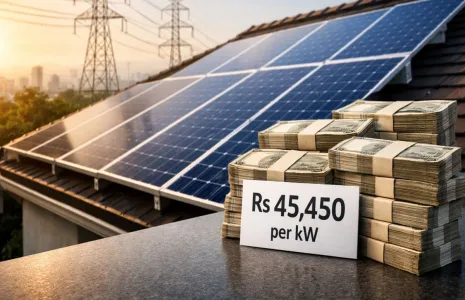
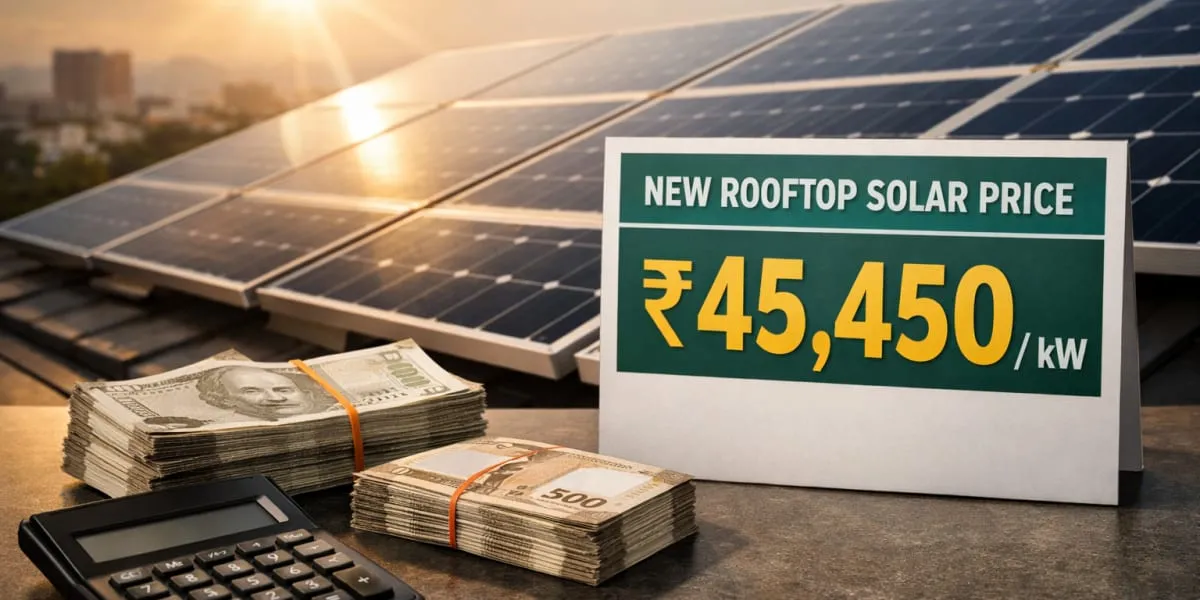
Maharashtra State Electricity Distribution Company Limited (Mahavitaran) has reduced the approved price for rooftop solar installations to Rs45,450 per kilowatt (kW), representing a reduction that yields savings of Rs15,000 for consumers on typical one kW systems. The pricing revision complements the central government scheme Pradhan Mantri Surya Ghar Muft Bijli Yojana (PMSMBY), which provides direct subsidies of Rs30,000 for one kW, Rs60,000 for two kW and Rs78,000 for three kW systems. Officials said the combined effect of the revised rate and central assistance improves the affordability of residential solar.

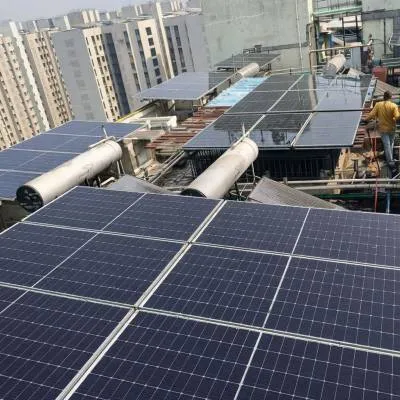
A standard one kW rooftop solar system typically generates around 120 units per month and for many small households this output can match or exceed monthly electricity consumption, potentially reducing bills to zero. Surplus generation can be exported to the grid under net metering arrangements with Mahavitaran, enabling consumers to receive payments for excess supply. The Maharashtra government is also extending additional state assistance under the SMART scheme to support below poverty line and economically weaker section consumers.

The cost rationalisation coincides with steady expansion of rooftop solar in the state, with rooftop capacity surpassing five gigawatt (GW) as of January 2025 and forming a significant share of the overall installed solar base of 19.1 GW. By lowering installation costs and ensuring vendor transparency through published empanelment lists on its official website and the SMART portal, Mahavitaran intends to accelerate adoption across residential categories. The SMART rooftop solar subsidy scheme includes grants of up to 95 per cent for low income households that consume less than 100 units of electricity per month.

The revised pricing framework is expected to deepen rooftop solar penetration particularly among small and economically weaker consumers by improving payback periods and reducing upfront barriers to entry. Wider adoption is likely to be supported by clearer vendor lists and the interaction of central and state subsidies with the new price point. Policymakers and distribution planners anticipate that the measures will strengthen the transition to distributed renewable generation across the state.

Maharashtra State Electricity Distribution Company Limited (Mahavitaran) has reduced the approved price for rooftop solar installations to Rs45,450 per kilowatt (kW), representing a reduction that yields savings of Rs15,000 for consumers on typical one kW systems. The pricing revision complements the central government scheme Pradhan Mantri Surya Ghar Muft Bijli Yojana (PMSMBY), which provides direct subsidies of Rs30,000 for one kW, Rs60,000 for two kW and Rs78,000 for three kW systems. Officials said the combined effect of the revised rate and central assistance improves the affordability of residential solar. A standard one kW rooftop solar system typically generates around 120 units per month and for many small households this output can match or exceed monthly electricity consumption, potentially reducing bills to zero. Surplus generation can be exported to the grid under net metering arrangements with Mahavitaran, enabling consumers to receive payments for excess supply. The Maharashtra government is also extending additional state assistance under the SMART scheme to support below poverty line and economically weaker section consumers. The cost rationalisation coincides with steady expansion of rooftop solar in the state, with rooftop capacity surpassing five gigawatt (GW) as of January 2025 and forming a significant share of the overall installed solar base of 19.1 GW. By lowering installation costs and ensuring vendor transparency through published empanelment lists on its official website and the SMART portal, Mahavitaran intends to accelerate adoption across residential categories. The SMART rooftop solar subsidy scheme includes grants of up to 95 per cent for low income households that consume less than 100 units of electricity per month. The revised pricing framework is expected to deepen rooftop solar penetration particularly among small and economically weaker consumers by improving payback periods and reducing upfront barriers to entry. Wider adoption is likely to be supported by clearer vendor lists and the interaction of central and state subsidies with the new price point. Policymakers and distribution planners anticipate that the measures will strengthen the transition to distributed renewable generation across the state.

Next Story
Building Material

NITI Aayog Unveils Cement Decarbonisation Roadmap

NITI Aayog has released a sector-specific decarbonisation roadmap for cement as part of three green transition reports covering cement, aluminium and MSMEs. The report projects cement production rising to around 2,100 million tonnes by 2070 from 391 million tonnes in 2023, while targeting a reduction in carbon intensity to 0.09–0.13 tCO₂e per tonne. It recommends clinker substitution, refuse-derived fuels, CCUS adoption and carbon trading mechanisms to enable deep decarbonisation. ..

Next Story
Technology

Genesys Launches Advanced GeoRadar System

Genesys International Corporation has launched an advanced Ground Penetrating Radar (GPR) solution from IDS GeoRadar for underground utility mapping in India. The system uses patented Equalised Scrambling Technology (EST) and Wide/Multi-Array Antenna Technology to deliver high-resolution three-dimensional imaging of subsurface infrastructure. The technology enables the detection and mapping of buried assets such as water pipelines, sewer networks, telecom cables and power lines. By providing detailed subsurface insights, the system aims to help urban authorities and infrastructure developers ..

Next Story
Infrastructure Urban

Hindustan Zinc Partners Virginia Tech to Boost Silver Recovery

Hindustan Zinc Limited recently signed a Memorandum of Understanding (MoU) with Virginia Tech to advance research aimed at improving silver recovery across its lead–zinc (Pb–Zn) concentrators. The collaboration will focus on refining flotation techniques and optimising reagent usage to improve concentrate quality and operational efficiency at processing plants.Virginia Tech, based in Blacksburg, Virginia, is globally recognised for its expertise in mining engineering, mineral processing and applied metallurgical research. Through this partnership, Hindustan Zinc will leverage global resear..

Advertisement

Subscribe to Our Newsletter

Get daily newsletters around different themes from Construction world.

STAY CONNECTED

Advertisement

Advertisement

Advertisement

Open In App