Mahavitaran Cuts Rooftop Solar Rate To Rs45,450 Per Kilowatt
POWER & RENEWABLE ENERGY

Mahavitaran Cuts Rooftop Solar Rate To Rs45,450 Per Kilowatt

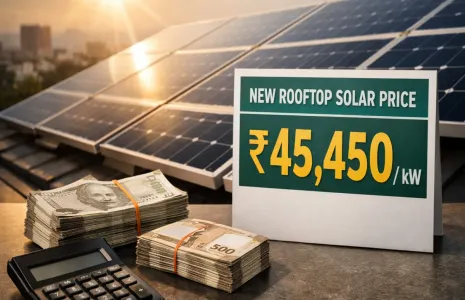
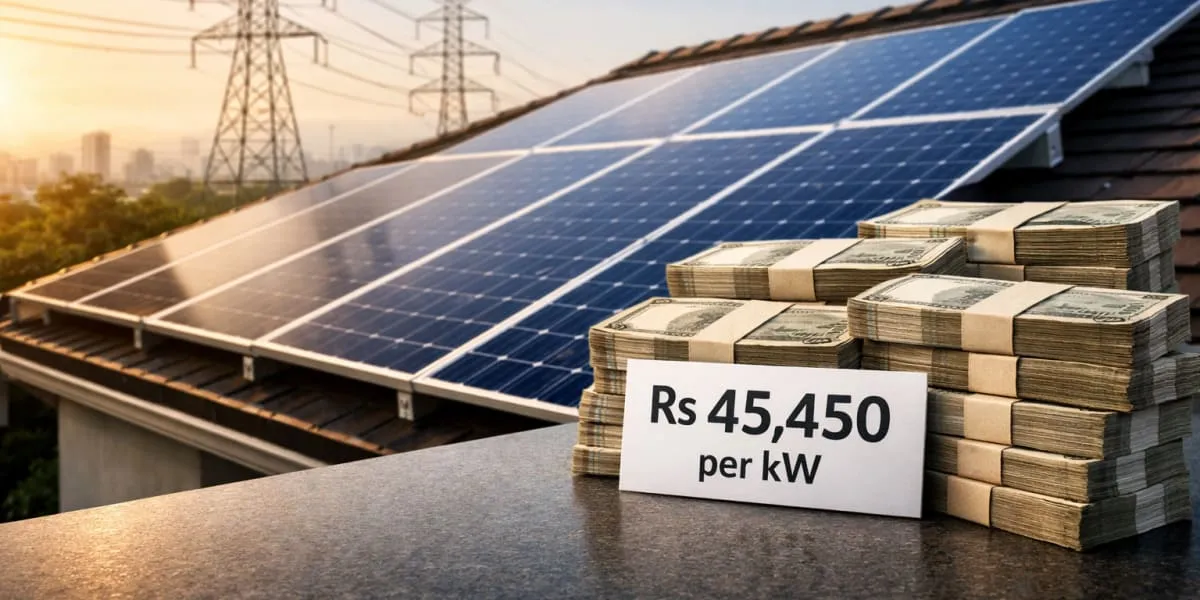
Maharashtra State Electricity Distribution Company Limited (Mahavitaran) has revised its rooftop solar installation price to Rs45,450 per kilowatt (kW), a reduction that is said to save consumers Rs15,000 on standard systems. The utility framed the move as complementing the central government scheme Pradhan Mantri Surya Ghar Muft Bijli Yojana (PMSMBY), which provides direct subsidies of Rs30,000 for one kW, Rs60,000 for two kW and Rs78,000 for three kW systems. The revised price is intended to improve affordability and uptake.\n\nA typical one kW rooftop solar system can generate about 120 units per month, which for many small households matches or exceeds domestic consumption and can reduce electricity bills to zero. Surplus generation may be exported to the grid under net metering arrangements, allowing consumers to earn additional income from feed-in. Mahavitaran has published empanelment lists of vendors on its official website and the SMART portal to enhance transparency in procurement and help consumers identify authorised suppliers.\n\nThe Maharashtra government is offering additional state-level assistance through the SMART scheme targeted at below poverty line (BPL) and economically weaker section (EWS) consumers to further strengthen affordability. The SMART scheme launched last year includes subsidies of up to 95 per cent for low-income households that consume less than 100 units per month. Officials expect the combined effect of central and state support together with cost rationalisation to lower upfront barriers to adoption among vulnerable segments.\n\nThe pricing revision arrives as rooftop solar capacity in the state has surpassed 5 gigawatt (GW), forming a substantial portion of the overall installed solar base of 19.1 GW as of January 2025. By lowering installation costs and ensuring vendor transparency the utility seeks to accelerate residential uptake across categories and deepen rooftop solar penetration, particularly among small and economically weaker consumers. The move is presented as part of broader efforts to expand distributed renewable generation in the state.

Maharashtra State Electricity Distribution Company Limited (Mahavitaran) has revised its rooftop solar installation price to Rs45,450 per kilowatt (kW), a reduction that is said to save consumers Rs15,000 on standard systems. The utility framed the move as complementing the central government scheme Pradhan Mantri Surya Ghar Muft Bijli Yojana (PMSMBY), which provides direct subsidies of Rs30,000 for one kW, Rs60,000 for two kW and Rs78,000 for three kW systems. The revised price is intended to improve affordability and uptake.\n\nA typical one kW rooftop solar system can generate about 120 units per month, which for many small households matches or exceeds domestic consumption and can reduce electricity bills to zero. Surplus generation may be exported to the grid under net metering arrangements, allowing consumers to earn additional income from feed-in. Mahavitaran has published empanelment lists of vendors on its official website and the SMART portal to enhance transparency in procurement and help consumers identify authorised suppliers.\n\nThe Maharashtra government is offering additional state-level assistance through the SMART scheme targeted at below poverty line (BPL) and economically weaker section (EWS) consumers to further strengthen affordability. The SMART scheme launched last year includes subsidies of up to 95 per cent for low-income households that consume less than 100 units per month. Officials expect the combined effect of central and state support together with cost rationalisation to lower upfront barriers to adoption among vulnerable segments.\n\nThe pricing revision arrives as rooftop solar capacity in the state has surpassed 5 gigawatt (GW), forming a substantial portion of the overall installed solar base of 19.1 GW as of January 2025. By lowering installation costs and ensuring vendor transparency the utility seeks to accelerate residential uptake across categories and deepen rooftop solar penetration, particularly among small and economically weaker consumers. The move is presented as part of broader efforts to expand distributed renewable generation in the state.

Next Story
Real Estate

Housing Sales Dip 7 per cent QoQ Across Top Cities

India’s housing market saw a 7 per cent quarter-on-quarter decline in sales across the top seven cities in Q1 2026, with approximately 1,01,675 units sold compared to 1,08,970 units in Q4 2025, according to ANAROCK Group. However, on a yearly basis, sales rose 9 per cent, indicating continued underlying demand.The total sales value stood at around Rs 1.51 trillion, reflecting a 5 per cent quarterly drop but a 6 per cent annual increase. Mumbai Metropolitan Region and Bengaluru together accounted for nearly 48 per cent of total sales, while Chennai recorded the highest quarterly decline at 18..

Next Story
Real Estate

Birla Estates Enters Mumbai Redevelopment

Birla Estates has announced its entry into Mumbai’s redevelopment segment with a luxury residential project in Khar West, developed in partnership with Parinee Real Estate Builders. The project will redevelop Anmol Co-operative Housing Society and Bhartiya Bhavan Co-operative Housing Society, marking the company’s first redevelopment initiative in the Mumbai Metropolitan Region.Spread across 1.3 acres, the development will offer a saleable area of 2.9 lakh sq ft with an estimated revenue potential of Rs 17 billion. Positioned in one of Mumbai’s prime residential micro-markets, the projec..

Next Story
Infrastructure Urban

Hitachi, MUFG Expand EV Financing Model

Hitachi and MUFG Bank have expanded their NextGen business co-creation model to accelerate decarbonised mobility by financing electric vehicles and charging infrastructure. The renewed collaboration aims to address key barriers to electrification, including limited access to capital and the need for integrated energy solutions.Building on earlier partnerships, the expanded model extends beyond battery-focused solutions to include electric mobility assets, charging systems and energy management infrastructure across global markets. The initiative will leverage structured financing through speci..

Advertisement

Subscribe to Our Newsletter

Get daily newsletters around different themes from Construction world.

STAY CONNECTED

Advertisement

Advertisement

Advertisement