+
Navitas Solar Plans Rs. 100 bn Green Energy Expansion
POWER & RENEWABLE ENERGY

Navitas Solar Plans Rs. 100 bn Green Energy Expansion

Surat-based Navitas Solar is preparing an investment plan of Rs. 100 bn over the next five years to establish an integrated renewable energy ecosystem across Gujarat and Maharashtra. The proposed expansion will cover manufacturing, power generation and energy storage.

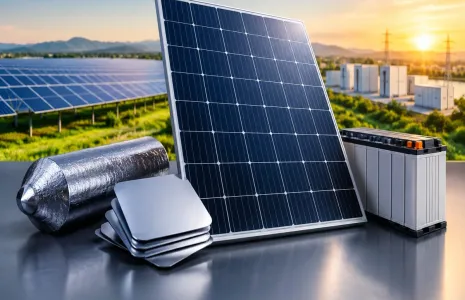
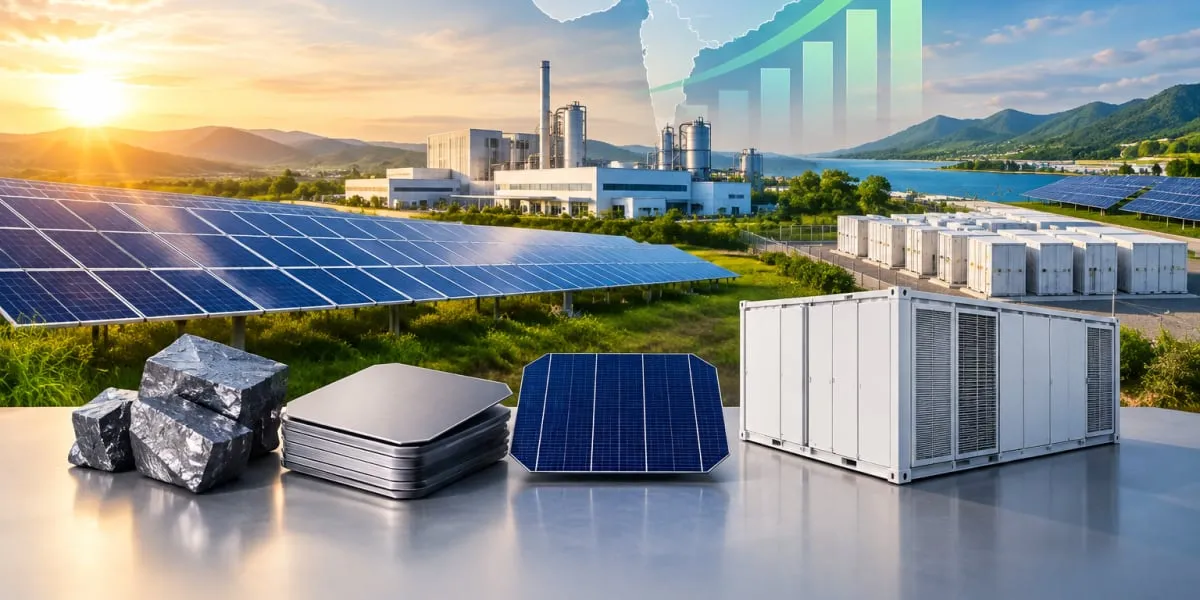
The company plans to build facilities for ingots, wafers, high-efficiency solar cells and battery energy storage systems (BESS), besides developing two solar parks. The strategy is intended to increase backward integration as India promotes domestic value addition and clean energy infrastructure.

Navitas Solar has already commissioned a 2.5-GW solar module manufacturing facility at Sisodara in Surat district, taking its total module production capacity to 3 GW. It is also setting up a 2.4-GW solar cell manufacturing line on an adjoining plot, along with 100-MW pilot lines for ingot and wafer production.

The first phase of the solar cell plant involves an investment of Rs. 12 bn, with operations expected to begin by July 2027. The pilot facilities will help the company build technical expertise before scaling production, while the promoters are planning an initial public offering over the next couple of years to raise part of the required capital.

The promoters currently hold about 67 per cent of Navitas Solar after earlier equity dilution. The company, founded in 2013 by Vineet Mittal, Sunay Shah, Ankit Singhania and Aditya Singhania, reported revenue of Rs. 13 bn in FY26 and is targeting more than Rs. 20 bn in FY27.

Beyond manufacturing, Navitas Solar is developing two solar parks in Maharashtra under engineering, procurement and construction and independent power producer models, with capacities of 200 MW and 25 MW. It is also entering the storage market with a 5-GWh BESS facility in Vadodara, involving an investment of about Rs. 1 bn.

Surat-based Navitas Solar is preparing an investment plan of Rs. 100 bn over the next five years to establish an integrated renewable energy ecosystem across Gujarat and Maharashtra. The proposed expansion will cover manufacturing, power generation and energy storage. The company plans to build facilities for ingots, wafers, high-efficiency solar cells and battery energy storage systems (BESS), besides developing two solar parks. The strategy is intended to increase backward integration as India promotes domestic value addition and clean energy infrastructure. Navitas Solar has already commissioned a 2.5-GW solar module manufacturing facility at Sisodara in Surat district, taking its total module production capacity to 3 GW. It is also setting up a 2.4-GW solar cell manufacturing line on an adjoining plot, along with 100-MW pilot lines for ingot and wafer production. The first phase of the solar cell plant involves an investment of Rs. 12 bn, with operations expected to begin by July 2027. The pilot facilities will help the company build technical expertise before scaling production, while the promoters are planning an initial public offering over the next couple of years to raise part of the required capital. The promoters currently hold about 67 per cent of Navitas Solar after earlier equity dilution. The company, founded in 2013 by Vineet Mittal, Sunay Shah, Ankit Singhania and Aditya Singhania, reported revenue of Rs. 13 bn in FY26 and is targeting more than Rs. 20 bn in FY27. Beyond manufacturing, Navitas Solar is developing two solar parks in Maharashtra under engineering, procurement and construction and independent power producer models, with capacities of 200 MW and 25 MW. It is also entering the storage market with a 5-GWh BESS facility in Vadodara, involving an investment of about Rs. 1 bn.

Related Stories

Gold Stories

Next Story
Infrastructure Transport

Mumbai-Ahmedabad Bullet Train’s Surat-Vapi Section Set for 2027

The first section of the Mumbai-Ahmedabad Bullet Train corridor, linking Surat and Vapi, is targeted to begin services in 2027. Construction is expected to be completed by December 2026, while Railway Minister Ashwini Vaishnaw has indicated that an inauguration could take place around the middle of 2027. The National High Speed Rail Corporation (NHSRCL) said the train being manufactured in India is expected to reach the tracks around April or May 2027. The train will undergo extensive testing before the section is opened for passenger services. The project began construction in 2021 and includ..

Next Story
Infrastructure Transport

Indian Railways Approves Four Projects Worth Rs. 7.36 bn Across Four States

Indian Railways has approved four projects with a combined value of Rs. 7.36 bn across Uttar Pradesh, Maharashtra, Andhra Pradesh and Gujarat. The programme covers train protection, signalling, electric traction supply and a road overbridge, with each project assigned to a different railway zone. In Uttar Pradesh, Rs. 2.52 bn has been approved to extend the Kavach 4.0 automatic train protection system across 607.7 km in the Lucknow Division of North Eastern Railway. The system monitors train movements and can apply the brakes if a driver fails to observe a signal or exceeds a safe speed. The w..

Next Story
Infrastructure Urban

Chandru Raheja Sells 1.49% Stake in Mindspace REIT for Rs. 5 bn

Billionaire Chandru Lachmandas Raheja has sold a 1.49 per cent holding in Mindspace Business Parks REIT for Rs. 5 bn through a bulk deal on the BSE. The transaction involved 9.9 mn units and was executed at an average price of Rs. 505 per unit, according to exchange data. Following the sale, units of Mindspace Business Parks REIT were trading 0.18 per cent lower at Rs. 504.05 on Tuesday. Exchange data did not identify the buyers involved in the transaction. Raheja is the chairman of real estate company K Raheja Corp. The sale involved 99,00,990 units, representing 1.49 per cent of the Mumbai-b..

Advertisement

Subscribe to Our Newsletter

Get daily newsletters around different themes from Construction world.

STAY CONNECTED

Advertisement

SPECIAL OFFER
QR Code