India’s Oil, Gas Import Bill Soars amid West Asia Crisis
POWER & RENEWABLE ENERGY

India’s Oil, Gas Import Bill Soars amid West Asia Crisis

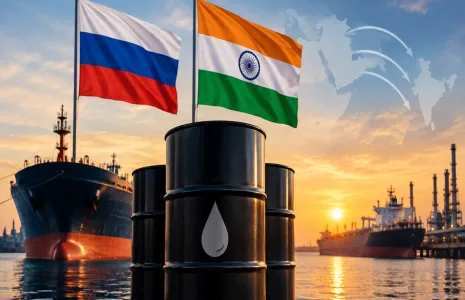
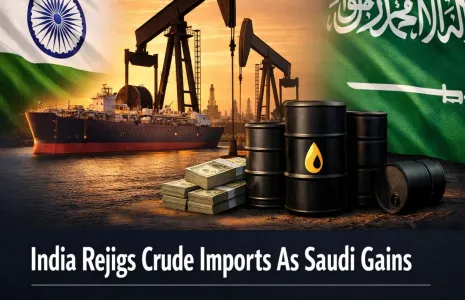
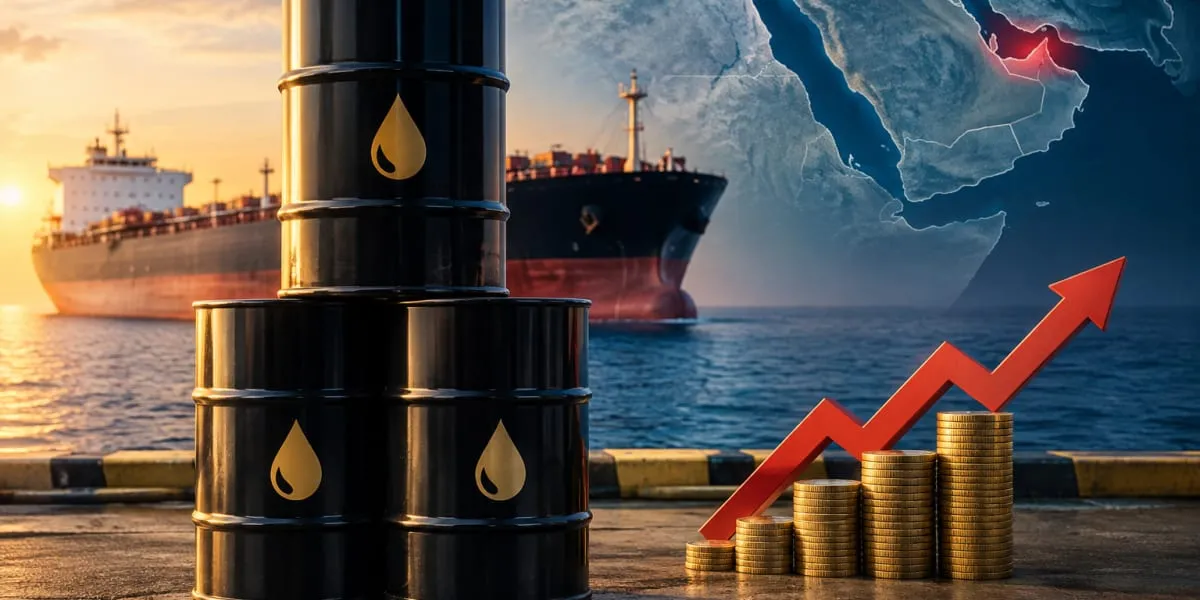
India’s crude oil import bill rose 53.5 per cent year on year to $111 bn in April-October, the first seven months of the financial year, according to provisional data from the Ministry of Petroleum and Natural Gas (MoPNG). Import volumes increased only 2.7 per cent to 146.6 mn t, indicating that higher prices, rather than substantially larger purchases, drove the increase amid the West Asia conflict and the resulting disruption risks around the Strait of Hormuz.

India imports more than 88 per cent of its crude oil requirement and about half of its natural gas consumption in the form of liquefied natural gas (LNG). Before the conflict began in late February, the Persian Gulf supplied about 40 per cent of India’s crude oil, 60 per cent of its LNG and 90 per cent of its liquefied petroleum gas through the Strait of Hormuz. India remains a net exporter of petroleum products because of its large refining capacity.

The average landed price of imported crude rose to $103.3 per barrel during April-October from about $69 per barrel a year earlier. In October, the latest month with available data, the oil import bill increased 87.5 per cent year on year to $19.5 bn. The Indian crude basket averaged $116.1 per barrel in September and $119.9 per barrel in October, after easing during June-August.

LNG imports increased 7.4 per cent to 22,175 mscm, or million standard cubic metres, but the import bill rose 35.8 per cent to $11 bn. Petroleum product imports fell 25 per cent in value to $9.9 bn, while export volumes declined 13.5 per cent to 32.1 mn t. However, higher international prices lifted petroleum product export value 47 per cent to $34.1 bn. Net oil and gas imports consequently rose 39 per cent to $97.7 bn.

The increase has implications for India’s trade balance, current account, inflation and the rupee. Wholesale fuel and power inflation reached 32.8 per cent in October, government data showed. India imports 1.8-2 bn barrels of oil annually, and each $1-per-barrel increase can raise the annualised import bill by up to $2 bn. Diversified sourcing has supported fuel availability, although gas supplies to some industries and commercial consumers were rationed during the conflict’s initial months.

India’s crude oil import bill rose 53.5 per cent year on year to $111 bn in April-October, the first seven months of the financial year, according to provisional data from the Ministry of Petroleum and Natural Gas (MoPNG). Import volumes increased only 2.7 per cent to 146.6 mn t, indicating that higher prices, rather than substantially larger purchases, drove the increase amid the West Asia conflict and the resulting disruption risks around the Strait of Hormuz. India imports more than 88 per cent of its crude oil requirement and about half of its natural gas consumption in the form of liquefied natural gas (LNG). Before the conflict began in late February, the Persian Gulf supplied about 40 per cent of India’s crude oil, 60 per cent of its LNG and 90 per cent of its liquefied petroleum gas through the Strait of Hormuz. India remains a net exporter of petroleum products because of its large refining capacity. The average landed price of imported crude rose to $103.3 per barrel during April-October from about $69 per barrel a year earlier. In October, the latest month with available data, the oil import bill increased 87.5 per cent year on year to $19.5 bn. The Indian crude basket averaged $116.1 per barrel in September and $119.9 per barrel in October, after easing during June-August. LNG imports increased 7.4 per cent to 22,175 mscm, or million standard cubic metres, but the import bill rose 35.8 per cent to $11 bn. Petroleum product imports fell 25 per cent in value to $9.9 bn, while export volumes declined 13.5 per cent to 32.1 mn t. However, higher international prices lifted petroleum product export value 47 per cent to $34.1 bn. Net oil and gas imports consequently rose 39 per cent to $97.7 bn. The increase has implications for India’s trade balance, current account, inflation and the rupee. Wholesale fuel and power inflation reached 32.8 per cent in October, government data showed. India imports 1.8-2 bn barrels of oil annually, and each $1-per-barrel increase can raise the annualised import bill by up to $2 bn. Diversified sourcing has supported fuel availability, although gas supplies to some industries and commercial consumers were rationed during the conflict’s initial months.

Related Stories

Gold Stories

Next Story
Infrastructure Urban

NDMC Approves Five Prakriti Cafés in Three Delhi Parks

The New Delhi Municipal Council (NDMC) approved the setting up of five Prakriti Cafés across three prominent parks in the capital during its council meeting on Tuesday. The locations include Lodhi Garden, Nehru Park and BRICS Garden on Shanti Path. Two cafés will be developed in Lodhi Garden, while two others will come up in Nehru Park. The remaining café is planned for BRICS Garden. The council granted in-principle approval to explore the project under the Build-Operate-Transfer (BOT) model. Under the proposed arrangement, the selected agency will develop the cafés at its own cost and man..

Next Story
Infrastructure Transport

Air India and Airbus to Build India's First Corporate SAF Programme

Air India and Airbus have partnered to develop a framework for India’s first voluntary corporate Sustainable Aviation Fuel (SAF) programme. The feasibility study will examine how businesses can reduce lifecycle emissions associated with air travel by voluntarily supporting the procurement and use of SAF. Jürgen Westermeier, President and Managing Director of Airbus India and South Asia, and P Balaji, Group Head of Governance, Risk and Compliance and Corporate Affairs at Air India, signed the Feasibility Study Agreement. The signing took place in the presence of Rammohan Naidu Kinjarapu, Min..
Next Story
Infrastructure Energy

Indian Companies to Buy US LPG from Four Firms in 2027

Indian state-run oil companies have awarded a joint tender to Saudi Aramco, Chevron, TotalEnergies Trading SA (Totsa) and Vitol for the import of about 2.75 mn t of US liquefied petroleum gas (LPG) in 2027. The contracts are intended to diversify supplies and reduce India’s reliance on the Middle East. Indian Oil, Bharat Petroleum and Hindustan Petroleum floated the tender in September. They sought four very large gas carrier (VLGC) cargoes each month on a delivered basis and one cargo each month on a free-on-board basis from the US. A VLGC typically carries about 46,000 t of LPG, which cons..

Advertisement

Subscribe to Our Newsletter

Get daily newsletters around different themes from Construction world.

STAY CONNECTED

Advertisement

SPECIAL OFFER
QR Code