Nepal Plans Fourfold Increase in Hydropower Supplies to India
POWER & RENEWABLE ENERGY

Nepal Plans Fourfold Increase in Hydropower Supplies to India

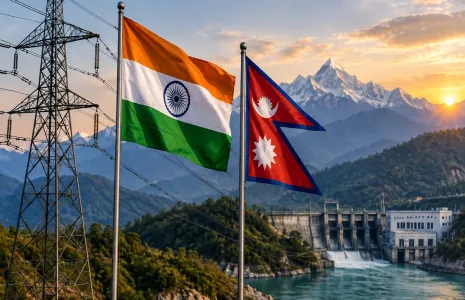
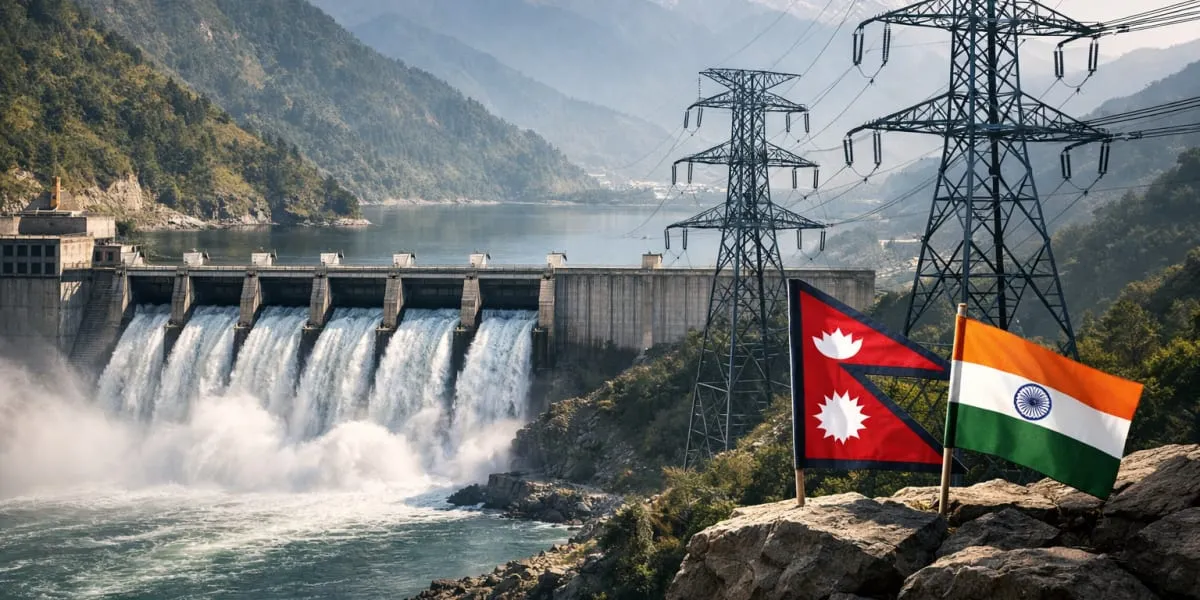
Nepal plans to quadruple hydropower supplies to neighbouring India, aiming to help New Delhi meet rising electricity demand as the war in the Middle East complicates regional resource planning. The government in Kathmandu has framed the initiative as a strategic opportunity to expand exports and support cross border energy security. Officials have presented the target as part of a broader push to harness the country's river resources for sustainable trade. The government has outlined broad goals rather than detailed timetables.

The plan is expected to deepen bilateral energy cooperation and to provide India with a low carbon alternative to fossil fuel generation. Increased flows of electricity could ease pressure on thermal plants and imported fuels while offering seasonal flexibility as water availability and demand patterns vary. New transmission links and commercial arrangements will be necessary to translate generation potential into reliable exports. Commercial terms and price mechanisms will be central to sustaining exports.

For Nepal the expansion offers an avenue for revenue growth and for accelerating domestic development through energy export earnings. Achieving the target will require significant investment in generation capacity and in grid infrastructure, as well as streamlined regulatory approvals and cross border coordination. Stakeholders have indicated that public private partnerships and foreign investment could play a role in mobilising required finance and technical expertise. Capacity building and institutional strengthening are also cited as priorities.

Challenges remain around environmental safeguards, resettlement issues and the management of river basins to balance domestic needs with export commitments. Timelines for scaling output are likely to depend on negotiations, project readiness and the availability of capital and technology. Observers expect that regional dialogue and pragmatic agreements will be essential if the ambition to quadruple supplies is to be realised in coming years. Success will hinge on predictable policies and cooperative implementation.

Nepal plans to quadruple hydropower supplies to neighbouring India, aiming to help New Delhi meet rising electricity demand as the war in the Middle East complicates regional resource planning. The government in Kathmandu has framed the initiative as a strategic opportunity to expand exports and support cross border energy security. Officials have presented the target as part of a broader push to harness the country's river resources for sustainable trade. The government has outlined broad goals rather than detailed timetables. The plan is expected to deepen bilateral energy cooperation and to provide India with a low carbon alternative to fossil fuel generation. Increased flows of electricity could ease pressure on thermal plants and imported fuels while offering seasonal flexibility as water availability and demand patterns vary. New transmission links and commercial arrangements will be necessary to translate generation potential into reliable exports. Commercial terms and price mechanisms will be central to sustaining exports. For Nepal the expansion offers an avenue for revenue growth and for accelerating domestic development through energy export earnings. Achieving the target will require significant investment in generation capacity and in grid infrastructure, as well as streamlined regulatory approvals and cross border coordination. Stakeholders have indicated that public private partnerships and foreign investment could play a role in mobilising required finance and technical expertise. Capacity building and institutional strengthening are also cited as priorities. Challenges remain around environmental safeguards, resettlement issues and the management of river basins to balance domestic needs with export commitments. Timelines for scaling output are likely to depend on negotiations, project readiness and the availability of capital and technology. Observers expect that regional dialogue and pragmatic agreements will be essential if the ambition to quadruple supplies is to be realised in coming years. Success will hinge on predictable policies and cooperative implementation.

Next Story
Infrastructure Transport

The Critical Path

In Ircon International Ltd v. Afcons Infrastructure Ltd, OMP (Comm) 279/2019, the Delhi High Court examined how delay and extension of time (‘EOT’) are to be assessed in construction contracts, particularly in the context of the ‘critical path’ while dealing with challenge to an arbitral award under Section 34 of the Arbitration and Conciliation Act 1996 (‘the Act’). The High Court’s observations regarding the critical path are of significant import for construction and infrastructure projects and related arbitration. The parties entered into a contract for construction of T..

Next Story
Infrastructure Urban

Urgently Wanted: 2 Million Workers!

Construction, India’s second largest employer by industry, employs about 50 million workers but could additionally absorb another 40 million workers, according to estimates shared by the Construction Skill Development Council of India (CSDCI) in 2023. Within this, citing trade estimates, Rahul Bahl, Managing Director, Krishna Buildestates, says the shortage of trained, skilled workers is currently about 2 million, and is expected to rise to 5 million by 2030.Not only is the construction industry struggling to find workers but construction labour productivity in India significantly trails g..

Next Story
Real Estate

144 Years in the Making!

1. A century-spanning construction storyConstruction began in 1882, making the Sagrada Família one of the longest-running architectural projects in modern history. Today, the project is overseen by the Fundació Junta Constructora del Temple Expiatori de la Sagrada Família, with Chief Architect Jordi Faulí leading its final construction phases.2. The world’s tallest church towerhe Sagrada Família in Barcelona reached its final height of 172.5 m (566 ft) on February 20, 2026, with the installation of the cross atop the Tower of Jesus Christ, making it the tallest church in the world...To ..

Advertisement

Subscribe to Our Newsletter

Get daily newsletters around different themes from Construction world.

STAY CONNECTED

Advertisement

Advertisement

Advertisement