NTPC Raises Capacity Of Dadri Units Five And Six To 500 MW Each
POWER & RENEWABLE ENERGY

NTPC Raises Capacity Of Dadri Units Five And Six To 500 MW Each

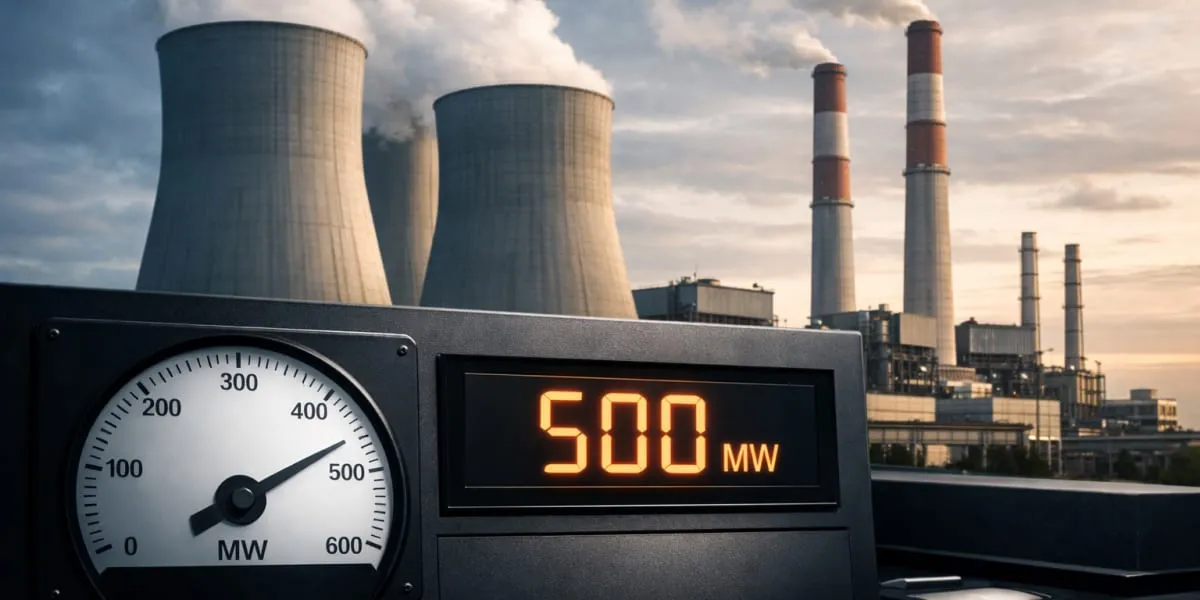
NTPC Limited has announced the uprating of two generating units at the Dadri Thermal Power Station, raising the output of Units five and six from 490 Megawatt (MW) each to 500 MW each, effective seven April 2026. The company informed stock exchanges of the change in accordance with SEBI listing obligations and disclosure requirements. The uprating forms part of ongoing efforts to enhance operational performance across the fleet. The uprating followed approval from the Central Electricity Authority and routine testing to validate performance at the higher output level.

With the successful increase in unit output, the NTPC Group's total installed capacity now stands at 89,128 MW while commercial capacity is reported at 88,048 MW. The matter was communicated to BSE Limited and the National Stock Exchange of India Limited as part of regulatory filings. The company secretary and compliance officer conveyed that the development reflects continued focus on improving capacity utilisation. The confirmation emphasised measures to improve capacity utilisation and minimise operational disruption during the uprating process.

Uprating existing thermal units is identified by the company as a cost effective route to augment generation without new greenfield construction. The measure is expected to improve the efficiency and output of existing assets and to strengthen supply reliability for distribution networks serving northern states. The Dadri Thermal Power Station is noted as a key hub for power supply in the region. Refraining from building new plants for incremental capacity is presented as a means to contain capital expenditure and shorten lead times.

The update underscores a pragmatic approach to meeting rising electricity demand while managing capital expenditure and timelines. NTPC will continue to pursue operational measures that bolster generation capacity and system resilience. The company will report any further material changes to regulators and exchanges in line with applicable standards. Performance will be monitored and reported in subsequent regulatory filings as the units operate at the enhanced output.

NTPC Limited has announced the uprating of two generating units at the Dadri Thermal Power Station, raising the output of Units five and six from 490 Megawatt (MW) each to 500 MW each, effective seven April 2026. The company informed stock exchanges of the change in accordance with SEBI listing obligations and disclosure requirements. The uprating forms part of ongoing efforts to enhance operational performance across the fleet. The uprating followed approval from the Central Electricity Authority and routine testing to validate performance at the higher output level. With the successful increase in unit output, the NTPC Group's total installed capacity now stands at 89,128 MW while commercial capacity is reported at 88,048 MW. The matter was communicated to BSE Limited and the National Stock Exchange of India Limited as part of regulatory filings. The company secretary and compliance officer conveyed that the development reflects continued focus on improving capacity utilisation. The confirmation emphasised measures to improve capacity utilisation and minimise operational disruption during the uprating process. Uprating existing thermal units is identified by the company as a cost effective route to augment generation without new greenfield construction. The measure is expected to improve the efficiency and output of existing assets and to strengthen supply reliability for distribution networks serving northern states. The Dadri Thermal Power Station is noted as a key hub for power supply in the region. Refraining from building new plants for incremental capacity is presented as a means to contain capital expenditure and shorten lead times. The update underscores a pragmatic approach to meeting rising electricity demand while managing capital expenditure and timelines. NTPC will continue to pursue operational measures that bolster generation capacity and system resilience. The company will report any further material changes to regulators and exchanges in line with applicable standards. Performance will be monitored and reported in subsequent regulatory filings as the units operate at the enhanced output.

Next Story
Infrastructure Transport

AFCONS & Navayuga set world records with Missing Link Expressway

Maharashtra’s most ambitious greenfield bypass — a 13.3-km alignment carrying twin record-setting tunnels and India’s tallest cable-stayed road bridge — was thrown open to traffic on Maharashtra Day, finally completing the Mumbai–Pune Expressway after a 23-year wait. CW reports…The 650-m cable-stayed bridge over Tiger Valley at sunset — the package executed by Afcons Infrastructure Ltd carries 182-m pylons, the tallest on any Indian road bridge.On 1 May 2026, Chief Minister Devendra Fadnavis, flanked by Deputy Chief Ministers Eknath Shinde and Sunetra Pawar (representing the late..

Next Story
Infrastructure Transport

Mumbai–Pune Missing Link boosts realty prospects

The recently opened ‘missing link’ on the Mumbai–Pune Expressway is set to significantly transform connectivity between the two cities by reducing travel time and bypassing the challenging ghat section. The new alignment, featuring tunnels and viaducts, is designed to improve safety, ease congestion and ensure a smoother, faster commute for both passenger and commercial traffic.With improved travel efficiency, the corridor is expected to strengthen intercity movement, encouraging more frequent travel for work, leisure and logistics. This enhanced accessibility is likely to benefit real e..

Next Story
Infrastructure Urban

How Hormuz is Hijacking Indian Highways

At the recently held RAHSTA Round Table on 29th April in Pune, and earlier during our webinars for Cement Expo by Indian Cement Review and by FIRST Construction Council on manufacturing construction equipment for the world, one thread lay common: the industry is being subjected to a cost-push chain reaction moving from crude oil → freight/insurance → steel, cement fuel, bitumen, polymers, packaging, logistics and finally project margins. Indeed, the West Asia crisis caused by the war and the Hormuz Strait blockade, which does not directly concern us, has turned around and hit us. If the wa..

Advertisement

Subscribe to Our Newsletter

Get daily newsletters around different themes from Construction world.

STAY CONNECTED

Advertisement

Advertisement

Advertisement