+
Oswal Pumps Sees Strong Solar Pump Pipeline, Eyes PM KUSUM 2
POWER & RENEWABLE ENERGY

Oswal Pumps Sees Strong Solar Pump Pipeline, Eyes PM KUSUM 2

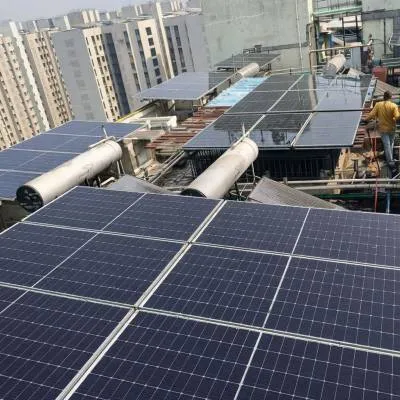
Oswal Pumps expects continued growth in the solar pump sector driven by government programmes and by diversification into rooftop solar and exports. The company reported it had executed over 90,000 solar pumps as of 31 January 2026 and held an order book of more than 24,500 pumps, with an additional pipeline of over 25,000 pumps. Management attributed the momentum to schemes including PM KUSUM and the Magel Tyala programme in Maharashtra.

Receivables from government-backed projects rose owing to payment delays linked to the Magel Tyala programme and procedural issues in funding from multilateral banks. Management said approvals have now been secured and some funds have begun to be released, which should ease the receivables position. Around 70–75 per cent of outstanding receivables were reported to be from Maharashtra and the company maintained that these claims are backed by state programmes.

PM KUSUM Scheme 2.0 is expected to be announced in late March or early April 2026 once the current phase concludes on 31 March. The allocation currently indicated for the programme was 5,000 crore, which the company converted as Rs 50 billion (Rs 50 bn), and management said this was a continuation of earlier provisions rather than a strict cap on deployment. The company is expanding manufacturing capacity and plans to complete ordering for its pump and motor plant expansion by the fourth quarter of FY26.

Solar module manufacturing capacity is expected to increase by one GW by the first quarter of FY27 and by zero point five GW by the third quarter of FY27 to support demand. The company is developing helical and centrifugal pump models with commercial rollout contingent on performance benchmarks and cited backward integration and in-house service capabilities as competitive strengths. To mitigate delays in government programmes the firm is diversifying into rooftop solar under schemes such as PM Surya Ghar and is exploring invoice discounting with banks to manage working capital while remaining cautious on balance sheet risk.

Oswal Pumps expects continued growth in the solar pump sector driven by government programmes and by diversification into rooftop solar and exports. The company reported it had executed over 90,000 solar pumps as of 31 January 2026 and held an order book of more than 24,500 pumps, with an additional pipeline of over 25,000 pumps. Management attributed the momentum to schemes including PM KUSUM and the Magel Tyala programme in Maharashtra. Receivables from government-backed projects rose owing to payment delays linked to the Magel Tyala programme and procedural issues in funding from multilateral banks. Management said approvals have now been secured and some funds have begun to be released, which should ease the receivables position. Around 70–75 per cent of outstanding receivables were reported to be from Maharashtra and the company maintained that these claims are backed by state programmes. PM KUSUM Scheme 2.0 is expected to be announced in late March or early April 2026 once the current phase concludes on 31 March. The allocation currently indicated for the programme was 5,000 crore, which the company converted as Rs 50 billion (Rs 50 bn), and management said this was a continuation of earlier provisions rather than a strict cap on deployment. The company is expanding manufacturing capacity and plans to complete ordering for its pump and motor plant expansion by the fourth quarter of FY26. Solar module manufacturing capacity is expected to increase by one GW by the first quarter of FY27 and by zero point five GW by the third quarter of FY27 to support demand. The company is developing helical and centrifugal pump models with commercial rollout contingent on performance benchmarks and cited backward integration and in-house service capabilities as competitive strengths. To mitigate delays in government programmes the firm is diversifying into rooftop solar under schemes such as PM Surya Ghar and is exploring invoice discounting with banks to manage working capital while remaining cautious on balance sheet risk.

Next Story
Infrastructure Urban

Implementation Status of Jal Jeevan Mission

Since August 2019 the Government has implemented Jal Jeevan Mission to provide assured potable water through household tap connections in rural India. At the start of the mission only 32.3 million (mn) rural households, representing 16.7 per cent, were reported to have tap water connections. States and union territories have reported that 125.8 mn additional rural households have since been provided with tap connections. As a result, of about 193.6 mn rural households roughly 158.2 mn, or 81.71 per cent, are reported to have tap water supply at home.\n\nThe State, district and village level st..

Next Story
Infrastructure Urban

Jal Jeevan Mission Reaches Eighty One Per Cent Rural Coverage

The Government reported substantial progress under the Jal Jeevan Mission, launched in August 2019 to provide tap water to every rural household. At launch only 32.3 million (mn) rural households had tap connections and states and Union territories reported provision of 125.8 mn additional households by March 2026. Consequently, out of about 193.6 mn rural households around 158.2 mn, or 81.71 per cent, are reported to have tap water at home. The Finance Minister announced extension of the mission until 2028 in the 2025-26 budget speech. The Swachh Bharat Mission Grameen, launched in October 20..

Next Story
Infrastructure Urban

Empowering Local Governance for Sustainable Rural Water Supply

The Ministry of Jal Shakti has aligned the Jal Jeevan Mission (JJM) with the 73rd Amendment to strengthen village level planning and community ownership of water supply. Gram Panchayats, village water and sanitation committees and Pani Samitis are to plan, implement, manage and maintain piped water systems, with gram sabha processes formalising handover and oversight. Implementation support agencies including non government organisations, community based organisations and self help groups have been empanelled to train local committees and promote women participation. Under JJM, the department ..

Advertisement

Subscribe to Our Newsletter

Get daily newsletters around different themes from Construction world.

STAY CONNECTED

Advertisement

Advertisement

Advertisement