+
PM KUSUM 2.0 To Enable Farmers To Generate Renewable Energy
POWER & RENEWABLE ENERGY

PM KUSUM 2.0 To Enable Farmers To Generate Renewable Energy

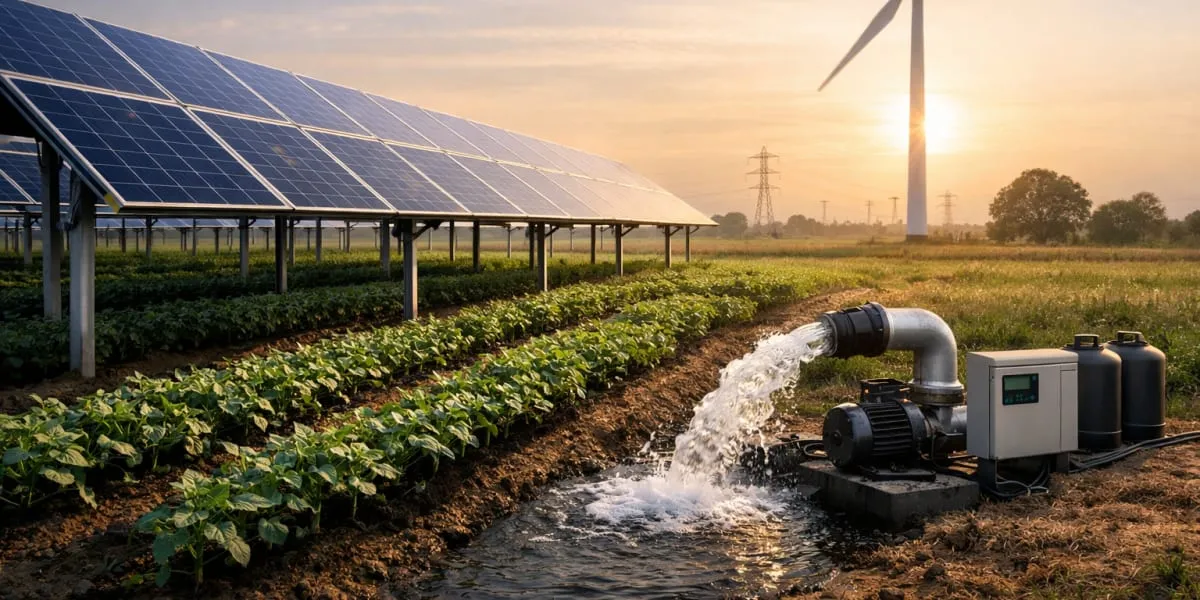
The Union government will launch the second edition of the PM-KUSUM scheme to enable farmers to generate renewable energy alongside crops, Union Minister Pralhad Joshi said on Thursday. PM-KUSUM 2.0 will introduce a model for decentralised renewable energy generation in rural India and is intended to allow continued agricultural activity on the same land. The minister made the remarks on the sidelines of a curtain-raiser for the seventh Agrivoltaics World Conference 2026, scheduled in New Delhi from October 21 to 23.

An official indicated that PM-KUSUM 2.0 is expected to include a dedicated 10 gigawatt (GW) agri photovoltaic component to promote co-location of solar panels with crops. The outlay for the second version is expected to be higher than the first edition, the official added. The Indo?German Cooperation on Agrivoltaics invited proposals from stakeholders including farmers, farmer organisations, renewable energy developers and public institutions.

Proposals will be considered for technical support, viability gap funding and research instrumentation across existing and planned agrivoltaic projects, according to event organisers. The scheme, originally launched in 2019 with an outlay of Rs 344.22 billion (bn), seeks to promote renewable energy in agriculture and help farmers reduce irrigation costs. PM-KUSUM had set a target of adding 34,800 megawatt (MW) of solar capacity by March 2026.

Officials described PM-KUSUM 2.0 as an effort to scale decentralised rural renewables and to support agri photovoltaic systems that maintain crop productivity while generating power. The move is framed as part of wider policy measures to bolster rural renewable infrastructure and to engage local stakeholders in energy transitions. Further operational details and the formal announcement timeline remain subject to government confirmation.

The Union government will launch the second edition of the PM-KUSUM scheme to enable farmers to generate renewable energy alongside crops, Union Minister Pralhad Joshi said on Thursday. PM-KUSUM 2.0 will introduce a model for decentralised renewable energy generation in rural India and is intended to allow continued agricultural activity on the same land. The minister made the remarks on the sidelines of a curtain-raiser for the seventh Agrivoltaics World Conference 2026, scheduled in New Delhi from October 21 to 23. An official indicated that PM-KUSUM 2.0 is expected to include a dedicated 10 gigawatt (GW) agri photovoltaic component to promote co-location of solar panels with crops. The outlay for the second version is expected to be higher than the first edition, the official added. The Indo?German Cooperation on Agrivoltaics invited proposals from stakeholders including farmers, farmer organisations, renewable energy developers and public institutions. Proposals will be considered for technical support, viability gap funding and research instrumentation across existing and planned agrivoltaic projects, according to event organisers. The scheme, originally launched in 2019 with an outlay of Rs 344.22 billion (bn), seeks to promote renewable energy in agriculture and help farmers reduce irrigation costs. PM-KUSUM had set a target of adding 34,800 megawatt (MW) of solar capacity by March 2026. Officials described PM-KUSUM 2.0 as an effort to scale decentralised rural renewables and to support agri photovoltaic systems that maintain crop productivity while generating power. The move is framed as part of wider policy measures to bolster rural renewable infrastructure and to engage local stakeholders in energy transitions. Further operational details and the formal announcement timeline remain subject to government confirmation.

Related Stories

Gold Stories

Next Story
Real Estate

Mindspace REIT earns IGBC Green Landscape Gold Rating

Mindspace Business Parks REIT’s Mindspace Airoli East business park in Navi Mumbai has received the IGBC Green Landscape Gold Rating from the Indian Green Building Council (IGBC). Mindspace REIT said it is the first REIT in India to receive the distinction.The certification evaluates the design, management and ecological performance of landscaped areas, including biodiversity, resource efficiency and sustainability practices.Mindspace Airoli East has more than 60 per cent native and adaptive green cover and more than 30 per cent vegetation supporting local birds and insects. Smart landscape ..

Next Story
Real Estate

Vertical integration gives us control over cost and delivery: Renny Strips

At bauma CONEXPO India 2026, Renny Strips showcased its green steel proposition, with a focus on lower-emission manufacturing, vertical integration and customised structural steel solutions. Managing Director Binny Gupta spoke to Kavita Parab about the company’s sustainability initiatives, including its 22MW solar plant, and its plans to expand capacity and support India’s infrastructure growth.What was Renny Strips’ focus at Bauma CONEXPO India 2026?We focused on showcasing our green steel proposition and explaining its benefits to customers, particularly in European markets. Our steel ..

Next Story
Infrastructure Energy

Beyond Energy-Efficiency

Walk through any major Indian business district today and you will see slick, glass-clad towers shimmering under the tropical sun. Most of these structures proudly display plaque certifications: Platinum, Gold, or 5-Star ratings. They promise lower carbon footprints, reduced electricity bills and a sustainable future.Yet, behind these polished green plaques, the electricity meter tells a different story. Many of these certified structures consume massive amounts of energy to remain operational. This gap, between what a certificate says and what a building actually does, is where this critique ..

Advertisement

Subscribe to Our Newsletter

Get daily newsletters around different themes from Construction world.

STAY CONNECTED

Advertisement

SPECIAL OFFER
QR Code