Power Minister Opens Ministry Pavilion At AI Impact Summit
POWER & RENEWABLE ENERGY

Power Minister Opens Ministry Pavilion At AI Impact Summit

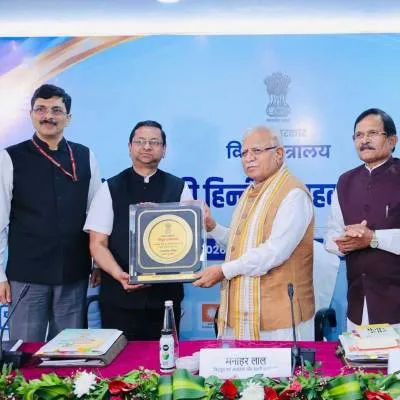
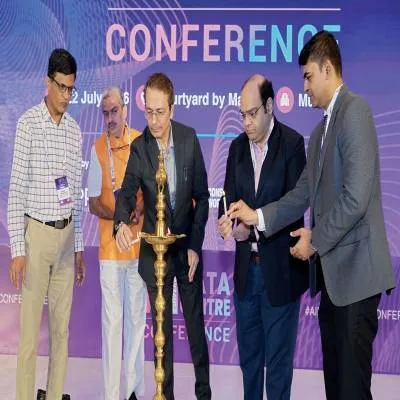
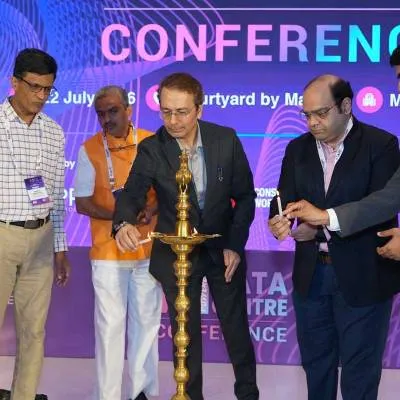
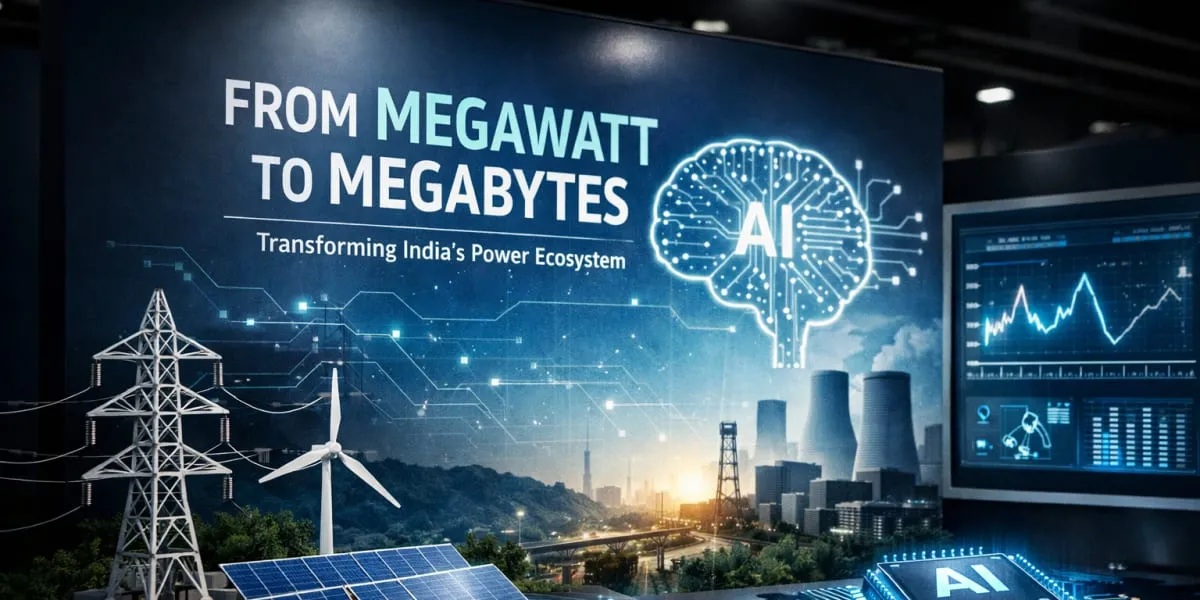
Union Minister for Power Manohar Lal inaugurated the Ministry of Power pavilion at the Artificial Intelligence (AI) Impact Summit 2026 at Bharat Mandapam, underscoring India's commitment to leveraging AI for a future-ready, efficient and resilient power sector. The pavilion set out a forward-looking vision under the theme From Megawatt (MW) to Megabytes: Transforming India's Power Ecosystem and demonstrated how digital technologies are reshaping generation, transmission and distribution. Officials presented a narrative of integrated digital adoption aimed at improving operational decision making and infrastructure reliability.

Highlights included demonstrations of AI driven power management, a startup zone for innovative solutions and a flagship project titled POWERGRID Asset Management through Artificial Intelligence in Transmission (PG-AMRIT). The PG-AMRIT initiative was presented as an AI enabled programme to enhance transmission asset monitoring and operational efficiency. The pavilion also outlined implementations that address revenue management and operational challenges faced by distribution companies (DISCOMs).

An early warning platform named eAabhas was described as an AI and machine learning enabled Internet of Things based real-time monitoring and flood forecasting system for dams and barrages to support proactive risk management. Delegates were informed that indigenous technologies are being deployed to improve safety and maintenance regimes while supporting sustainable growth in the sector. The ministry framed these measures within a wider strategy to strengthen system resilience and consumer service delivery.

The minister also visited the exhibition of the Delhi Metro Rail Corporation (DMRC) where officials outlined how AI will speed up grievance redressal and passenger issue handling. The DMRC described uses of AI for monitoring overhead electrification (OHE), pantograph–OHE interaction, wheel grinding, rolling stock subsystems and signalling as part of predictive maintenance efforts. The ministry stated that the pavilion reflected a commitment to integrate cutting-edge AI solutions across multiple facets of the transport and power ecosystems.

Union Minister for Power Manohar Lal inaugurated the Ministry of Power pavilion at the Artificial Intelligence (AI) Impact Summit 2026 at Bharat Mandapam, underscoring India's commitment to leveraging AI for a future-ready, efficient and resilient power sector. The pavilion set out a forward-looking vision under the theme From Megawatt (MW) to Megabytes: Transforming India's Power Ecosystem and demonstrated how digital technologies are reshaping generation, transmission and distribution. Officials presented a narrative of integrated digital adoption aimed at improving operational decision making and infrastructure reliability. Highlights included demonstrations of AI driven power management, a startup zone for innovative solutions and a flagship project titled POWERGRID Asset Management through Artificial Intelligence in Transmission (PG-AMRIT). The PG-AMRIT initiative was presented as an AI enabled programme to enhance transmission asset monitoring and operational efficiency. The pavilion also outlined implementations that address revenue management and operational challenges faced by distribution companies (DISCOMs). An early warning platform named eAabhas was described as an AI and machine learning enabled Internet of Things based real-time monitoring and flood forecasting system for dams and barrages to support proactive risk management. Delegates were informed that indigenous technologies are being deployed to improve safety and maintenance regimes while supporting sustainable growth in the sector. The ministry framed these measures within a wider strategy to strengthen system resilience and consumer service delivery. The minister also visited the exhibition of the Delhi Metro Rail Corporation (DMRC) where officials outlined how AI will speed up grievance redressal and passenger issue handling. The DMRC described uses of AI for monitoring overhead electrification (OHE), pantograph–OHE interaction, wheel grinding, rolling stock subsystems and signalling as part of predictive maintenance efforts. The ministry stated that the pavilion reflected a commitment to integrate cutting-edge AI solutions across multiple facets of the transport and power ecosystems.

Next Story
Infrastructure Transport

Tunnelling Begins for Thane, Borivali twin tunnel project

Tunnelling work has commenced for the 11.84-km Thane–Borivali Twin Tunnel, set to be India’s longest urban road tunnel, marking a key milestone in Mumbai’s infrastructure development.As per a post shared by Mumbai Metropolitan Region Development Authority on social media platform X, the tunnel boring machine (TBM) ‘Nayak’—the country’s largest single-shield hard rock TBM for an urban tunnel—was launched by Devendra Fadnavis on Tuesday. The event was attended by Eknath Shinde and Sunetra Pawar, among other dignitaries. A second TBM, ‘Arjuna’, is expected to be launched so..

Next Story
Infrastructure Transport

Large Format Store Planned At M G Road Metro Station

M G Road station in Bengaluru is set to host the city’s first large-format commercial and experience space, with planning led by Bangalore Metro Rail Corporation Limited. BMRCL has invited proposals to develop and operate a central business district destination at the Purple?Pink Line interchange. The plan positions the station as a commercial hub designed to serve a broad commuter base across the city. The proposal is part of a broader effort to activate transit nodes commercially. Tender documents set a minimum monthly rental of Rs 0.944 million (mn), inclusive of GST, for the large-format..

Next Story
Infrastructure Energy

Government Cancels Auction Of Eleven Critical Mineral Blocks

The government has cancelled the auction of 11 critical and strategic mineral blocks after receiving a poor investor response and failing to attract a sufficient number of qualified bidders. The decision represents a setback to plans to ramp up domestic exploration and production of critical minerals amid global supply chain disruptions and rising demand for materials used in clean energy and advanced technologies. The mines ministry issued an annulment notice setting out the reasons for the cancellations. The annulment notice indicated that the auction process for five mineral blocks was canc..

Advertisement

Subscribe to Our Newsletter

Get daily newsletters around different themes from Construction world.

STAY CONNECTED

Advertisement

Advertisement

Advertisement