Power Ministry Reviews India Energy Stack’s Foundational Framework
POWER & RENEWABLE ENERGY

Power Ministry Reviews India Energy Stack’s Foundational Framework

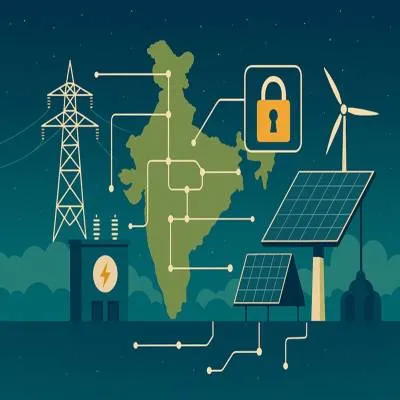
The Ministry of Power convened a high-level meeting of the India Energy Stack (IES) Taskforce to accelerate the development of the country’s first unified digital public infrastructure for the power sector. The review session centred on two key foundational documents — the draft IES Strategy Document (version 0.1) and the IES Architecture Document (version 0.1) — which outline the structural, technical and policy blueprint for the initiative.
Led by REC Limited as the Nodal Agency and supported by FSR Global as Knowledge Partner, the IES aims to create a secure, interoperable digital backbone connecting stakeholders across the energy value chain. The platform is designed to enable seamless data exchange, improve grid operations, enhance market transparency, and strengthen consumer-centric energy services.
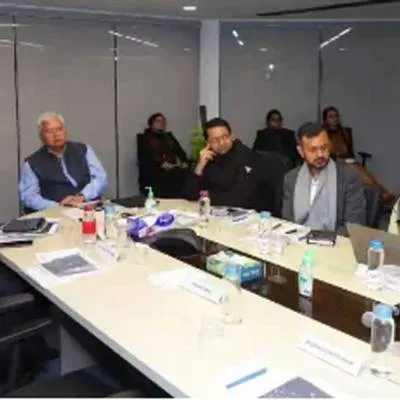
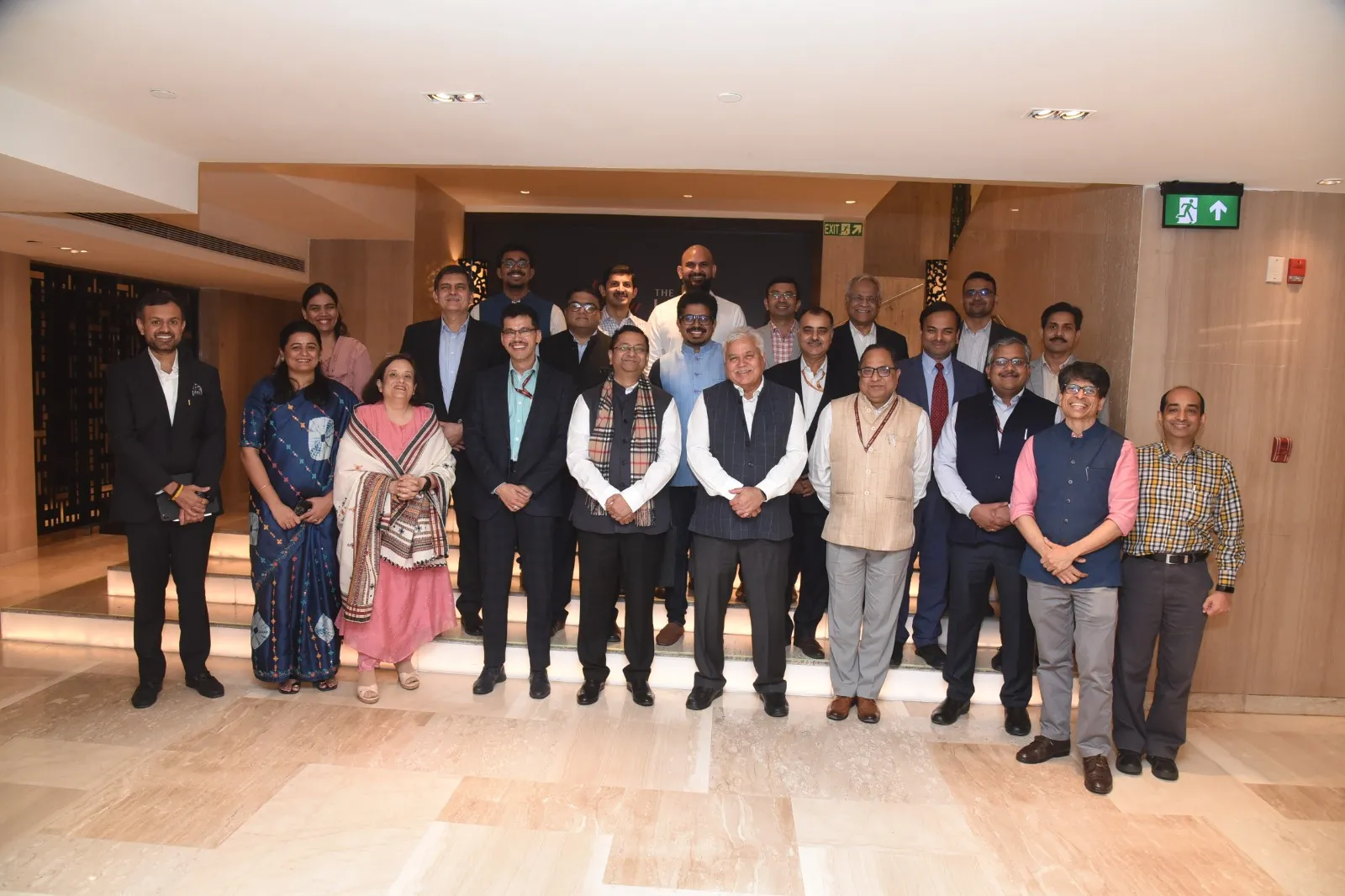
The meeting brought together senior experts from technology, utilities and regulatory institutions for an extensive roundtable discussion. Taskforce Chairman Dr Ram Sewak Sharma, former DG of UIDAI and former CEO of the National Health Authority, guided the deliberations alongside Chief Architect Pramod Verma, co-founder of FIDE and former Chief Architect of Aadhaar, and Vice Chair Pradeep Kumar Pujari, former Chairman of CERC.
Participants included CEA Chairperson Ghanshyam Prasad, AIDA DG Alok Kumar, REC CMD Jitendra Srivastava, former Grid India CMD S.K. Soonee, IEEMA President-Elect Vikram Gandotra, FSR Global ED Swetha Ravi Kumar, FIDE CEO Sujith Nair, REC ED Prince Dhawan, PVVNL MD Raveesh Gupta, Distinguished Fellow at NITI Aayog Debjani Ghosh, and Joint Secretary (Distribution) Shashank Mishra.
REC CMD Jitendra Srivastava said the meeting marked an important milestone toward building India’s next-generation energy digital infrastructure. He noted that the inputs from experts will help refine the documents ahead of the pilot phase.
The IES, envisioned as a transformative public digital infrastructure, will introduce open protocols, federated registries and real-time data exchange to break silos across generation, transmission, distribution and consumers. The initiative is expected to improve DISCOM efficiency, enable renewable energy integration, strengthen market operations and promote innovation through open APIs.
Members emphasised that the IES could become as transformative for energy as Aadhaar has been for identity and UPI for digital payments. Monthly Taskforce meetings will now be conducted to ensure timely progress. The project is targeted for completion by July 2026.

The Ministry of Power convened a high-level meeting of the India Energy Stack (IES) Taskforce to accelerate the development of the country’s first unified digital public infrastructure for the power sector. The review session centred on two key foundational documents — the draft IES Strategy Document (version 0.1) and the IES Architecture Document (version 0.1) — which outline the structural, technical and policy blueprint for the initiative.Led by REC Limited as the Nodal Agency and supported by FSR Global as Knowledge Partner, the IES aims to create a secure, interoperable digital backbone connecting stakeholders across the energy value chain. The platform is designed to enable seamless data exchange, improve grid operations, enhance market transparency, and strengthen consumer-centric energy services.The meeting brought together senior experts from technology, utilities and regulatory institutions for an extensive roundtable discussion. Taskforce Chairman Dr Ram Sewak Sharma, former DG of UIDAI and former CEO of the National Health Authority, guided the deliberations alongside Chief Architect Pramod Verma, co-founder of FIDE and former Chief Architect of Aadhaar, and Vice Chair Pradeep Kumar Pujari, former Chairman of CERC.Participants included CEA Chairperson Ghanshyam Prasad, AIDA DG Alok Kumar, REC CMD Jitendra Srivastava, former Grid India CMD S.K. Soonee, IEEMA President-Elect Vikram Gandotra, FSR Global ED Swetha Ravi Kumar, FIDE CEO Sujith Nair, REC ED Prince Dhawan, PVVNL MD Raveesh Gupta, Distinguished Fellow at NITI Aayog Debjani Ghosh, and Joint Secretary (Distribution) Shashank Mishra.REC CMD Jitendra Srivastava said the meeting marked an important milestone toward building India’s next-generation energy digital infrastructure. He noted that the inputs from experts will help refine the documents ahead of the pilot phase.The IES, envisioned as a transformative public digital infrastructure, will introduce open protocols, federated registries and real-time data exchange to break silos across generation, transmission, distribution and consumers. The initiative is expected to improve DISCOM efficiency, enable renewable energy integration, strengthen market operations and promote innovation through open APIs.Members emphasised that the IES could become as transformative for energy as Aadhaar has been for identity and UPI for digital payments. Monthly Taskforce meetings will now be conducted to ensure timely progress. The project is targeted for completion by July 2026.

Next Story
Real Estate

RBI Rate Cut Boosts Confidence Across Housing Market

Industry Context and Market DynamicsThe real estate industry has welcomed the RBI’s rate cut as a timely boost to affordability and demand. With home prices having risen steadily across major markets, even a marginal reduction in interest rates meaningfully strengthens purchasing power, especially for first-time and mid-income buyers.Ashish Jerath, President – Sales & Marketing, Smartworld Developers, observes:“The RBI’s 25-basis-point cut, bringing the repo rate down to 5.25%, is a timely boost for the real estate sector. Lower interest rates reduce borrowing costs, enabling homeb..

Next Story
Infrastructure Transport

BMC Resumes Rs 170 Billion Road Works, Targets 80 per cent By Jan 2026

Following the withdrawal of the southwest monsoon in October, the Brihanmumbai Municipal Corporation (BMC) has restarted work on 645 roads—covering 297.49 kilometres—under its large-scale concretisation programme. Data shows that more than 60 per cent of the resumed works are located in the western suburbs. Officials said the civic body aims to complete concretisation on 80 per cent of the roads where fresh work has begun by January 2026. Launched in 2022, the Rs 170 billion project seeks to concretise 700 kilometres of roads across Mumbai. All civil works were halted during the monsoon ..

Next Story
Infrastructure Urban

India Pushes Digital Shift In Urban Land Mapping

The Department of Land Resources (DoLR) under the Ministry of Rural Development has convened a National Symposium on NAKSHA – the National Geospatial Knowledge-based Land Survey of Urban Habitations – to advance India’s transition to modern, technology-driven land mapping. Speaking at the inaugural session, Secretary Manoj Joshi underscored the urgent need to move revenue departments away from outdated, tape-based methods and rough hand-drawn sketches. He stressed that adopting latitude–longitude-based digital mapping and GIS-linked registration systems is essential for economic stabi..

Advertisement

Subscribe to Our Newsletter

Get daily newsletters around different themes from Construction world.

STAY CONNECTED

Advertisement

Advertisement

Advertisement

Advertisement

Open In App