Renewable Energy Demand Could Rise as Data Centres Surge in India
POWER & RENEWABLE ENERGY

Renewable Energy Demand Could Rise as Data Centres Surge in India

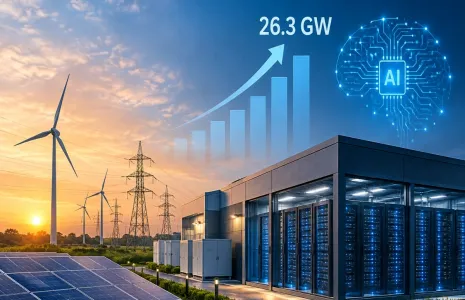
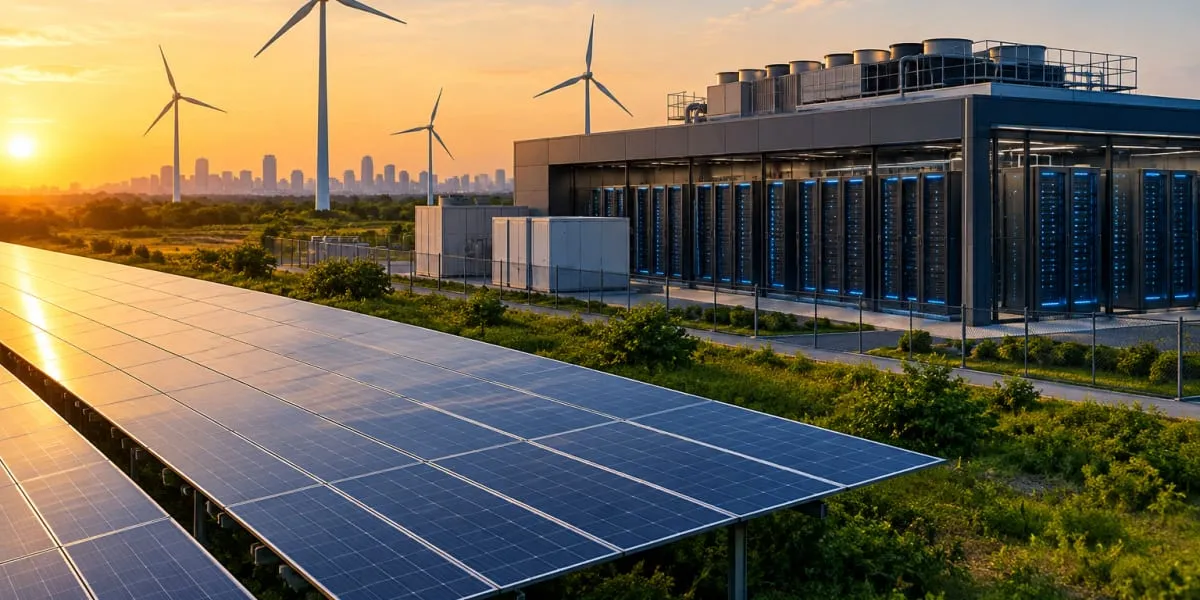
India’s renewable energy suppliers could see a sharp rise in demand from data centre operators as artificial intelligence infrastructure expands and companies seek alternative markets. Public backlash in the US against resource-intensive facilities and risks linked to the West Asia conflict are also increasing India’s appeal as a destination for data centre investment.

Kuldeep Jain, managing director and founder of CleanMax Enviro Energy Solutions, estimated that 5 GW of data centre capacity in India would require about 30-40 GW of renewable power. He said the green energy needed to support artificial intelligence infrastructure was significantly underestimated, indicating that demand could exceed available supply.

India has introduced power tariff subsidies, tax incentives and faster land clearances to attract data centre companies. BloombergNEF ranks the country as the leading data centre development market in the Asia-Pacific region outside China. Jain also pointed to the damage caused to two Amazon data centres in Bahrain by an Iranian strike in July as an example of the risks facing operators.

Supporting the projected expansion will require substantial investment in renewable generation and energy storage. CleanMax is adding about 1.5 GW of solar and wind capacity annually, with yearly capital expenditure of up to Rs. 90 bn. Jain estimated that powering a 1 GW artificial intelligence data centre with 75 per cent renewable energy would require about 3 GW each of solar and wind capacity, alongside roughly 3 GWh of storage, involving around Rs. 400 bn in renewable investment.

The Brookfield Asset Management-backed company has signed supply agreements with Meta Platforms, Google, Apple and Amazon. It will provide 1.8 GW under these arrangements, representing about a third of comparable contracts signed in India over the past three years. Data centres with 1.3 GW of IT capacity are under construction, while projects totalling another 3.2 GW have secured land, power and permits. Wood Mackenzie expects India’s capacity to reach 12 GW by 2030, with artificial intelligence-focused capacity rising to 6.5 GW.

India’s renewable energy suppliers could see a sharp rise in demand from data centre operators as artificial intelligence infrastructure expands and companies seek alternative markets. Public backlash in the US against resource-intensive facilities and risks linked to the West Asia conflict are also increasing India’s appeal as a destination for data centre investment. Kuldeep Jain, managing director and founder of CleanMax Enviro Energy Solutions, estimated that 5 GW of data centre capacity in India would require about 30-40 GW of renewable power. He said the green energy needed to support artificial intelligence infrastructure was significantly underestimated, indicating that demand could exceed available supply. India has introduced power tariff subsidies, tax incentives and faster land clearances to attract data centre companies. BloombergNEF ranks the country as the leading data centre development market in the Asia-Pacific region outside China. Jain also pointed to the damage caused to two Amazon data centres in Bahrain by an Iranian strike in July as an example of the risks facing operators. Supporting the projected expansion will require substantial investment in renewable generation and energy storage. CleanMax is adding about 1.5 GW of solar and wind capacity annually, with yearly capital expenditure of up to Rs. 90 bn. Jain estimated that powering a 1 GW artificial intelligence data centre with 75 per cent renewable energy would require about 3 GW each of solar and wind capacity, alongside roughly 3 GWh of storage, involving around Rs. 400 bn in renewable investment. The Brookfield Asset Management-backed company has signed supply agreements with Meta Platforms, Google, Apple and Amazon. It will provide 1.8 GW under these arrangements, representing about a third of comparable contracts signed in India over the past three years. Data centres with 1.3 GW of IT capacity are under construction, while projects totalling another 3.2 GW have secured land, power and permits. Wood Mackenzie expects India’s capacity to reach 12 GW by 2030, with artificial intelligence-focused capacity rising to 6.5 GW.

Related Stories

Gold Stories
Next Story
Real Estate

Landmark Group plans Rs 150 billion NCR expansion

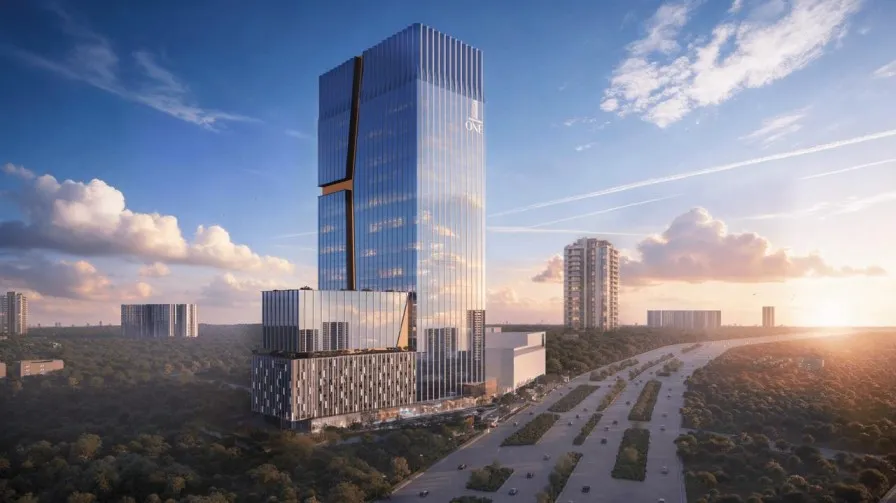
Landmark Group has announced expansion plans across two real estate projects in the National Capital Region (NCR), with a combined estimated sales potential of Rs 150 billion. The projects include Landmark One, a 2.1 million sq ft corporate office development on Golf Course Extension Road in Gurugram, and a proposed integrated hospitality, commercial and residential development on Dwarka Expressway.Landmark One has an estimated sales value of Rs 40 billion. The project involves an estimated construction investment of Rs 10 billion, apart from the underlying land, currently valued at around Rs ..
Next Story
Real Estate

RMZ entities secure 5-Star ratings in GRESB 2026

RMZ has been recognised as a Global and Regional Sector Leader in the 2026 Global Real Estate Sustainability Benchmark (GRESB) Real Estate Development Assessment, with three of its entities scoring 99.6 out of 100. RMZ Nexus LLP, Millenia Realtors Private Limited and Infralogix LLP secured 5-Star ratings in their respective categories across the Office and Industrial sectors.In the 2026 Development Benchmark, RMZ Nexus LLP and Millenia Realtors Private Limited were named Sector Leaders in the Office and Office Non-Listed categories in Asia. Infralogix LLP received the distinction in the Indust..

Next Story
Products

Schneider Electric deploys smart building systems at Jupiter Hospitals

Schneider Electric has partnered with Jupiter Hospitals to deploy connected building technologies aimed at improving energy efficiency, patient comfort and operational performance across its hospital campus. The deployment of its EcoStruxure Building Operation platform and SpaceLogic thermostats is helping the hospital achieve energy savings of up to 28 per cent, according to the company.With heating, ventilation and air-conditioning (HVAC) systems accounting for nearly 60 per cent of the hospital's total energy consumption, improving efficiency while maintaining the conditions required for pa..

Advertisement

Subscribe to Our Newsletter

Get daily newsletters around different themes from Construction world.

STAY CONNECTED

Advertisement

SPECIAL OFFER
QR Code