Solarium Commissions One Gigawatt Solar Module Plant
POWER & RENEWABLE ENERGY

Solarium Commissions One Gigawatt Solar Module Plant

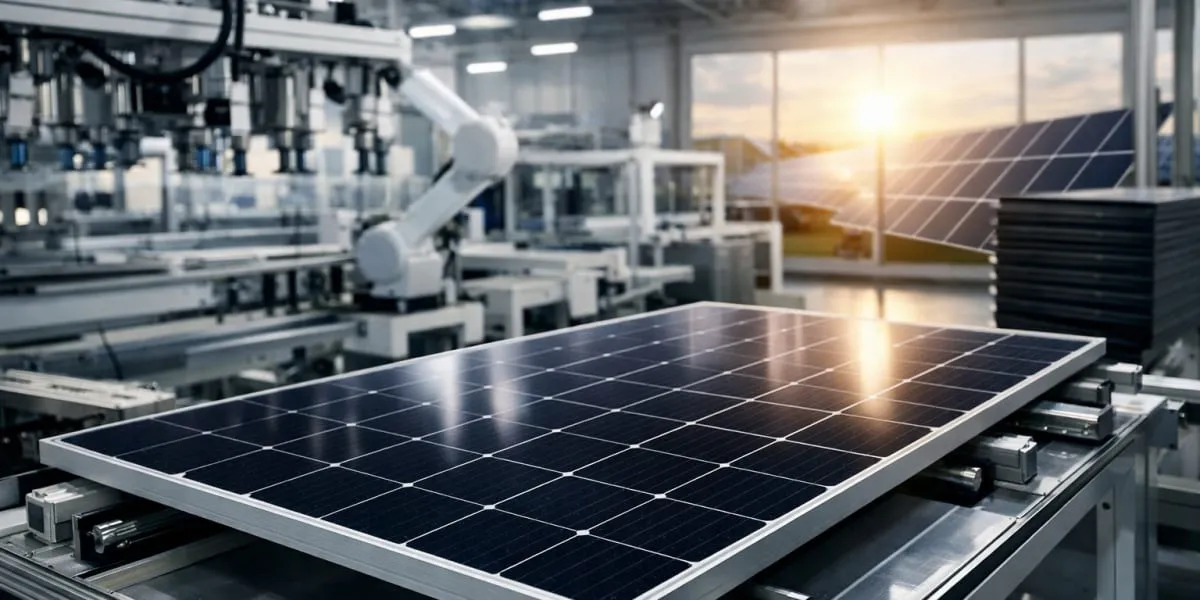
Solarium Green Energy Limited (Solarium) has commissioned a solar module manufacturing facility with an installed capacity of one gigawatt (GW, 1,000 MW) in Ahmedabad, Gujarat. The plant was established as part of the company's backward integration strategy announced in June 2025. The facility was built with fully automated latest-generation manufacturing machinery at an estimated capital expenditure of approximately Rs 900 mn excluding working capital.

The technologically advanced plant is capable of producing large-format G12 solar modules of up to approximately 725 Wp and will manufacture high-efficiency crystalline silicon solar photovoltaic modules using TOPCon cells, half-cut cells and bifacial designs. High-precision imported equipment includes tabber-stringers, laminators and sun simulators to support production. Solar modules typically account for 50–60 per cent of total engineering, procurement and construction project costs and the facility is expected to reduce dependency on third-party suppliers.

At an assumed plant utilisation of 85 per cent the operation has the potential to generate annual revenues exceeding Rs 10 bn subject to prevailing market conditions and module pricing if modules are sold externally. The facility will serve both internal requirements and external customers, including other engineering, procurement and construction players and the broader business-to-business market. Captive consumption is expected to accelerate execution timelines and improve margins thereby strengthening Solarium's supply chain and positioning it as an integrated solar solutions provider.

Company executives noted that the plant was delivered in under nine months reflecting strong execution capabilities and readiness to scale manufacturing. The commissioning is anticipated to support margin improvement across the company's rooftop solar engineering, procurement and construction business through captive module use and potential market sales. Further engagement with consultants and investors has been indicated for market outreach and investor relations.

Solarium Green Energy Limited (Solarium) has commissioned a solar module manufacturing facility with an installed capacity of one gigawatt (GW, 1,000 MW) in Ahmedabad, Gujarat. The plant was established as part of the company's backward integration strategy announced in June 2025. The facility was built with fully automated latest-generation manufacturing machinery at an estimated capital expenditure of approximately Rs 900 mn excluding working capital. The technologically advanced plant is capable of producing large-format G12 solar modules of up to approximately 725 Wp and will manufacture high-efficiency crystalline silicon solar photovoltaic modules using TOPCon cells, half-cut cells and bifacial designs. High-precision imported equipment includes tabber-stringers, laminators and sun simulators to support production. Solar modules typically account for 50–60 per cent of total engineering, procurement and construction project costs and the facility is expected to reduce dependency on third-party suppliers. At an assumed plant utilisation of 85 per cent the operation has the potential to generate annual revenues exceeding Rs 10 bn subject to prevailing market conditions and module pricing if modules are sold externally. The facility will serve both internal requirements and external customers, including other engineering, procurement and construction players and the broader business-to-business market. Captive consumption is expected to accelerate execution timelines and improve margins thereby strengthening Solarium's supply chain and positioning it as an integrated solar solutions provider. Company executives noted that the plant was delivered in under nine months reflecting strong execution capabilities and readiness to scale manufacturing. The commissioning is anticipated to support margin improvement across the company's rooftop solar engineering, procurement and construction business through captive module use and potential market sales. Further engagement with consultants and investors has been indicated for market outreach and investor relations.

Next Story
Infrastructure Urban

Mineral Auction Rules Amended To Speed Mine Operationalisation

The Ministry of Mines notified the Mineral (Auction) Second Amendment Rules, 2026 on 30 March 2026 to accelerate operationalisation of mines and improve ease of doing business in the mining sector. The amendment follows a prior change to the Mineral (Auction) Rules, 2015 effected on 17 October 2025 that introduced intermediary timelines between issuance of a letter of intent (LoI) and execution of the mining lease. The 2025 change provided that one per cent of performance security would be appropriated for each month of delay by the preferred bidder and introduced incentives for early operatio..

Next Story
Infrastructure Transport

Indian Railways Strengthens Telecom And AI Safety Systems

Indian Railways strengthened its telecom and digital infrastructure during 2025-26 with the aim of improving safety, operational efficiency and the passenger experience. The programme promoted modernisation through advanced technologies, robust communication systems and passenger-centric solutions. These measures were presented as part of a drive to build a digitally integrated rail ecosystem. A key development was the enhancement of the Internet Protocol Multi-Protocol Label Switching (IP MPLS) backbone, commissioned at 1,396 stations to meet bandwidth needs of mission-critical applications. ..

Next Story
Infrastructure Transport

NHAI Holds Workshop on Litigation Management and Coordination

The National Highways Authority of India (NHAI) organised a day-long workshop in New Delhi to strengthen capacity and interdepartmental synergy for faster execution of national highway projects. The event was held under Mission Karmayogi – Sadhana Saptah, an initiative of the Government of India to enhance governance through capacity building and improved processes. The workshop focused on structured and solution oriented deliberations to address implementation constraints. The session was chaired by the NHAI chairman Santosh Kumar Yadav and brought together senior officials from NHAI, the M..

Advertisement

Subscribe to Our Newsletter

Get daily newsletters around different themes from Construction world.

STAY CONNECTED

Advertisement

Advertisement

Advertisement