+
Telangana Plans Green Power Expansion to Meet Rising Demand
POWER & RENEWABLE ENERGY

Telangana Plans Green Power Expansion to Meet Rising Demand

Telangana Deputy Chief Minister Mallu Bhatti Vikramarka said the state government was committed to expanding environmentally friendly energy sources to meet rising electricity demand. He outlined the Telangana Clean and Green Energy Policy-2025 while responding to questions in the Legislative Council.

The state’s peak electricity demand has increased from 15,497 MW in 2014 to 19,543 MW as of September 9, with demand likely to reach 20,000 to 21,000 MW this year. The policy integrates conventional and non-conventional sources, while pumped storage projects are being considered to support grid stability. Detailed Project Reports (DPRs) for such projects could take 1.5 to 2 years, and commercial operation could require 5 to 8 years. Ten proponents have expressed interest, with permissions to be issued after the DPRs are submitted.

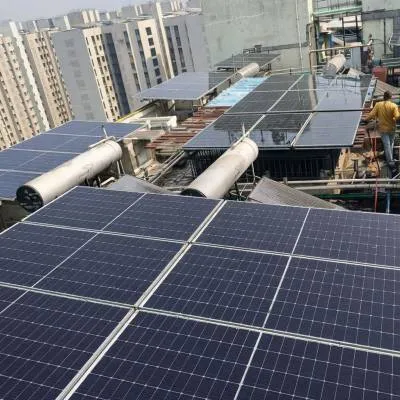
The government plans to provide 2,000 MW of solar power to farmers under the PM-KUSUM scheme and is encouraging them to establish 2 MW plants. A pilot project for complete solarisation has been commissioned in Mannanur, in the Upper Plateau area of Achampet constituency. The state is also developing village micro-grids with battery storage to supply power after sunset, although high battery costs have delayed projects despite central Viability Gap Funding (VGF).

Bhatti said the government spends Rs. 140 bn annually on free electricity for 2,900,000 agricultural pump sets and another Rs. 50 bn on up to 200 units of free power for 5,300,000 domestic consumers. Redirecting part of the subsidy expenditure towards solarisation could reduce pressure on state finances and improve farmers’ energy self-reliance.

Land prices of Rs. 2 mn to more than Rs. 2.5 mn per acre were making solar projects less viable, while the government was assessing limited wind potential near Parigi. It was also promoting Compressed Biogas (CBG) projects, examining coal gasification and entering into Power Purchase Agreements (PPAs) for solar projects established by women’s Self-Help Groups on leased temple and government land. Officials would review measures to restore non-functional solar street lights in local bodies.

Telangana Deputy Chief Minister Mallu Bhatti Vikramarka said the state government was committed to expanding environmentally friendly energy sources to meet rising electricity demand. He outlined the Telangana Clean and Green Energy Policy-2025 while responding to questions in the Legislative Council. The state’s peak electricity demand has increased from 15,497 MW in 2014 to 19,543 MW as of September 9, with demand likely to reach 20,000 to 21,000 MW this year. The policy integrates conventional and non-conventional sources, while pumped storage projects are being considered to support grid stability. Detailed Project Reports (DPRs) for such projects could take 1.5 to 2 years, and commercial operation could require 5 to 8 years. Ten proponents have expressed interest, with permissions to be issued after the DPRs are submitted. The government plans to provide 2,000 MW of solar power to farmers under the PM-KUSUM scheme and is encouraging them to establish 2 MW plants. A pilot project for complete solarisation has been commissioned in Mannanur, in the Upper Plateau area of Achampet constituency. The state is also developing village micro-grids with battery storage to supply power after sunset, although high battery costs have delayed projects despite central Viability Gap Funding (VGF). Bhatti said the government spends Rs. 140 bn annually on free electricity for 2,900,000 agricultural pump sets and another Rs. 50 bn on up to 200 units of free power for 5,300,000 domestic consumers. Redirecting part of the subsidy expenditure towards solarisation could reduce pressure on state finances and improve farmers’ energy self-reliance. Land prices of Rs. 2 mn to more than Rs. 2.5 mn per acre were making solar projects less viable, while the government was assessing limited wind potential near Parigi. It was also promoting Compressed Biogas (CBG) projects, examining coal gasification and entering into Power Purchase Agreements (PPAs) for solar projects established by women’s Self-Help Groups on leased temple and government land. Officials would review measures to restore non-functional solar street lights in local bodies.

Related Stories

Gold Stories

Next Story
Infrastructure Transport

Godavari Pushkaralu: Rs. 3 bn Cleared for Roads Across Six Andhra Districts

The Andhra Pradesh government has sanctioned Rs. 3 bn for the restoration and modernisation of the Roads and Buildings (R&B) network across six districts ahead of the Godavari Pushkaralu pilgrimage in 2027. The allocation is intended to improve travel for the large number of devotees expected to visit the region during the event...

Next Story
Infrastructure Transport

Two Tunnels on Kiratpur-Manali Highway to Open on September 11

Two tunnels between Deod and Hanogi on the Kiratpur-Manali four-lane highway in Himachal Pradesh will open to traffic on September 11 after safety checks and a trial run by the National Highways Authority of India (NHAI). The opening will improve connectivity along the Pandoh-Takoli section of National Highway-03, which links Mandi with Kullu-Manali and routes towards Leh-Ladakh...

Next Story
Infrastructure Transport

Meghalaya CM Lays Foundation for Didak River Bridge

Meghalaya Chief Minister Conrad K Sangma laid the foundation stone for a reinforced cement concrete (RCC) bridge over the Didak River at Jangrapara on September 11. The bridge will be built along the Tikrikilla–Jangrapara road and is part of the state government’s efforts to improve road connectivity across Meghalaya...

Advertisement

Subscribe to Our Newsletter

Get daily newsletters around different themes from Construction world.

STAY CONNECTED

Advertisement

SPECIAL OFFER
QR Code