






UP Government Promotes Solar Subsidy
POWER & RENEWABLE ENERGY

UP Government Promotes Solar Subsidy

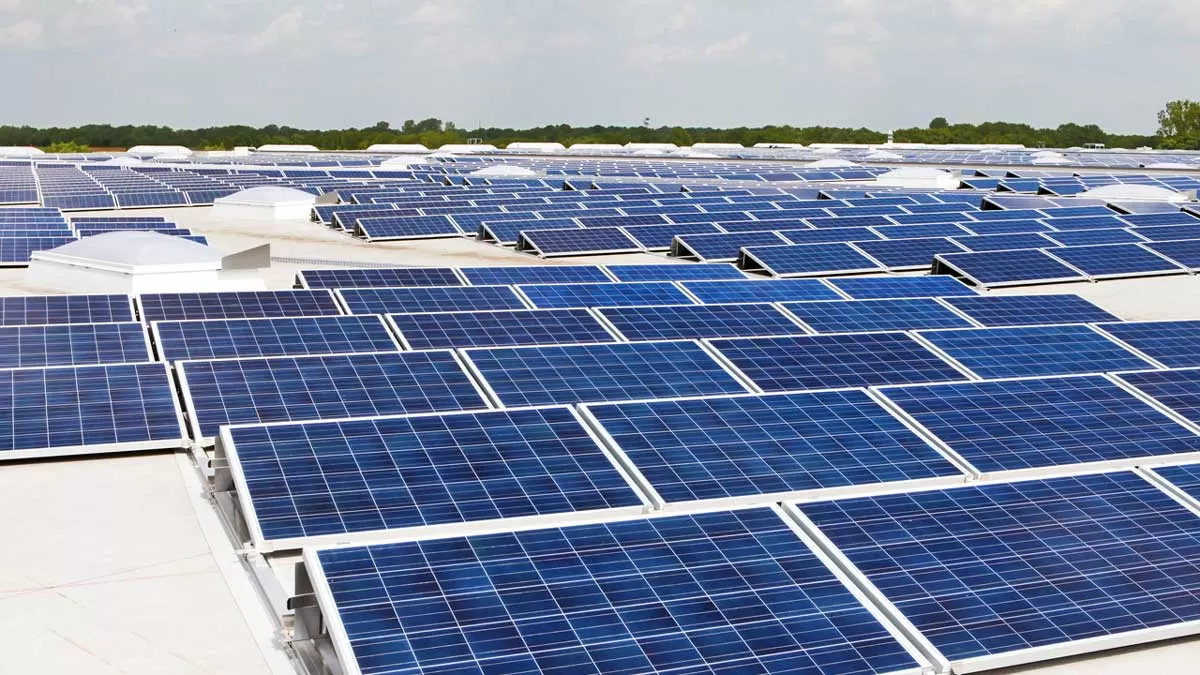
The Uttar Pradesh (UP) government is actively promoting the Centre's rooftop solar subsidy scheme in key cities including Ayodhya, Varanasi, and Gorakhpur. This initiative aligns with India's broader renewable energy goals and aims to enhance the adoption of solar power among residents and businesses. The scheme offers substantial financial incentives, making it more affordable for households and commercial establishments to install solar panels.

In Ayodhya, known for its religious and cultural significance, the adoption of rooftop solar can significantly reduce the energy burden on the grid while promoting sustainable practices among residents. Varanasi, a major cultural hub, stands to benefit from cleaner energy, reducing pollution and contributing to a healthier environment. Gorakhpur, another important city, will see improvements in energy reliability and cost savings through the widespread use of rooftop solar systems.

The scheme provides subsidies that cover a significant portion of the installation costs, making it an attractive proposition for consumers. For residential consumers, the subsidy can cover up to 40% of the installation cost for systems up to 3 kW, and up to 20% for systems between 3 kW and 10 kW. Commercial and industrial consumers also benefit from financial support, though at different rates, encouraging a broad adoption across various sectors.

The UP government is implementing awareness campaigns to educate the public about the benefits of rooftop solar energy and the details of the subsidy scheme. These campaigns are crucial for addressing common misconceptions and promoting the long-term financial and environmental benefits of solar power. Workshops, informational sessions, and collaboration with local organizations are part of the strategy to maximize participation.

Moreover, the government's push for rooftop solar aligns with India's commitment to achieving 450 GW of renewable energy capacity by 2030. By promoting solar energy in Ayodhya, Varanasi, and Gorakhpur, UP is contributing to this national goal, supporting sustainable development, and paving the way for a greener future.

In conclusion, the UP government's promotion of the rooftop solar subsidy scheme in Ayodhya, Varanasi, and Gorakhpur represents a significant step towards enhancing renewable energy adoption, reducing energy costs, and contributing to environmental conservation. This initiative not only supports India's renewable energy targets but also brings tangible benefits to the residents and businesses in these cities.

The Uttar Pradesh (UP) government is actively promoting the Centre's rooftop solar subsidy scheme in key cities including Ayodhya, Varanasi, and Gorakhpur. This initiative aligns with India's broader renewable energy goals and aims to enhance the adoption of solar power among residents and businesses. The scheme offers substantial financial incentives, making it more affordable for households and commercial establishments to install solar panels. In Ayodhya, known for its religious and cultural significance, the adoption of rooftop solar can significantly reduce the energy burden on the grid while promoting sustainable practices among residents. Varanasi, a major cultural hub, stands to benefit from cleaner energy, reducing pollution and contributing to a healthier environment. Gorakhpur, another important city, will see improvements in energy reliability and cost savings through the widespread use of rooftop solar systems. The scheme provides subsidies that cover a significant portion of the installation costs, making it an attractive proposition for consumers. For residential consumers, the subsidy can cover up to 40% of the installation cost for systems up to 3 kW, and up to 20% for systems between 3 kW and 10 kW. Commercial and industrial consumers also benefit from financial support, though at different rates, encouraging a broad adoption across various sectors. The UP government is implementing awareness campaigns to educate the public about the benefits of rooftop solar energy and the details of the subsidy scheme. These campaigns are crucial for addressing common misconceptions and promoting the long-term financial and environmental benefits of solar power. Workshops, informational sessions, and collaboration with local organizations are part of the strategy to maximize participation. Moreover, the government's push for rooftop solar aligns with India's commitment to achieving 450 GW of renewable energy capacity by 2030. By promoting solar energy in Ayodhya, Varanasi, and Gorakhpur, UP is contributing to this national goal, supporting sustainable development, and paving the way for a greener future. In conclusion, the UP government's promotion of the rooftop solar subsidy scheme in Ayodhya, Varanasi, and Gorakhpur represents a significant step towards enhancing renewable energy adoption, reducing energy costs, and contributing to environmental conservation. This initiative not only supports India's renewable energy targets but also brings tangible benefits to the residents and businesses in these cities.

Next Story
Real Estate

Integrated Waterproofing Strategies

Waterproofing buildings used to be an annual pre-monsoon affair but the evolution of real-estate development has changed that approach. In new developments, developers are weaving waterproofing solutions into both the design and construction phases, an approach that Nikhil Madan, Managing Director, Mahima Group, says, “is all about ensuring lasting durability [of the building] and keeping lifecycle risks including water seepage and extensive maintenance to a minimum.”Watertight by designAluminium formwork systems aren’t commonly thought of as a waterproofing tool but at the Mahima Group,..

Next Story
Infrastructure Urban

GROHE Showcases Water-Led Design At Milan

GROHE unveiled its GROHE SPA Aqua Sanctuary at Milan Design Week 2026, transforming Piccolo Teatro Studio Melato into an immersive showcase of water, design and wellbeing. Built on the philosophy of ‘Wellbeing Through Water’, the installation reimagined bathrooms as holistic spaces for relaxation, rejuvenation and self-care.The Aqua Sanctuary was presented through three interconnected sanctums. The first showcased the 3D-printed GROHE SPA AquaTree shower and faucet, highlighting bespoke innovation and biophilic design. The second featured the Atrio Private Collection and GROHE SPA x Buster..

Next Story
Infrastructure Transport

Rahee Group Expands Rail Manufacturing Capacity

Rahee Group has outlined a multi-year investment roadmap to expand its operational footprint and strengthen manufacturing capabilities for India’s growing railway and urban transit sector. The Group is expanding in Odisha with a new Track Component Casting Unit, for which the groundbreaking ceremony was held on 8 April 2026 in the presence of Odisha Chief Minister Mohan Charan Majhi.The Group’s flagship EPC arm, Rahee Infratech Ltd, continues to focus on complex rail infrastructure projects, including track systems, bridges, viaducts and ballastless infrastructure. Its wholly owned subsidi..

Advertisement

Subscribe to Our Newsletter

Get daily newsletters around different themes from Construction world.

STAY CONNECTED

Advertisement

Advertisement

Advertisement

-->















