+
UPPCL Clarifies Smart Meter Consent, Dismisses Misreading of Tariff Order
POWER & RENEWABLE ENERGY

UPPCL Clarifies Smart Meter Consent, Dismisses Misreading of Tariff Order

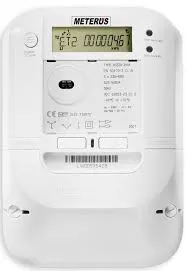
The Uttar Pradesh Power Corporation (UPPCL) has rejected claims that its tariff order bars the conversion of smart meters to prepaid mode without consumer consent, stating that such interpretations are incorrect and misleading.

Clarifying its position, UPPCL said the tariff order merely records that public interest litigations challenging mandatory prepaid smart meters are pending before various High Courts. In view of this, the Electricity Regulatory Commission has emphasised that consumers must be provided with accurate and functional meters, irrespective of whether they operate in prepaid or postpaid mode. In case of any doubts over performance, meters can be tested under provisions of the Supply Code.

The power utility further stated that Section 47(5) of the Electricity Act, 2003 does not grant consumers the right to choose between prepaid and postpaid billing systems. According to UPPCL, the tariff order clearly mandates that all new electricity connections must be issued with smart meters.

Under the Revamped Distribution Sector Scheme (RDSS), around 5 per cent of old, non-smart meters are being retained as check meters to build consumer confidence. UPPCL said 3.41 lakh such check meters have already been installed, and no instance of smart meters running fast has been found so far. The state has set a target of installing 20.73 million meters, of which 51.71 lakh smart meters are already operational.

UPPCL maintained that smart meters are safe and transparent, record actual consumption similar to electronic meters, and eliminate manual readings while enabling automated billing. Consumers using prepaid smart meters can track hourly consumption through the UPPCL Smart Consumer App, recharge digitally, receive balance alerts, and avail a 2 per cent tariff rebate.

Addressing concerns over disconnections, UPPCL said alerts are issued at 30 per cent, 10 per cent and zero balance levels, followed by a 30-day grace period and an additional three days after balance expiry. Disconnections are not carried out during evenings, holidays or Sundays.

Meanwhile, Avadhesh Kumar Verma, chairman, UP Rajya Vidyut Upbhokta Parishad, alleged that UPPCL’s clarification on prepaid smart meters is misleading.

News source: MSN

The Uttar Pradesh Power Corporation (UPPCL) has rejected claims that its tariff order bars the conversion of smart meters to prepaid mode without consumer consent, stating that such interpretations are incorrect and misleading.Clarifying its position, UPPCL said the tariff order merely records that public interest litigations challenging mandatory prepaid smart meters are pending before various High Courts. In view of this, the Electricity Regulatory Commission has emphasised that consumers must be provided with accurate and functional meters, irrespective of whether they operate in prepaid or postpaid mode. In case of any doubts over performance, meters can be tested under provisions of the Supply Code.The power utility further stated that Section 47(5) of the Electricity Act, 2003 does not grant consumers the right to choose between prepaid and postpaid billing systems. According to UPPCL, the tariff order clearly mandates that all new electricity connections must be issued with smart meters.Under the Revamped Distribution Sector Scheme (RDSS), around 5 per cent of old, non-smart meters are being retained as check meters to build consumer confidence. UPPCL said 3.41 lakh such check meters have already been installed, and no instance of smart meters running fast has been found so far. The state has set a target of installing 20.73 million meters, of which 51.71 lakh smart meters are already operational.UPPCL maintained that smart meters are safe and transparent, record actual consumption similar to electronic meters, and eliminate manual readings while enabling automated billing. Consumers using prepaid smart meters can track hourly consumption through the UPPCL Smart Consumer App, recharge digitally, receive balance alerts, and avail a 2 per cent tariff rebate.Addressing concerns over disconnections, UPPCL said alerts are issued at 30 per cent, 10 per cent and zero balance levels, followed by a 30-day grace period and an additional three days after balance expiry. Disconnections are not carried out during evenings, holidays or Sundays.Meanwhile, Avadhesh Kumar Verma, chairman, UP Rajya Vidyut Upbhokta Parishad, alleged that UPPCL’s clarification on prepaid smart meters is misleading.News source: MSN

Next Story
Infrastructure Transport

Second Mountain Tunnel Breakthrough in Palghar Advances High Speed Rail

The Mumbai-Ahmedabad high speed rail (MAHSR) project reached a milestone with the breakthrough of a mountain tunnel in Palghar, Maharashtra. Mountain tunnel MT-six measures 454 metres long and 14.4 metres wide and will accommodate up and down tracks. The breakthrough follows MT-five near Saphale on second January 2026 and the MT-six excavation was completed from both ends using the New Austrian Tunnelling Method. The ministry reported that the tunnelling was completed within 12 months. The New Austrian Tunnelling Method is favoured for its flexibility in complex geology and irregular tunnel s..

Next Story
Infrastructure Transport

Modi Government Pushes Atmanirbhar Container Drive With BCSL MoU

The Union Government advanced a plan to create an integrated, domestically anchored container ecosystem with the signing of a Memorandum of Understanding to establish the Bharat Container Shipping Line (BCSL). The MoU was signed by key agencies including the Shipping Corporation of India and Container Corporation of India alongside major port authorities and Sagarmala Finance Corporation Limited under the Ministry of Ports, Shipping and Waterways, in the presence of senior ministers. The initiative aligns with the Container Manufacturing Assistance Scheme announced in the Union Budget 2026–2..

Next Story
Infrastructure Urban

Ministry Reports Gains In Mobility For Marginalised Communities

The Ministry of Social Justice and Empowerment is implementing skill development, education and rehabilitation schemes to promote socio-economic mobility and sustainable livelihoods for marginalised and disadvantaged communities across the country. Programmes target Scheduled Castes, Other Backward Classes, Economically Weaker Sections, De-notified Tribes and Safai Karamcharis through specialised implementing corporations and empanelled training institutes. Pradhan Mantri Dakshata Aur Kushalta Sampann Hitgrahi Yojana, or PM-DAKSH, provided skill training and placement support through the Nati..

Advertisement

Subscribe to Our Newsletter

Get daily newsletters around different themes from Construction world.

STAY CONNECTED

Advertisement

Advertisement

Advertisement

Open In App