Vedanta Power Scales Waste-to-Energy Model in Punjab
POWER & RENEWABLE ENERGY

Vedanta Power Scales Waste-to-Energy Model in Punjab

Vedanta Power has expanded its waste-to-energy model in Punjab at the Talwandi Sabo Power Ltd (TSPL) plant in Mansa to reduce open-field crop residue burning. TSPL has integrated torrefied biomass into existing boilers while maintaining dispatch reliability. The plant co-fired the equivalent of zero point three two nine million tonnes (mn t) of torrefied biomass in fiscal year 2026.

The plant achieved an average biomass co-firing rate of five point one six per cent in fiscal year 2026, exceeding requirements set by the Commission for Air Quality Management. CAQM norms require thermal plants within a 300 km radius of Delhi to co-fire biomass with coal to curb emissions and address seasonal stubble burning. Company statements framed the work as an operational response to those imperatives.

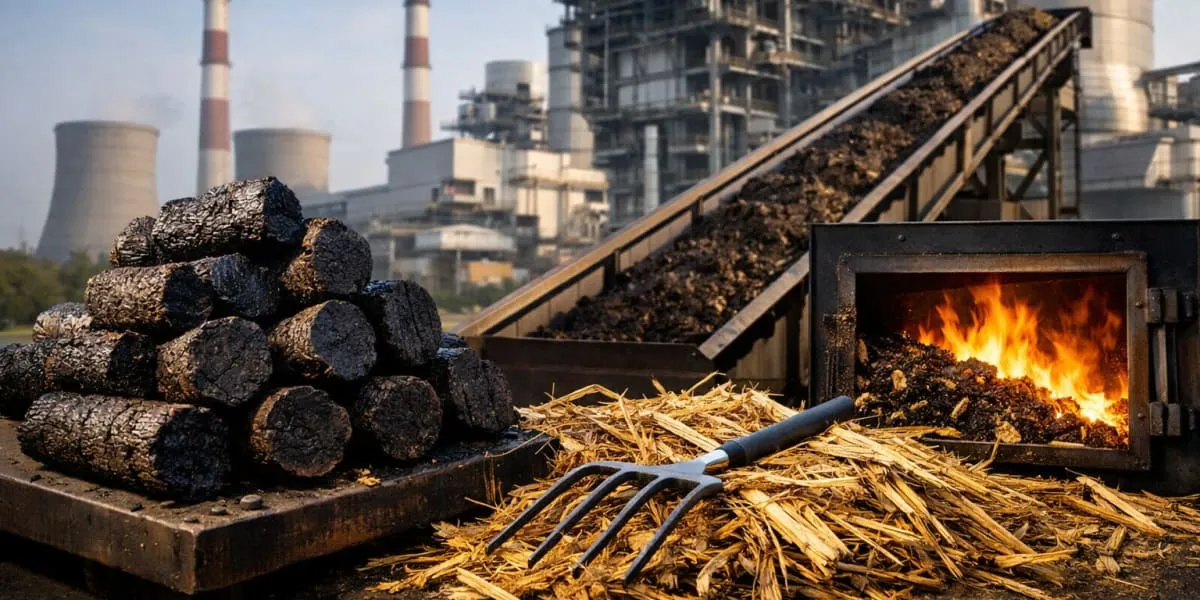
The model sources paddy straw from local farmers and converts it into torrefied biomass pellets for use as an alternative fuel in thermal generation, reducing the incentive to burn residue. Vedanta Power reported engagement of around 3,800 farmers in the Mansa region and facilitated collection of zero point eight mn t of paddy straw. The supply chain arrangements aim to ensure fuel quality and steady throughput.

The company estimated that co-firing in fiscal year 2026 yielded a reduction equivalent to zero point four mn t of carbon dioxide emissions, reflecting the climate benefit of partial substitution of coal. Vedanta Power, a subsidiary of Vedanta Limited, said sustainability is embedded in operations and that biomass integration seeks to enable a cleaner thermal power transition while maintaining reliable power supply. Executives presented the initiative as aligned with wider efforts to reduce regional air pollution.

Officials said the initiative provides farmers with an additional income stream for crop residue and strengthens regional waste-to-energy practices by formalising collection and procurement. The company framed the Talwandi Sabo work as a model that could be adopted by other plants to address seasonal pollution episodes. Observers said operationalising such supply chains is central to long-term reductions in stubble burning.

Vedanta Power has expanded its waste-to-energy model in Punjab at the Talwandi Sabo Power Ltd (TSPL) plant in Mansa to reduce open-field crop residue burning. TSPL has integrated torrefied biomass into existing boilers while maintaining dispatch reliability. The plant co-fired the equivalent of zero point three two nine million tonnes (mn t) of torrefied biomass in fiscal year 2026. The plant achieved an average biomass co-firing rate of five point one six per cent in fiscal year 2026, exceeding requirements set by the Commission for Air Quality Management. CAQM norms require thermal plants within a 300 km radius of Delhi to co-fire biomass with coal to curb emissions and address seasonal stubble burning. Company statements framed the work as an operational response to those imperatives. The model sources paddy straw from local farmers and converts it into torrefied biomass pellets for use as an alternative fuel in thermal generation, reducing the incentive to burn residue. Vedanta Power reported engagement of around 3,800 farmers in the Mansa region and facilitated collection of zero point eight mn t of paddy straw. The supply chain arrangements aim to ensure fuel quality and steady throughput. The company estimated that co-firing in fiscal year 2026 yielded a reduction equivalent to zero point four mn t of carbon dioxide emissions, reflecting the climate benefit of partial substitution of coal. Vedanta Power, a subsidiary of Vedanta Limited, said sustainability is embedded in operations and that biomass integration seeks to enable a cleaner thermal power transition while maintaining reliable power supply. Executives presented the initiative as aligned with wider efforts to reduce regional air pollution. Officials said the initiative provides farmers with an additional income stream for crop residue and strengthens regional waste-to-energy practices by formalising collection and procurement. The company framed the Talwandi Sabo work as a model that could be adopted by other plants to address seasonal pollution episodes. Observers said operationalising such supply chains is central to long-term reductions in stubble burning.

Next Story
Equipment

Kirloskar Brothers supports INS Taragiri with pump systems

Kirloskar Brothers (KBL) has contributed to INS Taragiri, the Indian Navy’s stealth-guided missile frigate, supporting India’s indigenous defence manufacturing programme. KBL has supplied precision-engineered Canned Motor Pumps (CMPs), critical to the vessel’s onboard systems. These pumps are designed for leak-proof operation, high reliability and low maintenance, with compact, low-noise and low-vibration performance suited for naval environments. INS Taragiri is part of India’s indigenisation drive in defence, representing advanced naval engineering and self-reliance in shipbui..

Next Story
Infrastructure Energy

Power Mech Secures Mumbai Monorail Operations Contract

Power Mech Projects Limited (Power Mech) has secured an order from Maha Mumbai Metro Operation Corporation Limited (MMMOC) to undertake the operations and maintenance of the Mumbai Monorail. The contract pertains to a corridor of 19.54 km featuring 17 stations and will connect Sant Gadge Maharaj Chowk to Chembur. The award was disclosed to stock exchanges in a filing that conforms to SEBI master circular requirements. Under the terms the scope comprises routine operations, system upkeep, signalling and traction oversight, station management and other allied services necessary for continuous se..

Next Story
Infrastructure Urban

UK Awards Rs380 Mn To Tata's Agratas For Somerset Gigafactory

The UK government has awarded Rs380 mn in funding to Agratas Energy Storage Solutions Private Limited (Agratas), the battery arm of the Tata Group, to support a planned electric vehicle battery gigafactory in Somerset. The Advanced Propulsion Centre (APC) said the grant forms part of a broader Rs470 mn government package intended to bolster domestic manufacture of batteries and strengthen supply chains for zero emission transport. The funding allocation was announced as part of efforts to accelerate the transition to zero emission vehicles and attract industrial investment. Agratas is developi..

Advertisement

Subscribe to Our Newsletter

Get daily newsletters around different themes from Construction world.

STAY CONNECTED

Advertisement

Advertisement

Advertisement