Continuous cost rationalisation and digitalisation of market outreach strategies helped us stay on track and achieve increased profits.
Cement

Continuous cost rationalisation and digitalisation of market outreach strategies helped us stay on track and achieve increased profits.

SECTOR: Cement Products Visaka Industries Visaka Industries Ltd was founded by Dr G Vivekanand in 1981. A publicly listed company, it is a diversified business group with interests in cement roofs, textiles, cement fibre boards and integrated solar roofs.It ha...

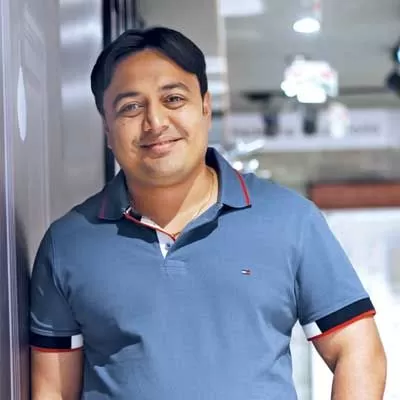
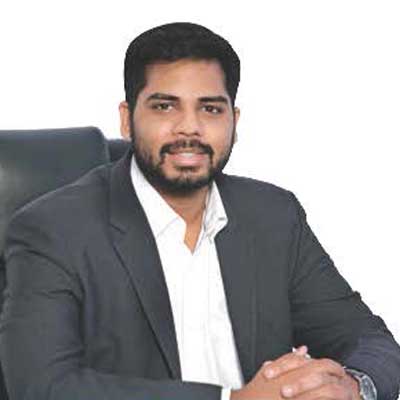
SECTOR: Cement Products Visaka Industries Visaka Industries Ltd was founded by Dr G Vivekanand in 1981. A publicly listed company, it is a diversified business group with interests in cement roofs, textiles, cement fibre boards and integrated solar roofs.It has a pan-India presence with 13 manufacturing units, 13 marketing offices and a countrywide distribution channel with over 7,000 dealer outlets. In FY2020-21, Visaka Industries Ltd declared revenues of Rs.114.65 million. Vamsi Krishna Gaddam, Joint Managing Director, Visaka Industries Ltd, shares more…. Strategies to overcome COVID-19 and other challenges in FY2020-21: The company’s exceptional performance in FY2020-21can be attributed to volume growth and increased margins in the building products segment with cement roofing sheets commanding a premium in the market, strong rural growth, and the opening of urban and semi-urban markets during the year. Continuous cost rationalisation and digitalisation of market outreach strategies helped the company stay on track and achieve increased profits. Major contributor to growth in FY2020-21: Understanding the market and keeping demand for building materials in sight, we ensured our capacity utilisation was at an optimum. This enabled us to make the best use of resources, equipment and space, which enabled us to firm up prices. We ensured profitability by increasing volume and enjoying savings from economies of scale. Another reason was the extensive use of digital channels by our marketing and sales teams, which we capitalised on for our products. The cost-effective use of marketing resources proved extremely beneficial, both in terms of outreach and marketing spends. We looked at our costs and redeployed resources so that they were supporting our most profitable businesses, and we supported our long-term partners who had stood by us for years.Decision avoided/made that helped maintain top-line and bottom-line: We continued with our business and ensured optimum capacity utilisation. We also ensured that we look at our business from a long-term perspective rather than a short-term one. This helped us avoid any knee-jerk reactions or decisions related to people, production and efficient use of resources. Essentially, we avoided being overwhelmed by the external situation and remained calm in these trying circumstances. We were sure this was a passing phase, albeit a long one, and that we, like the rest of the economy, would emerge stronger from it.Plans for growth in FY2021-22 and beyond: As a company, we are trying to make the world a better place by focusing on sustainable technologies, products and services. The pandemic taught us all a lesson that we must start caring more and consciously change our habits and practices that are pushing us towards an unsustainable future. Having recognised this years ago, we have been focusing on sustainable business lines such as cement fibre boards, textiles and solar roofs. By doing so, we are ensuring that we remain relevant in the future, where sustainability and eco-friendly technologies, products and services will be preferred by consumers and favourably looked upon by investors and regulators.

Next Story
Infrastructure Urban

Implementation Status of Jal Jeevan Mission

Since August 2019 the Government has implemented Jal Jeevan Mission to provide assured potable water through household tap connections in rural India. At the start of the mission only 32.3 million (mn) rural households, representing 16.7 per cent, were reported to have tap water connections. States and union territories have reported that 125.8 mn additional rural households have since been provided with tap connections. As a result, of about 193.6 mn rural households roughly 158.2 mn, or 81.71 per cent, are reported to have tap water supply at home.\n\nThe State, district and village level st..

Next Story
Infrastructure Urban

Jal Jeevan Mission Reaches Eighty One Per Cent Rural Coverage

The Government reported substantial progress under the Jal Jeevan Mission, launched in August 2019 to provide tap water to every rural household. At launch only 32.3 million (mn) rural households had tap connections and states and Union territories reported provision of 125.8 mn additional households by March 2026. Consequently, out of about 193.6 mn rural households around 158.2 mn, or 81.71 per cent, are reported to have tap water at home. The Finance Minister announced extension of the mission until 2028 in the 2025-26 budget speech. The Swachh Bharat Mission Grameen, launched in October 20..

Next Story
Infrastructure Urban

Empowering Local Governance for Sustainable Rural Water Supply

The Ministry of Jal Shakti has aligned the Jal Jeevan Mission (JJM) with the 73rd Amendment to strengthen village level planning and community ownership of water supply. Gram Panchayats, village water and sanitation committees and Pani Samitis are to plan, implement, manage and maintain piped water systems, with gram sabha processes formalising handover and oversight. Implementation support agencies including non government organisations, community based organisations and self help groups have been empanelled to train local committees and promote women participation. Under JJM, the department ..

Advertisement

Subscribe to Our Newsletter

Get daily newsletters around different themes from Construction world.

STAY CONNECTED

Advertisement

Advertisement

Advertisement