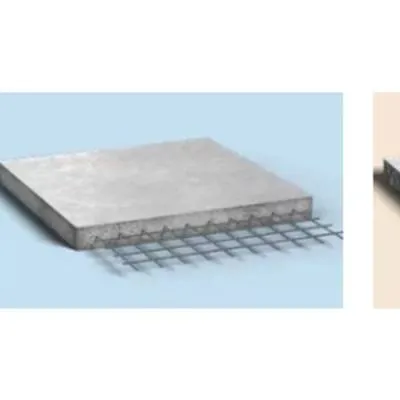
Ultra-high-performance concrete is the need of the hour for strong, durable and enduring structures, writes Prof AS KHANNA. The need of the hour is stronger buildings that require durable, tough and stable concrete that can withstand both normal and seismic conditions. The question is, is Ordinary Portland Cement (OPC) sufficient to take care of such requirements?A stable building structure can be made with a good quality of cement + sand + water. Its quality can be enhanced by keeping the density of admixture higher (varies from 30 in normal buildings to 80 in bridges, etc). Further enhancement in the properties of various cements admixtures is made by adding several additives (construction chemicals) that render additional strength, waterproofing and flexibility. Understanding UPHCThat said, if the strength of the concrete structure is needed to be enhanced to 2,000MPa and its durability to 100 years plus, there are special kinds of concrete structures made with ultra-high-performance concrete (UHPC). It offers advantages like extreme strength (four to 10 times compared to standard concrete), superior durability, very low permeability to water/chemicals, high ductility (acts like metal), abrasion resistance and potential for thinner, lighter structures, leading to longer service life, reduced maintenance and better sustainability in bridges, buildings and infrastructure [1].To understand better, let’s begin with the two basic kinds of cement: OPC and Portland pozzolana cement (PPC). OPC is best for projects needing high early strength and fast setting (foundations, columns, quick builds). PPC is superior for long-term durability, moisture resistance and better finishing (plastering, coastal areas, general housing), offering cost-effectiveness and lower heat during hydration, making it ideal for most modern residential buildings,PPC is a mixed hydraulic cementitious material made by grinding silicate cement clinker with pozzolanic materials: fly ash, volcanic ash or calcined clay and gypsum. The amount of pozzolanic mixed materials is greater than 20 per cent and less than 40 per cent by mass. OPC is the world’s most common hydraulic cement, a fine grey powder made from limestone, clay and gypsum, forming the base for concrete, mortar and plaster, known for its strength, durability and versatility in general construction, from homes to massive infrastructure, classified by strength (33, 43, 53 grades) based on its compressive strength after 28 days. PPC achieves an initial strength equivalent to OPC 33 but gives better long-term strength. As for the composition of UHPC, it contains random reinforcing steel fibers of over 2 per cent (by volume), whose tensile strength exceeds 2,000 MPa, and ranges from 10 mm to 20 mm in length and 0.1 mm to 0.25 mm in diameter. UHPC is broadly defined as a cementitious composite material that has enhanced strength and durability, and is free from environmental degradation. Table 1 gives the composition of a typical UHPC [2].Some UHPC mix designs can even achieve 50,000 psi, matching that of steel. UHPC also has strong resistance to environmental degradation. Also, it is impervious to water and strong enough to have negligible surface damage. It is completely waterproof and is even highly resistant to gases owing to its fine pore structure. And it has a very long service life. Its 100+-year lifespan means that structures require minimal maintenance and fewer repairs over time. Compared to conventional concrete, UHPC is also more resistant to environmental factors.Applications of UHPCUHPC mix designs exhibit three important properties of concrete mixes: the flowing and passing abilities of self-consolidating concrete (SCC); the superior strength and long-term performance of high-performance concrete (HPC); and the increased ductility and post-cracking strength of fibre-reinforced concrete (FRC). Such a concrete mix results in a self-consolidating ultra-high-performance fibre-reinforced concrete (UHPFRC), presented to the construction industry as UHPC [2].To date, UHPC mixes have been used in the fabrication of multiple bridge projects within the US. This includes the fabrication of full UHPC bridges, construction of shear connectors and panel joints, pier jacketing. and deck overlays. Approximately 200 bridge construction projects used UHPC admixtures from 2006 to 2018 in the US. The next application is bridge beam repair owing to the improved fatigue resistance of UHPC and UHPC shear connectors. UHPC proprietary mixes are used to repair corroded steel girders ends, negatively impacted by expansion joints located above the girders because of water leakage. UHPC treatment of steel girder ends is successfully replacing conventional treatment methods of corroded steel elements.Another application is the use of UHPC in pouring bridge deck overlays. There is a high demand for effective and durable rehabilitation of bridge decks that are deteriorating because of increased number of vehicles and loading, freeze-thaw cycles, deck cracking, delamination of concrete cover and corrosion of reinforcing steel. The traditional use of normal concrete overlays, latex-modified concrete and special asphalt mixes with polymer-based materials is now being replaced by UHPC overlays. They offer the choice of slim 2.5-5 cm thick overlays, with superior bond to existing concrete. The very low permeability and superior strength characteristics of UHPC provide sufficient strengthening required, in addition to protection from ingress of contaminators as chemical attacks and de-icing salts [2].UHPC can also be used in bridge piles that support bridge load. Traditionally, piles are fabricated using steel sections, precast or cast-in-place concrete, where many failures were noted such as limited capacity, pile failure during installation, and deterioration of piles due to environmental attacks The use of UHPC mixes in fabricating piles has substantially improved their capacity and long-term performance. UHPC mixes, with high strength, are easily driven with minimal to no damage. The very low permeability of UHPC mixes results in improved resistance to environmental attacks. As for accelerated bridge construction (ABC), the use of prefabricated bridge elements and systems (PBES), where UHPC mixes are used in pouring different bridge elements, can expedite bridge construction. This enables engineers to design innovative bridge sections with geometrical dimensions.UHPC in IndiaUHPC is a new class of concrete that has been developed in recent decades for its exceptional properties of strength and durability. It was first developed in 1990 in France and is now manufactured in India by several companies. Dramix® steel fibres [3] provide a homogeneous reinforcing network across the entire concrete cross-section. This leads to increased post-crack strength and ductility throughout the entire floor. This is also known as steel-fibre reinforced concrete (SFRC) as steel fibres are used for reinforcement. The fibres are added to the concrete at the ready-mix plant or on the jobsite. The concrete is poured with the reinforcement inside. In contrast to traditional reinforcement (rebar/mesh), steel fibres are relatively short (see Fig.1), discontinuous elements that are evenly distributed throughout the concrete floor. As such, the fibres become part of the concrete matrix, turning it into a strong, ductile composite material.UHPC India Pvt Ltd is another company making UHPC concrete since 2020. The ingredients of the concrete are shown in Fig. 2 with steel fibre details -- steel fibres 2 per cent by volume and size 0.2 mm (d) x 13 mm (L), that can achieve a tensile strength of ~2,800 MPaThe company claims an elastic modulus of concrete as 50,000 MPa with a maintenance-free durability of 100 years. There is a 50 per cent reduction in the weight of structural elements and the concrete is ultra-high wear and impact-resistant, with a cost just 10-15 times that of conventional concrete. Its product has already been used in several structures across India, including the Mumbai GCC Namaste building and a bungalow project in Tirupati, Andhra Pradesh, and will also be used in several upcoming bridges (2).Other significant projects in India using UHPC concrete:Palkhi Marg (NH-965), Maharashtra: Features India’s first 100-m span UHPFRC bridge, allowing for longer spans with fewer piers, as seen in Chandani Chowk and the Mumbai-Pune Expressway missing linkSole River Bridge, Latur, Maharashtra: The first UHPC bridge in India, significantly reducing substructure work due to lighter, longer-span girdersSamruddhi Mahamarg (Mumbai-Nagpur Expressway): UHPC girders being used for various bridgesROB (Railway Over Bridge) strengthening: UHPC used for strengthening existing ROBs, such as one near Saphale for the Dedicated Freight Corridor. In conclusionEvidently, the future of long-lasting, tough and stable buildings is the UHPC mix, the use of which is picking up globally and in several projects in India. The presence of steel in fibres enhances durability and flexibility, which results in a concrete structure far superior than one built with the conventional OPC mix.References[1] https://www.uhpcsolutions.com/blog/what-is-ultra-high-performing-concrete [2] A.K. Akhnoukh and C. Buckhalter, Construction Materials 15 (2021) [3] https://construction.bekaert.com[4] https://uhpcindia.com