India’s Aviation Expansion Takes Centre Stage at Infrastructure Today Conclave
AVIATION & AIRPORTS

India’s Aviation Expansion Takes Centre Stage at Infrastructure Today Conclave

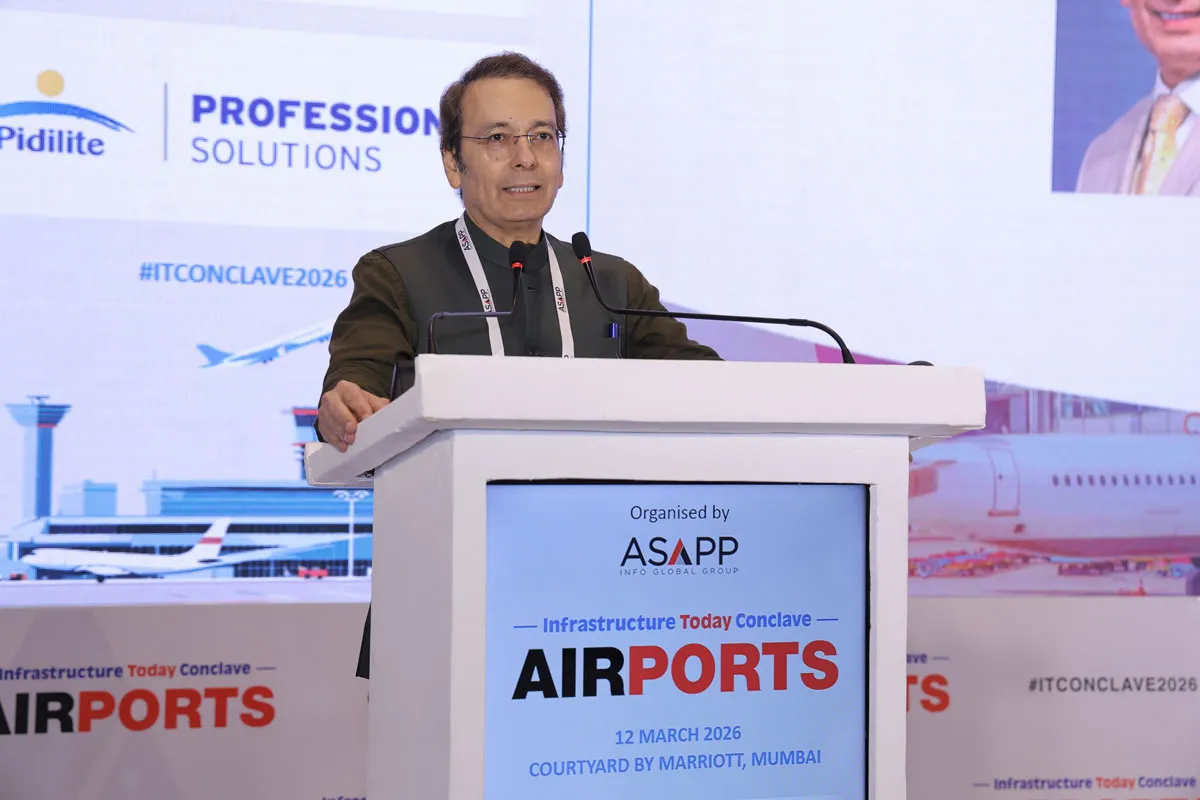
Mumbai, March 12, 2026: The Infrastructure Today Conclave – Airports 2026, held at Courtyard by Marriott, brought together policymakers, infrastructure developers, financiers, engineers and technology providers to discuss the next phase of India’s aviation infrastructure growth.

The conclave focused on how India must move beyond building airports to creating integrated aviation ecosystems that combine connectivity, technology, sustainability and passenger experience.

Welcoming the delegates, Pratap Padode, Editor-in-Chief, Infrastructure Today, highlighted the rapid transformation underway in India’s aviation sector.
“India’s aviation sector is finally setting up for take-off. With low-cost airlines bringing millions of first-time flyers into the ecosystem and the UDAN scheme connecting smaller cities, aviation is becoming a mainstream mode of transport. The challenge before us is not just to build more airports, but to build smarter, more efficient and more passenger-centric infrastructure.”

Padode noted that India, now the world’s third-largest aviation market, currently operates around 164 airports, with projections indicating over 170 operational airports by 2029. However, a truly “super-connected India” may ultimately require nearly 400 airports, signalling enormous opportunities for infrastructure investment.

Highlighting the scale of growth, he pointed to a recent milestone where over 5.38 lakh domestic passengers travelled in a single day across more than 3,300 flights, underscoring the rapid rise in air travel demand.

Speaking on the airport project pipeline, Tanveer Padode, CEO, IMPACCT, presented insights into upcoming airport developments and investment opportunities across India.

“India currently has around 164 airports, with over 240 airport projects being tracked across various stages—from planning and tendering to execution. For suppliers, contractors and developers, the key is knowing when and where opportunities arise during the project lifecycle.”

He highlighted that IMPACCT now enables companies to track project pipelines, identify procurement opportunities and estimate demand for materials such as steel, cement and specialised equipment.

One of the standout upcoming projects discussed was the proposed Greenfield Airport at Great Nicobar Island, estimated at around Rs 8,500 crore, reflecting the scale of new aviation investments emerging across the country.

Delivering the keynote address on engineering in extreme terrains, Lt Gen Rajeev Chaudhury, Former Director General, Border Roads Organisation, shared lessons from building strategic airfields in some of the world’s most challenging environments.

“Constructing airfields in high-altitude regions is not just an engineering challenge; it is a test of logistics, human endurance and precise planning. In such terrains, even breathing becomes difficult, so material management, workforce rotation and disciplined execution become critical.”

Throughout the day, panel discussions explored critical themes including financing airport infrastructure, scaling Tier-2 and Tier-3 airports, airport operations and passenger experience, and the role of airports as cargo and logistics hubs.

Experts discussed financing models such as public-private partnerships, hybrid structures and sustainability-linked financing, while also highlighting opportunities in non-aeronautical revenues including retail, real estate and cargo logistics.

The conclave concluded with discussions on how airports are evolving into integrated mobility hubs and commercial ecosystems, offering retail, hospitality and digital passenger services alongside aviation operations.

The event was supported by Silver Partner Pidilite, Innovation Partner Piramal Nextgen, Exhibit Partners Rockwool and esri India, and Business Intelligence Partner IMPACCT.

The Infrastructure Today Conclave is part of a broader initiative aligned with the vision of “Viksit Bharat @2047,” highlighting the role of modern infrastructure in enabling India’s long-term economic growth, connectivity and sustainability.

Mumbai, March 12, 2026: The Infrastructure Today Conclave – Airports 2026, held at Courtyard by Marriott, brought together policymakers, infrastructure developers, financiers, engineers and technology providers to discuss the next phase of India’s aviation infrastructure growth.The conclave focused on how India must move beyond building airports to creating integrated aviation ecosystems that combine connectivity, technology, sustainability and passenger experience.Welcoming the delegates, Pratap Padode, Editor-in-Chief, Infrastructure Today, highlighted the rapid transformation underway in India’s aviation sector.“India’s aviation sector is finally setting up for take-off. With low-cost airlines bringing millions of first-time flyers into the ecosystem and the UDAN scheme connecting smaller cities, aviation is becoming a mainstream mode of transport. The challenge before us is not just to build more airports, but to build smarter, more efficient and more passenger-centric infrastructure.”Padode noted that India, now the world’s third-largest aviation market, currently operates around 164 airports, with projections indicating over 170 operational airports by 2029. However, a truly “super-connected India” may ultimately require nearly 400 airports, signalling enormous opportunities for infrastructure investment.Highlighting the scale of growth, he pointed to a recent milestone where over 5.38 lakh domestic passengers travelled in a single day across more than 3,300 flights, underscoring the rapid rise in air travel demand.Speaking on the airport project pipeline, Tanveer Padode, CEO, IMPACCT, presented insights into upcoming airport developments and investment opportunities across India.“India currently has around 164 airports, with over 240 airport projects being tracked across various stages—from planning and tendering to execution. For suppliers, contractors and developers, the key is knowing when and where opportunities arise during the project lifecycle.”He highlighted that IMPACCT now enables companies to track project pipelines, identify procurement opportunities and estimate demand for materials such as steel, cement and specialised equipment.One of the standout upcoming projects discussed was the proposed Greenfield Airport at Great Nicobar Island, estimated at around Rs 8,500 crore, reflecting the scale of new aviation investments emerging across the country.Delivering the keynote address on engineering in extreme terrains, Lt Gen Rajeev Chaudhury, Former Director General, Border Roads Organisation, shared lessons from building strategic airfields in some of the world’s most challenging environments.“Constructing airfields in high-altitude regions is not just an engineering challenge; it is a test of logistics, human endurance and precise planning. In such terrains, even breathing becomes difficult, so material management, workforce rotation and disciplined execution become critical.”Throughout the day, panel discussions explored critical themes including financing airport infrastructure, scaling Tier-2 and Tier-3 airports, airport operations and passenger experience, and the role of airports as cargo and logistics hubs.Experts discussed financing models such as public-private partnerships, hybrid structures and sustainability-linked financing, while also highlighting opportunities in non-aeronautical revenues including retail, real estate and cargo logistics.The conclave concluded with discussions on how airports are evolving into integrated mobility hubs and commercial ecosystems, offering retail, hospitality and digital passenger services alongside aviation operations.The event was supported by Silver Partner Pidilite, Innovation Partner Piramal Nextgen, Exhibit Partners Rockwool and esri India, and Business Intelligence Partner IMPACCT.The Infrastructure Today Conclave is part of a broader initiative aligned with the vision of “Viksit Bharat @2047,” highlighting the role of modern infrastructure in enabling India’s long-term economic growth, connectivity and sustainability.

Next Story
Infrastructure Urban

Coal Minister Inaugurates Projects and Reviews WCL in Nagpur

G. Kishan Reddy, Coal Minister, inaugurated several key infrastructure projects and reviewed operations of Western Coalfields Limited (WCL) at a programme in Nagpur. The minister opened new facilities aimed at strengthening production capacity and logistics and undertook a comprehensive review of mining, transportation and safety arrangements. He assessed project readiness and operational planning with senior WCL officials and emphasised the need for timely completion and strict adherence to statutory norms. During the visit the minister inspected mining works, mechanisation initiatives, pithe..

Next Story
Infrastructure Transport

Modi To Inaugurate Redeveloped Kakinada Railway Station

Prime Minister Narendra Modi is scheduled to inaugurate the redeveloped Kakinada railway station in Andhra Pradesh on March 31. The ceremony will mark the completion of a redevelopment initiative intended to upgrade the station's infrastructure and services. The event will be presented as a milestone in efforts to modernise regional rail facilities. The redevelopment focuses on improved passenger amenities, enhanced accessibility and better circulation within the station complex. Upgrades are reported to encompass modernised waiting areas, upgraded sanitation facilities and signage, and measur..

Next Story
Infrastructure Energy

Kerala Able to Meet Peak Electricity Demand, Minister Says

Kerala will be able to meet peak electricity demand and there will be no power cuts, the state energy minister Krishnankutty has said. He provided assurance that supply arrangements and operational measures are in place to handle peak loads and to maintain stability across the grid. The statement followed routine assessments by the state electricity department and other agencies tasked with monitoring system health and reserve margins. The minister indicated that the administration has intensified monitoring of demand patterns and generation output to pre-empt stress on the network. He said co..

Advertisement

Subscribe to Our Newsletter

Get daily newsletters around different themes from Construction world.

STAY CONNECTED

Advertisement

Advertisement

Advertisement