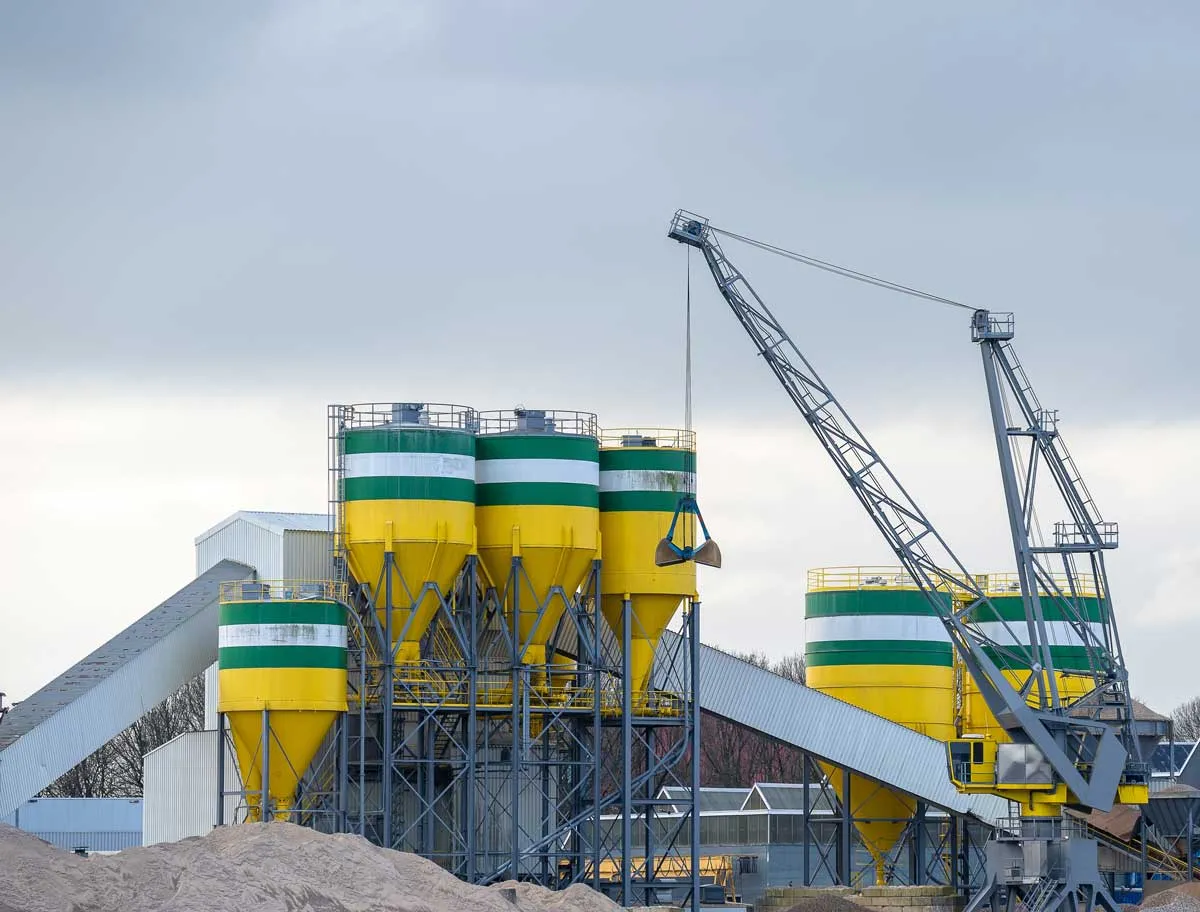
India’s pace of infrastructure development is pushing the construction sector to work at a significantly higher scale than previously. Tight deadlines necessitate eliminating concreting delays, especially in large and mega projects, which, in turn, imply installing the right batching plant and ensuring batching is efficient. CW explores these steps as well as the gaps in India’s batching plant market.Choose wellLarge-scale infrastructure and building projects typically involve concrete consumption exceeding 30,000-50,000 cum per annum or demand continuous, high-volume pours within compressed timelines, according to Rahul R Wadhai, DGM - Quality, Tata Projects.Considering the daily need for concrete, “large-scale concreting involves pouring more than 1,000–2,000 cum per day while mega projects involve more than 3,000 cum per day,” says Satish R Vachhani, Advanced Concrete & Construction Consultant.The standard benchmark for large scale may very per kind of project. For infrastructure projects like expressways or metro rail, Abhishek Dwivedi, Assistant Manager (RMC Technical Service), Infra Market, says, “a demand of 1,000 cum per day or peak requirements of 90 cum per hour and above demarcate large scale.”The plant selection must ensure uninterrupted supply, backup reliability and alignment with placement rates. “While 120-180 cum per hr batching plants with 300 mt capacity silos suit large projects, mega projects need plants with capacity of 240 cum³ per hr and above with 500 mt capacity silos,” says Vachhani. “Mega projects are recommended to use two 120 cum per hr plants, and if they prefer to use one 240 cum per hr plant, they must keep a standby plant with 500 mt capacity silos.”Large and mega projects generally require CP30 or M1 category batching plants, selected based on peak daily demand, programme criticality and multiple pouring fronts, says Wadhai. “While CP30 plants are suitable for daily requirements of around 150 to 250 cum, offering operational flexibility and relatively easier relocation, M1 (or higher-capacity) plants are preferred for mega projects involving mass concreting, fast cycle times or multilocation pours, where consistent output exceeding 300 cum per day is required.”To meet large-scale concrete needs, projects typically deploy plants with a rated capacity of 90 cum per hr to 150 cum per hr, according to Dwivedi. Speaking of the type of plant, he says, “stationary plants are workhorses for large, multiyear projects such as dams, high-rise clusters or major bridges where stability and massive output are non-negotiable.” But for highway projects where the work front moves, he says mobile plants in the 60 to 90 cum per hr range are often paired in tandem to reach large-scale volumes while maintaining flexibility.Where two alternate cementitious materials are sought to be used, or temperature-controlled concrete or higher grades of concrete (M80 and above) where mixing takes longer, Vachhani recommends higher capacity batching plants (240 cum per hr and an additional plant to compensate for the extra time).Batching efficienciesRunning a large-scale plant isn’t just about the machine; it’s about the ecosystem around it, opines Dwivedi. “In large projects involving high-strength concrete,” he explains, “load cells must be calibrated every three to six months or after any significant plant relocation, as even a 1 per cent error in aggregate or water weighing can lead to a batch failure.”Dwivedi also recommends the following: A 1:1.5 ratio of transit mixer capacity to hourly plant output to avoid efficiency losses between the plant and the pour. Precisely matching the transit mixer arrival frequency with the concrete pump speed to avoid cold joints and truck idling. In India’s heat, where concrete temperature often exceeds the 32°C limit, chilled water plants or flake ice to maintain the mix temperature, ensuring workability during long hauls. Also, large plants using microwave moisture sensors in the bins allow the programmable logic controller to adjust the water added to the mix in real-time based on the wetness of the sand and aggregates.Squeezing more value out of a batching plant necessitates transitioning from “mechanical operation” to “data-driven production”, says Dwivedi. “Modern plants use IoT sensors to track motor health, vibration and power consumption, while a digital twin of the plant can predict when a conveyor belt or mixer blade is likely to fail, moving from reactive to predictive maintenance. Implementing a supervisory control and data acquisition (SCADA) system allows the centralised monitoring of every recipe used, ensuring no deviation across thousands of batches. The properties of concrete and the vehicle must be tracked in real time during transit and data integration. Reducing the mixing cycle by even 5 seconds through faster gate opening or higher-efficiency twin-shaft mixers can increase daily output by 10 to 15 per cent without adding more machinery.”In Wadhai’s view, “Efficient batching plant operations in large projects depend on strategic plant location within the project, redundancy planning including standby mixers, transit mixers and power backup, automated batching and real-time monitoring systems for accurate proportioning, production tracking and reduced manual dependency, dedicated trained plant operators and maintenance teams, planned preventive maintenance schedules, optimised material sourcing, 5X5 matrix (multi-vendor planning and advanced trial mix validation for seamless switches) for material, and sufficient material stockpiles especially to cover the monsoon.”Market gapsIndia’s batching plant market has many high-capacity models but clear gaps still force contractors to improvise. For starters, most Indian plants lack built-in concrete reclaimers, says Dwivedi, adding, “In large projects, 2 to 3 per cent of concrete is wasted as leftover in trucks. But integrated systems that separate sand and aggregates from waste slurry for immediate reuse are still rare.”Most large plants struggle to switch between drastically different mixes, such as from M10 lean concrete to M80 high performance, without significant manual cleaning and downtime, he points out. “A self-cleaning mixer or a faster flush-out system is a major market gap.”Dwivedi points out that most plants still rely heavily on the operator’s judgment for slump and workability control. Systems that use artificial intelligence (AI) vision and machine learning (ML) to check mix consistency inside the drum are still in their infancy in India.“We need more plants with built-in AI/ML-based optimisation for mix corrections, automatic moisture compensation, temperature recording and predictive maintenance,” agrees Wadhai. “We also need modular high-capacity plants that can be quickly dismantled and reinstalled without significant productivity loss.”“In fully integrated smart systems, although automation and IoT exist, the technology is still not fully optimised for predictive control, real-time quality correction and fleet synchronisation,” says Abhik Ghosh, Manager QA/QC, Jyo Consultants, pointing out that “truly plug-and-play, modular high-capacity (>100 cum/hr) plants with rapid relocation, rapid adaptation to dynamic site conditions, lower energy consumption and seamless digital integration represent the next major opportunity for innovation.” Vachhani sees a real opportunity for smart automated plants, modular high-capacity (>240 cum per hr) plants, integrated logistics systems and advanced moisture and temperature control solutions.Seamless integration between batching plants, ERP systems, quality labs and SAP platforms would enable end-to-end traceability, according to Wadhai, while optimising the concrete plant and integrating plants with a chiller and ice plant system would help control the temperature of concrete. “Improved ergonomics, easier maintenance access, and stronger OEM-led technical support during continuous high-output operations would also be useful as would the provisioning of ultra-high performing concrete production capability.”In view of the need for more sustainable construction, Wadhai points out that advanced dust control, water recycling, concrete recycling and energy-efficient systems will be increasingly relevant for large projects in future.Incorporating all these systems is the need of the hour.Optimising batching plant cycle timeOptimising the cycle time of a concrete batching plant can significantly drive efficiencies in large projects by improving efficiency across all stages of production, from raw material handling to final discharge.Outlining these methods, Abhik Ghosh, Manager QA/QC, Jyo Consultants, says parallelising operations using programmable logic controller sequencing helps ensure that while one batch is being mixed, the next batch’s materials are already being prepared, which, in turn, significantly reduces idle time and improves throughput. “This includes pre-batching aggregates, the early dosing of water and admixtures and interlocking cement delivery after partial aggregate loading,” he adds.Mechanical improvements focusing on enhancing flow rates through optimised geometry and material handling also drive efficiencies. Ghosh recommends including using wide gates with low-friction liners (such as UHMW-PE), vibration assistance, two-stage dosing for accurate final weighing and proper belt speed (1.2–2.0 m/s) to prevent spillage while maintaining transport efficiency. Cement flow may be improved via aeration pads and maintaining screw conveyor rates between 60-90 t/h, while water and admixture lines should support flows of 600–1000 L/min and 25-50 L/min, respectively, using dual manifolds for reliability.Accurate and fast batching necessitates advanced measurement and control techniques, continues Ghosh. For instance, load cells must be properly tuned with filters and creep correction to enable rapid yet precise weighing. Real-time moisture compensation using microwave or capacitive sensors ensures mix consistency and allows automatic water adjustment. The split dosing of admixtures – 60 per cent early and 40 per cent in the final 10-15 seconds – improves dispersion and reduces mixing time, especially under hot conditions.Weather-adaptive tactics such as adding water early and admixture dosing in the later stages help control slump loss in hot conditions, says Ghosh. In cold weather, the converse enhances workability. He also recommends transit mixer synchronisation by standardising chute angles and drum rotation speeds to save 6-12 seconds per discharge.Quality control measuresRahul R Wadhai, DGM - Quality, Tata Projects, outlines control measures to ensure the quality of batching plant concrete:Robust mix design validation through laboratory and field trials prior to full-scale productionMonthly calibration of weigh batching systems to ensure accuracy of cement, aggregates, water and admixturesStringent incoming material inspection, including physical and chemical testingContinuous in-process checks, such as slump, temperature, density and cube sampling at defined frequencies (as per the inspection and test plan and quality assurance plan)Digital quality records and traceability, linking each concrete pour to plant parameters, raw material batches and test resultsMeasuring the bulk density of concrete to ensure consistency of material and calibration.Quick bytesHigh-capacity batching demand risingMega projects exceed 3,000 cum dailyPlant selection critical to timelines and continuityEfficiency depends on integrated ecosystem approachMarket lacks modular, intelligent solutionsCW Lens:Transitioning from ‘mechanical operation’ to ‘data-driven production’ making use of AI and machine learning is key to boost batching efficiencies. But available plants still lack truly smart automation and seamless digital integration.- Charu Bahri