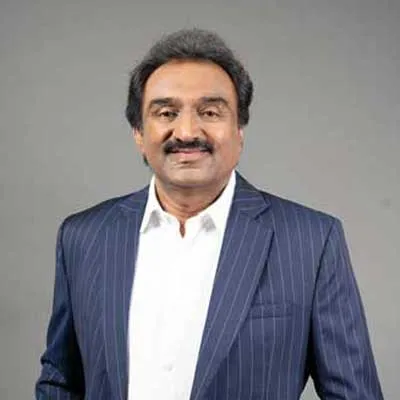
With over 25 years of experience spanning structural engineering and real-estate development, Mayur R Shah, Vice Chairman, Marathon Nextgen Realty, and former President, CREDAI-MCHI, brings a deeply technical and execution-driven perspective to urban development. Under his leadership, the group has expanded across townships, redevelopment and affordable housing, while retaining strong inhouse construction capabilities. In this interaction, Shah highlights how execution control, standardised systems and selective technology adoption drive quality and scalability, while addressing labour dynamics, redevelopment complexities and micro-market-led product strategies across Mumbai.Across projects like Monte South, Nexzone and the Bhandup ‘Neo’ series, how are you structuring contracting models – item-rate, EPC or hybrid – and what drives that choice?We largely operate with an inhouse execution model, with only labour being outsourced through contractors. All core construction activities – planning, engineering, procurement and execution – are handled internally. We have experimented with EPC in the past but found that quality often becomes inconsistent due to differing priorities. As developers, we are accountable to customers for the long term, not just for project delivery. Retaining control ensures flexibility, scalability and consistent quality across projects.With multiple projects under execution, how do you manage contractor bandwidth, labour availability and site logistics in a dense market like Mumbai?Labour availability is a sector-wide challenge, but we’ve mitigated it through long-term relationships and strong onsite practices. We provide clean accommodation, healthcare support, timely payments and a structured work environment, which makes labour groups prefer working with us. We also invest heavily in training, especially for skilled roles like carpenters and shuttering specialists. For advanced technologies, we train teams – sometimes even internationally – and replicate those learnings onsite. This creates a stable and skilled labour ecosystem that moves with us across projects.What construction technologies – MIVAN, precast or others – are you deploying to compress timelines and how do you evaluate their cost-benefit trade-offs?We have consistently used aluminium formwork (commonly referred to as MIVAN) across segments since early 2004. It ensures speed, precision and a superior finish without plaster.For super-tall projects like Monte South, we’ve adopted advanced systems such as sliding formwork (Kumkang Kind, a South Korean manufacturer specialising in advanced aluminium formwork systems, steel scaffolding and modular buildings) for faster core construction. The choice of technology depends on building typology – standard towers versus super-tall structures require different approaches.Our evaluation is straightforward: lifecycle efficiency, speed of execution and long-term durability matter more than just upfront cost.Monte South is set to feature one of the tallest swimming pools globally. From a construction and engineering standpoint, what are the key challenges – structural load, waterproofing, wind impact – and how are you addressing them?A high-altitude swimming pool involves multiple engineering considerations: structural loading, wind forces, waterproofing and maintenance systems. We address these at the design stage itself through wind tunnel testing and enhanced structural parameters that go beyond code requirements. The pool structure uses a double-slab system to eliminate leakage risks and all services – filtration, drainage and circulation – are pre-integrated through detailed 3D modelling.At such heights, controlling building sway is critical. We design for far stricter tolerances to ensure stability and user comfort.From a developer’s standpoint, what differentiates a high-quality contractor today and what capabilities should partners build to work with developers like Marathon Nextgen Realty?For us, the most important factor is alignment in quality and execution philosophy. A contractor must understand that construction is not just about speed; it’s about precision, durability and long-term performance. However, since we execute most work inhouse, we expect partners –whether material suppliers or service providers – to deliver consistency, technical support and responsiveness. Long-term relationships are built on reliability and performance.As you expand into redevelopment, what are the biggest execution challenges compared to greenfield projects?The biggest challenge in redevelopment is space constraint. Unlike greenfield sites, redevelopment projects operate within extremely tight footprints, often with no room for logistics planning. Construction density increases significantly – you are not only rebuilding existing units but also adding additional inventory and parking. This can multiply the construction load by three to four times. Managing materials, machinery and workflows within such constraints is a major challenge.What typically makes you walk away from a redevelopment opportunity despite strong location potential?We do not walk away midway; project viability is assessed upfront. However, redevelopment projects come with unpredictable external constraints, such as access limitations, infrastructure conflicts and regulatory complexities. If the project economics or execution feasibility do not align with our standards at the evaluation stage, we avoid taking it up.Markets like Panvel, Bhandup and Byculla differ widely. How does that translate into design, construction typology and cost engineering?We have a clearly defined product segmentation strategy, which is quite distinct in the market and makes it easier for customers. Marathon has built clearly identifiable product segments.‘Neo’ is our affordable housing segment, focused on compact, efficient urban homes with innovative layouts, such as our projects in Bhandup. ‘Nex’ is our township-led premium segment, where the emphasis is on larger layouts, integrated amenities and a different cost structure, as seen in developments like Marathon Nexzone in Panvel. ‘Monte’ is our super-luxury segment, defined by high-rise towers, premium specifications and an elevated living experience, with projects like Monte South in Byculla and Monte Carlo in Mulund.While design, planning, amenities and pricing are tailored to suit market expectations, the underlying construction technology and quality standards remain consistent across the portfolio.How do you balance product standardisation with micro-market customisation without impacting execution efficiency?We standardise construction systems and processes – such as formwork, materials and engineering protocols – across projects. However, product design, unit configuration and amenity planning are customised based on the micro-market. This allows us to maintain execution efficiency while still delivering market-relevant offerings and our project segments Neo, Nex and Monte.What procurement strategies help you manage risks related to steel, cement and key materials?We rely on long-term partnerships with trusted suppliers and maintain strong inhouse capabilities like RMC batching plants at project sites. We also invest in mix design optimisation and testing to ensure consistent quality, especially for high-performance concrete used in high-rise structures. Procurement decisions are driven by reliability, technical support and performance consistency rather than just pricing.What is one policy change that could significantly improve project execution in the real-estate sector?The biggest bottleneck remains building plan approvals. Despite digitisation, timelines are still long and fragmented. With today’s technology – even AI – plan validation can be completed in days rather than months. Faster, more transparent approval systems would unlock significant efficiency, reduce costs and accelerate project delivery across the industry.- KAVITA PARABFact file:Company name: Marathon GroupYear of establishment: 1969Top management:- Mayur R. Shah : Vice-Chairman, Marathon Nextgen Realty | Former President, CREDAI-MCHI- Chetan R. Shah : Chairman, Marathon Nextgen Realty - Parmeet M. Shah : Director, Marathon Group | Founder and CEO, NEXT School- Samyag M. Shah : Director, Marathon Group- Kaivalya C. Shah : Director, Marathon GroupArea of operation (cities/states): Lower Parel, Byculla, Mulund, Panvel, Bhandup, Dombivili, Kalyan-Shil RoadNo of projects completed (including total sq. ft. delivered): 100+ projects delivered, ~ 31.50 lakh sq. ft. deliveredOngoing projects: ~4 Million Sq. ft. Marathon Futurex, Monte South, Neo Park, Neo Valley, Marathon Nexzone, Marathon Nextown, Marathon Nexworld, Marathon MilleniumUpcoming projects: ~4.2 Cr. Sq. ft. of land being planned across Thane, Lower Parel, Byculla, Mulund, Panvel, Bhandup, Dombivli