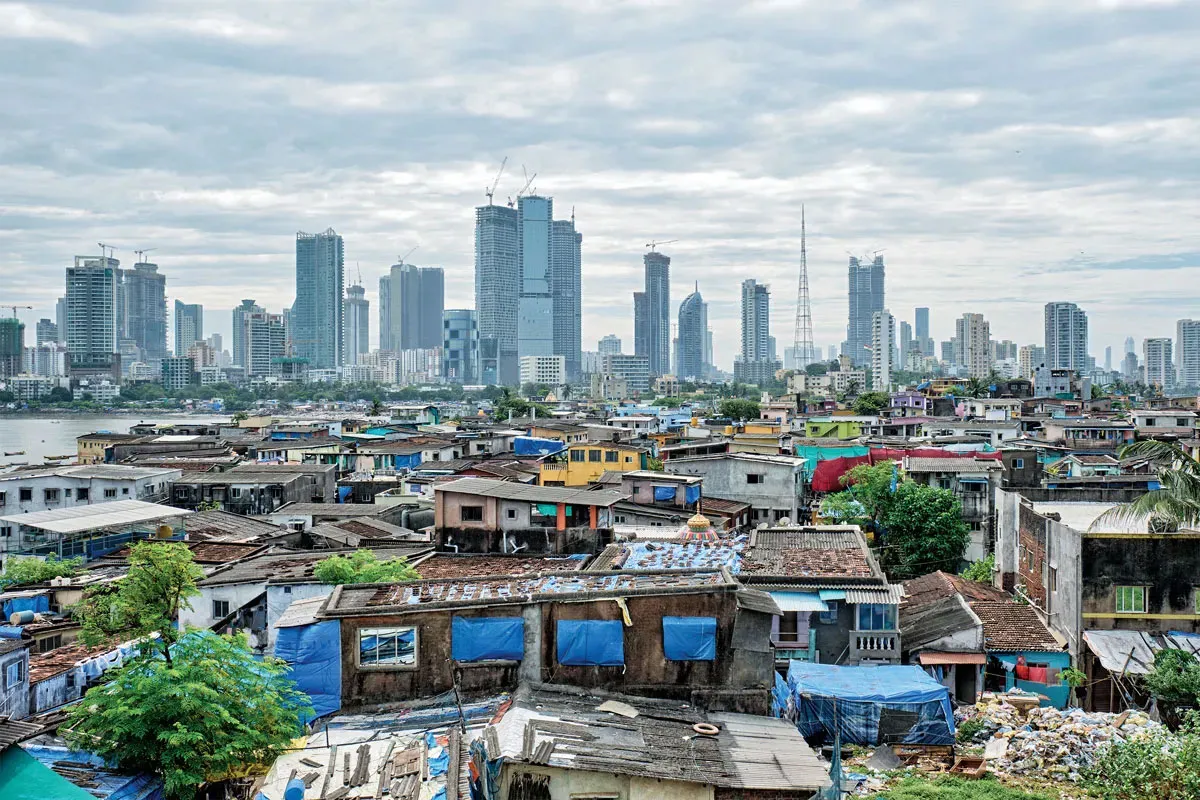
Mumbai’s redevelopment challenge has crossed the threshold from
market-led opportunity to urban compulsion. The welcome address at the
Mumbai Redevelopment summit framed the issue in unambiguous terms: the
city’s housing stock is ageing faster than its delivery mechanisms can
respond, and redevelopment has become the primary – if not the only –
pathway to renew urban living conditions within severe land constraints.With
tens of thousands of buildings over 30 years old and a significant
portion far older, redevelopment today sits at the intersection of
safety, infrastructure capacity, affordability and governance. Yet
despite years of policy reform and sustained market demand, progress
remains fragmented. That paradox – high intent, limited delivery –
formed the backbone of the discussions that followed.Reality checkBefore the panel discussions unfolded, Gulam Zia, Senior Executive Director, Knight Frank India, grounded
the debate in data rather than perception. Drawing on IGR-registered
development agreements – the first legally binding milestone in any
redevelopment project – Zia revealed how limited actual progress has
been beneath the narrative of scale. “Only about 1,000 development
agreements have been registered over the last six years and nearly 90
per cent of them are on land parcels smaller than 1 acre,” he pointed
out, highlighting the structural constraint posed by fragmented plots. Zia
cautioned that redevelopment has increasingly become expectation-driven
rather than feasibility-led. Promises of 150-165 per cent additional
carpet area – once considered aggressive – are now being positioned as
standard, often without regard for market cycles or execution risk.“Real
estate does not grow in a straight line. Every cycle turns, and
projects structured on peak-cycle assumptions are the first to suffer,”
he warned.Importantly, Zia reframed the role of housing societies
themselves. As landowners, societies are participants in the
development process, not passive beneficiaries. Excessive demands on
developers, he argued, leave no margin to absorb delays, cost inflation
or downturns – ultimately jeopardising delivery. This data-led intervention became a reference point for every subsequent discussion.Financing redevelopment: Capital is available, certainty is notThe first panel reinforced Zia’s core argument: Redevelopment is not starved of capital, but it is burdened by uncertainty.“Redevelopment is not constrained by demand or even capital,” said Naushad Panjwani, Chairman, Mandarus Partners. “It is constrained by uncertainty – around approvals, timelines and stakeholder decisions.”Unlike
greenfield development, redevelopment involves non-linear cash flows,
prolonged pre-vacation phases and fragmented consent structures. This
fundamentally alters lender risk perception.“Redevelopment does not fit into standard lending products,” noted Kishor Kumbhare, Chief Risk Officer, IIFCL.
“Cash flows are unpredictable in the first three to four years and the
absence of hard collateral significantly elevates lender risk.”Extra
FSI remains the economic backbone of redevelopment but panellists
cautioned that aggressive commitments – especially during peak cycles –
are eroding viability. Rachna Lakhotia of Tata Realty & Infrastructure warned
that the free-sale component is expected to absorb rehabilitation
costs, premiums, taxes and financing charges, leaving little buffer if
timelines slip. As a result, lenders are no longer funding projects
upfront. Milestone-based disbursements, escrow controls and continuous
monitoring have become the norm, signalling a shift from growth-led
capital to risk-managed capital.Policy and regulation: Intent is clear, execution is fragileThe
second panel examined why redevelopment continues to stall despite
repeated policy interventions. While the Maharashtra Housing Policy 2025
was acknowledged as comprehensive, panellists argued that
implementation gaps and approval delays remain the primary bottlenecks.“Housing policies look good on paper, but implementation is the real test,” said Mayur R. Shah, Vice Chairman, Marathon Nextgen Realty (Former President, CREDAI-MCHI). “Delays in approvals, CCs and OCs add rent and interest costs that can make viable projects unworkable.”A
recurring concern was credibility. Smaller developers account for a
large share of registered agreements, yet there is no formal mechanism
to assess financial strength or execution capability before societies
commit.From a consumer and legal perspective, Adv. Shirish Deshpande, Chairman, Mumbai Grahak Panchayat, noted
that while RERA has improved transparency, its grievance redressal
system is under strain. “Conciliation worked when it was encouraged,” he
said. “Over-legalisation has diluted the original intent.”The
panel concluded that redevelopment does not need more incentives—it
needs predictable timelines, reduced discretion and faster
decision-making.Execution realitiesExecution challenges dominated the third panel, which focused on why delivery remains Mumbai redevelopment’s weakest link.“Mumbai is now in an undeniable wave of redevelopment,” said Dr Niranjan Hiranandani, Chairman, Hiranandani Developers. “But increasing density without matching infrastructure is creating congestion and affordability challenges.”Cessed
and dilapidated buildings, particularly in the island city, were
highlighted as the most urgent segment, driven by safety concerns. Yet
escalating premiums, layered regulations and long approval cycles have
made execution increasingly complex.“A large number of stalled
projects are the result of weak developers being selected without
professional evaluation,” observed Dr Anand Gupta, Immediate Past President, BAI Chairman, Housing & RERA Committee, BAI, pointing to unrealistic commitments made at the bidding stage.The role of the project management consultant (PMC) emerged as central. “The PMC is the system integrator in redevelopment,” said Ameya Tandulkar, COO, Paradigm Realty. “They align feasibility, documentation and execution. Without that discipline, projects unravel.”Technology
adoption, including prefabrication and BIM, was cited as promising, but
speakers stressed that its true impact will come only when planning
authorities integrate digital tools into approval processes.Self-redevelopment: Alternative pathway, not a panacea The final panel examined the rise of self-redevelopment, driven largely by eroding trust in developer-led models.“Despite the scale of ageing housing stock, only about 1,000 development agreements have been signed in five years,” noted Aditya Bansal, Director Advisory Services, Knight Frank, explaining why societies are exploring alternatives.Policy
support – such as incentive FSI and a dedicated self-redevelopment
authority – has improved viability, particularly when paired with
cooperative bank financing. “Self-redevelopment will scale only if societies get structured access to finance,” said Rahul Patil, Chairman, Sahakar Bharati Mumbai & Mumbai Division Cooperative Panel Auditors Association.Speakers were clear that self-redevelopment works only under specific conditions. “Without clear title and disciplined documentation, self-redevelopment is not feasible,” cautioned Adv. Shreeprasad Parab, Expert Director, Maharashtra State Cooperative Housing Federation.Hybrid
development-management models, combining society ownership with
professional execution, emerged as the most credible middle ground.