The Stone Theatre
Real Estate

The Stone Theatre

Stone is usually sold in places built for inventory. Rows of slabs. Dust in the air. Decisions made in haste. Function leads; feeling follows. Megaphone by HMG in Jigani, on the southern edge of Bengaluru, flips that script. Instead of asking visitors to browse stone as commodity, it stages the...

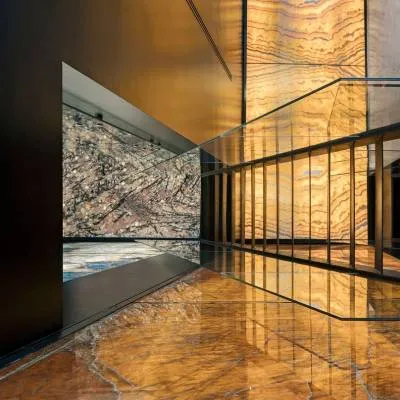
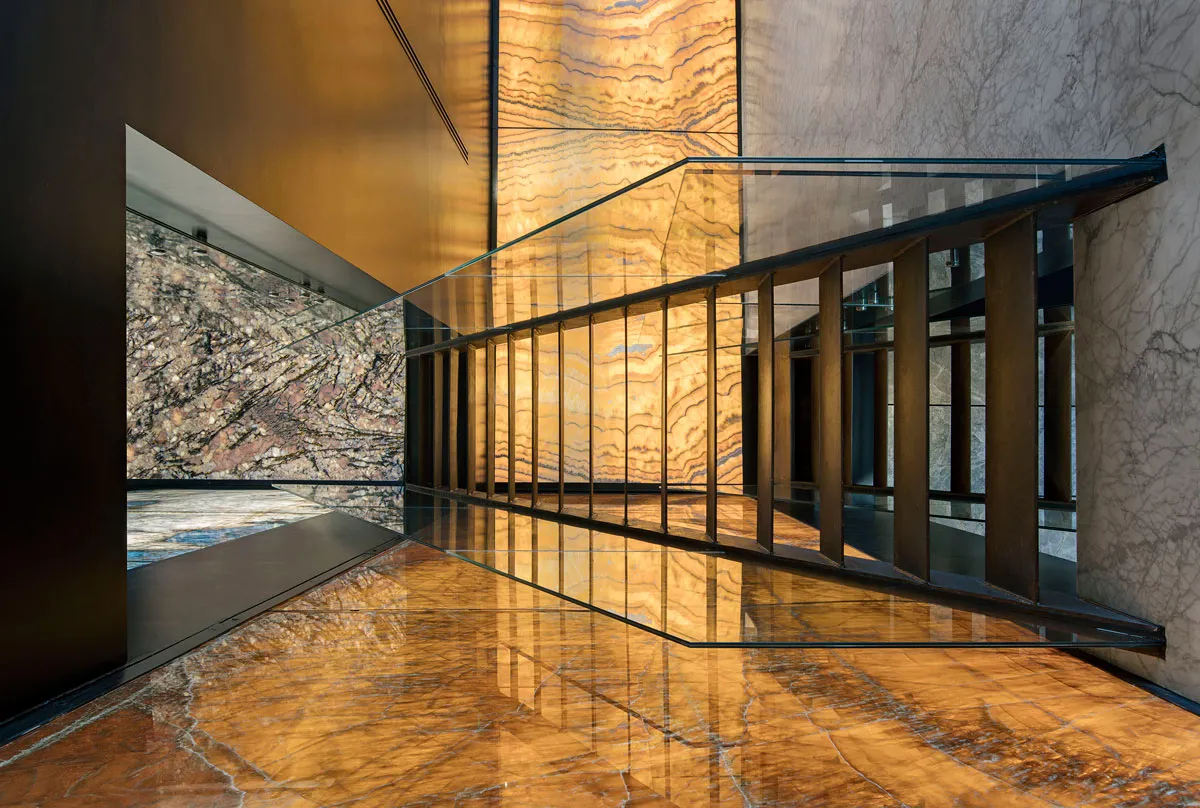
Stone is usually sold in places built for inventory. Rows of slabs. Dust in the air. Decisions made in haste. Function leads; feeling follows. Megaphone by HMG in Jigani, on the southern edge of Bengaluru, flips that script. Instead of asking visitors to browse stone as commodity, it stages the material as experience – dramatic, tactile, immersive and unmistakably architectural. Spread across 6,000 sq ft, the centre is not conceived as a conventional showroom but a ‘Stone Theatre’: a place where stone is read, felt and understood before it is bought. If natural stone is one of the most expressive materials in architecture and interiors, why should it be presented like inventory? At Megaphone, stone is not lined up for sale; it is staged for impact. “Megaphone by HMG has been conceptualised in line with HMG’s vision of crafting destination-driven experiences that ignite curiosity, generate visual impact and create an immersive experience,” says Anand Reddy M G, Founder & CEO, HMG Stones. “The space allows visitors to engage with natural stone as a design medium rather than a product on display.”That ambition is visible from the outset. Located in Jigani, where stone manufacturing units draw a steady flow of visitors from Bengaluru and beyond, the centre has been positioned to catch the eye even from a distance. But this is not simply about visibility; it is about reframing the buying journey. In a sector where customers often make decisions in busy factory settings, Megaphone offers a calmer, more intentional environment – one that allows architects, designers and project developers to engage with material on their own terms.The project draws inspiration from the bold form of a megaphone and the constructivist language of Alexander Rodchenko. That pairing gives the building its identity: assertive, industrial and graphic, yet highly controlled. Designed by Andrea Milani of Studio Milani along with Anand Reddy M G, the centre brings bold geometry and spatial drama into an industrial context where such architectural confidence is rare. “There is an element of visual drama and curiosity,” adds Anand Reddy M G. “Megaphone amplifies the voice and the experience centre magnifies the visual language and messaging.”Inside, the experience unfolds through scale and sequence. A 50-ft roof creates immediate volume and vertical drama, while a large-format linear gallery with eight descending bays allows slabs to be displayed upright and read in full. The display extends across ground, first and mezzanine levels, transforming the visitor journey into a layered exploration of texture, pattern, translucency and finish. Rather than overwhelm, the architecture directs attention. It creates rhythm, pause and revelation.“The architectural approach prioritises stone as the primary visual element of the space,” says Pavana Reddy, Head of Marketing and Communications, HMG Stones. “Contrasting materials like matte black aluminium sheets and corten steel are used in the envelope to create a subdued architectural frame. This enhances the presence, texture, and visual effect of the stone displays.”That subdued shell is critical. The black aluminium and corten steel do not compete with the material; they intensify it. Against this darker envelope, the stones appear sharper, richer and more sculptural. The centre houses a curated range from HMG’s portfolio, including marble, granite, onyx, travertine, shell stone, sandstone, limestone, quartzite and dolomite, along with 10-mm-thick quartzite that combines slenderness with strength.The most striking moments, however, come from light. A front-facing glass façade brings in natural light that changes the appearance of the stones through the day, while accent lighting, track lights, spotlights and LED backlighting heighten depth and translucency indoors. “Since different stones require varied lighting techniques, onyx and 10-mm quartzite are backlit using LED panels, enhancing the visual effect and translucency of the material,” says Pavana Reddy. “The stark contrast between the black aluminium outer façade and the vibrant colours inside make the experience centre visually arresting.” That visual arrest finds its strongest expression in the dedicated backlit onyx zone and the 10-mm quartzite mezzanine display, where the material seems to glow rather than merely sit on display. Here, stone stops behaving like a surface and begins to act like atmosphere. “The centre positions artefacts and natural stones to create an immersive experience for everyone, especially architects, designers, and project developers, enabling quick evaluation, in-depth exploration, and swift decision-making,” says Anand Reddy M G.More than a showroom, Megaphone by HMG is an argument for a new material culture – one in which stone is not simply bought, but experienced. In doing so, it turns a visit to Jigani into something far more memorable: a walk through a theatre where architecture, light and material speak in one amplified voice.

Next Story
Real Estate

Homes: Smart Beyond Gadgets

India’s smart home industry is seeing a clear shift from gadget-centric automation to integrated living ecosystems. Whereas smart homes used to largely be about controlling lights through an app, today, the expectation is more holistic: Technology should seamlessly integrate with architecture and everyday living and tailored to home occupants needs to maximise their convenience and safety.Especially as home owners develop a taste for minimalism, integrated automation assumes centre-stage. “By reducing the dependence on multiple switches, panels and visible hardware, integrated automation c..

Next Story
Building Material

Ultra Concrete Age

The need of present time is stronger buildings, industrial or common utility buildings, such as Malls, Railway stations, hospitals, offices, bridges etc. For this, there is need of long durable, tough and stable concrete, which could stand under normal and seismic conditions. Tough railway bridges are required for bullet trains to pass without any damage. Railway tunnels, sea-links, coastal roads, bridges and multistorey buildings, are the need of the hour. The question comes, is the normal cement called OPC is sufficient to take care of such requirements or better combination of cements and s..

Next Story
Infrastructure Energy

The next five years will expose the capability gap in transmission EPC

India’s transmission expansion is redefining EPC priorities, shifting focus from scale to specialised execution. Rajesh Kumar Singh, CEO, Jyoti Structures, explains how engineering capability, disciplined project selection and delivery experience will determine competitiveness in the evolving market.India is witnessing a major push to expand its transmission network to integrate renewable energy and strengthen grid resilience. From your perspective, how will this wave of transmission investment reshape opportunities for EPC companies over the next five years?What is happening in Indian ..

Advertisement

Subscribe to Our Newsletter

Get daily newsletters around different themes from Construction world.

STAY CONNECTED

Advertisement

Advertisement

Advertisement