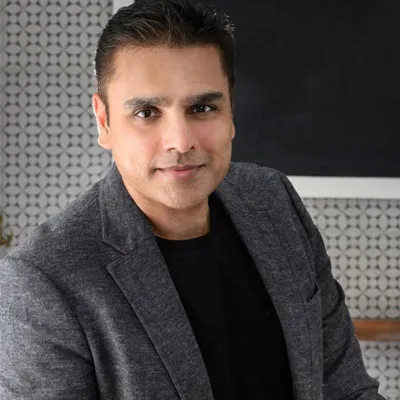
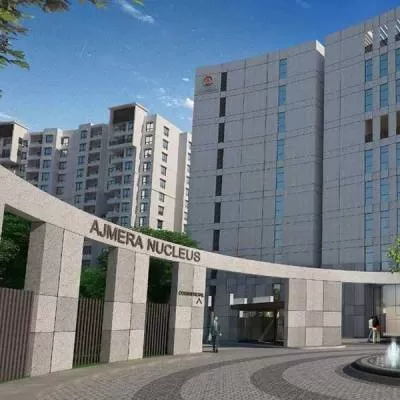
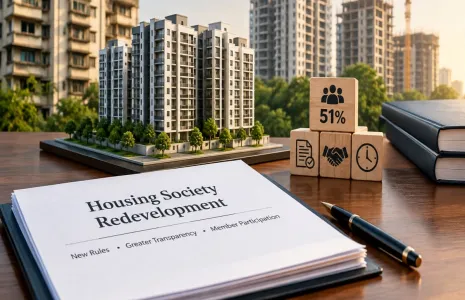
Driven by a longstanding township philosophy, Ajmera Realty is aligning its growth with connectivity-led urban expansion and evolving buyer preferences. Dhaval Ajmera, Director – Corporate Affairs, Ajmera Group, discusses the rising dominance of community living, the emergence of central Mumbai as a growth engine, and why policy recalibration – especially around affordability and home loans – could unlock the next phase of real-estate momentum. Ajmera Realty has evolved from developing neighbourhoods such as Manish Nagar, Shastri Nagar and Andheri to building large-scale destinations. What has been the core philosophy driving this journey? Ajmera has always been rooted in township development. For nearly five decades, we have believed in creating integrated communities rather than standalone projects. Real estate is a key driver of the urban economy and when you build a township with over a thousand families, you create a complete ecosystem. We take pride in being called pin-code creators. Many of our developments have transformed previously underdeveloped areas into thriving neighbourhoods, often leading to the creation of new pin codes. Post COVID, the importance of security, community and shared living has strengthened further. Township developments today are preferred over standalone buildings because they offer a complete lifestyle – security, amenities and a sense of belonging – which is why they command a premium. How does Ajmera Realty approach the development of micro-markets, especially while creating such integrated communities? Our philosophy remains consistent across projects: Community living. Whether it is a 1-acre development or a 100-acre township, we design projects around family living, safety, amenities and shared spaces. Even in standalone buildings, we try to replicate this approach by integrating security, facilities and thoughtful planning. The idea is to ensure that every project, regardless of size, delivers a holistic living experience. Demand has clearly evolved over time. How have buyer preferences and pricing dynamics changed, especially after COVID? Buyer expectations have shifted significantly. Today, amenities and lifestyle features are non-negotiable. Whether it is a township or a single tower, buyers expect gyms, recreational areas, strong security, parking and green spaces. Earlier, these were considered value additions; now they are essential. COVID accelerated this shift, making community living and lifestyle infrastructure central to decision-making. Location still plays a key role – prime areas will continue to see demand for standalone premium developments – but wherever there is an option, community living is preferred. With a major infrastructure push – metros, roads and connectors – where do you see demand emerging, particularly in central Mumbai? Historically, Mumbai’s growth has been skewed towards the western corridor. However, the central belt is now seeing a strong transformation driven by infrastructure. The Wadala-Sewri belt, in particular, stands out. It is perhaps the only micro-market with access to multiple transport modes: metro, monorail, Eastern Freeway, BKC connector and Atal Setu. Such multilayered connectivity is rare. The government’s plan to develop BKC2 in Wadala reinforces this potential. Connectivity is the key driver here and it will significantly influence real-estate demand in the coming years.Redevelopment is becoming central to Mumbai’s growth story. What are the key challenges developers face in this segment? Redevelopment is now essential for land creation in Mumbai, but it comes with challenges. The biggest issue is the increasing gap between expectations and feasibility. There is intense competition, with multiple developers bidding for the same project. Societies sometimes prioritise higher financial offers over credibility and track record. However, redevelopment requires strong financial capability, execution expertise and delivery assurance. Established developers are now becoming more cautious. We have to maintain discipline and cannot stretch beyond sustainable limits. At the same time, societies must also evaluate developers based on long-term reliability, not just immediate gains. How is Ajmera Realty’s project pipeline shaping up, and which regions will see more focus? We continue to have a balanced presence across Mumbai. But in terms of scale, central Mumbai will see larger developments, particularly in Wadala, Kanjurmarg, Vikhroli and Bhandup. At the same time, we are expanding in the western suburbs with projects in Versova, Lokhandwala, Bandra and Malad, and upcoming developments in Goregaon. However, given our land bank, the central belt will be a key growth driver for us. Ultra-luxury housing is no longer limited to prime South Mumbai or Bandra. Do you see similar demand in emerging micro-markets? Absolutely. The biggest shift is that buyers now want to upgrade within their existing micro-markets. They prefer to stay close to their social ecosystem while moving into better homes. As a result, every suburb – whether Ghatkopar, Borivali or Kandivali – will have a mix of affordable, mid-segment and ultra-luxury housing. Luxury is no longer location-specific; it is micro-market driven. What is your outlook for the real-estate sector this year? Real-estate demand will remain strong because housing is a fundamental need. However, growth may moderate due to global uncertainties and macroeconomic factors. At the same time, these conditions can create opportunities. For instance, shifts in global markets could redirect investments into Indian cities like Mumbai, Delhi and Bengaluru. Overall, the long-term outlook remains positive. Affordable housing seems to have taken a backseat in industry discussions. Why is that? The issue lies in its definition. A uniform price-based definition across India does not work because land and construction costs vary widely across cities. If affordable housing is defined by size rather than price, a significant portion of projects could fall under this category. Currently, the economics do not support such developments in many urban markets, which is why supply is limited. Ajmera Realty spans three generations. How do you balance legacy with professional management? We have evolved from a partnership firm to a listed company and this growth has been supported by both family leadership and professional management. While strategic decisions are taken at the leadership level, day-to-day operations are largely driven by professionals who are integral to the organisation’s growth. How do you see the company evolving in the next phase? Legacy is a strong foundation for growth. We had set a target to grow five times in five years during COVID, which we have achieved. Now, we are aiming for 10x growth over the next five to 10 years. Our focus is on making the right strategic decisions, leveraging our legacy and expanding our presence across key markets. If you had to suggest one key policy change, what would it be? Apart from redefining affordable housing, removing the cap on home-loan interest deduction would be a game changer. Currently, the deduction is capped at Rs 3 lakh. If the full interest amount becomes tax-deductible, it would significantly boost home buying, improve financial planning and drive structured growth in the sector. -KAVITA PARAB